To understand more about this troubled Central American country one only needs to watch the movie Salvador, about the brutal civil war that tore the country apart in the 1980s. The civil war is now over in El Salvador, and its beauty and splendor–including active volcanoes and cloud forests–are starting to show again.
Traveling in El Salvador isn’t like in other Central American countries, where independent travel is the norm. Currently, most people come to El Salvador to participate in the redevelopment and restoration of this post-war country. Organizations from all over the world bring people here to help with education, healthcare, and other initiatives that will put El Salvador on the road to recovery.
A recent blow to El Salvador’s revitalization, a massive earthquake hit the region in early 2001 causing a state of emergency. Not all the areas of the country were affected, but the area around the capitol San Salvador suffered greatly, and much is still needed to be done to help El Salvador recover from this latest tragedy.
Traveling in El Salvador
 The 2001 earthquake disrupted all travel in El Salvador, so public transportation in the country is unpredictable. Some raods are still washed out so there is no way to tell how easy it is to travel around the entire country. But there is a good bus system, and if the roads are open, buses will run frequently. Renting a car is also possible, but it is best to discuss with someone first where you are headed so you know how the road is or if it’s passable.
U.S. and Canadian citizens do not require a visa but must buy a tourist card–valid for 90 days–upon arrival. Citizens of Australia and New Zealand need a visa; citizens of most Western European countries do not require a visa or tourist card.
Health Risks in El Salvador
Health risks include cholera, dengue fever, malaria, hepatitis, typhoid, and dysentery. It is advised that you consult a doctor about what shots you may need before traveling to El Salvador.
What to Know
In 2001, the U.S. dollar became the official currency in El Salvador, but places still accept the old currency the colón. Things are more expensive here than in other Central American countries, but it is still comparatively cheap for most travelers–$25 to $30 dollars a day will get you reasonable accomodations and meals.
Weather in El Salvador
The optimal time to visit is the dry season, which is from November to April. The roads are in the best condition and most of the cultural festivals take place during this period. But during the main festival season, as well as before Easter and after Christmas, traveling is most expensive. The wet season–May to October–can still be nice, but expect daily rain showers.
El Salvador Information
 Population:6,122,515
Government: Republic
Square Miles: 8093 sq mi (20,752 sq km)
Capitol: San Salvador (pop 1 million)
Official Languages:Spanish
People: 94% mestizo (Spanish-Indian), 5% Indian, 1% European descent
Religion: 75% Roman Catholic, 20% Protestant
Major products/industries: Textiles, coffee, sugar, beverages, petroleum, chemicals, fertilizer, textiles, furniture, light metals, cotton
 With its harsh climate, geographic remoteness, and weak economy Chad is not a place where many tourists seek out. Chad is considered to be one of the poorest nations on earth, but it’s cities and other ancient attractions still make it an interesting place to go for the adventurous traveler.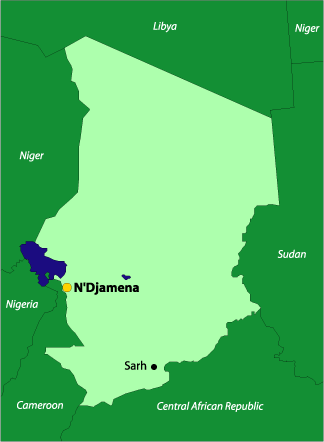

 Technically part of Ecuador, the Galapagos Islands are so unique, we thought they deserved a page of their own. Situated roughly 600 miles west of Ecuador, these islands were discovered in 1535 by the Spanish, and later claimed by Ecuador in 1832. But the first visitors to the Galapagos–the fauna that’s protected there today–arrived millions of years before.
 After more than three decades of civil war, Guatemala is now emerging as a viable and popular tourist destination. The breadth of Central America’s ecology, culture, and history can be found in Guatemala in a distilled form: ancient Mayan ruins and soaring volcanoes stand side-by-side, and the government’s tourism-focused agenda has encouraged a rich and educational lexicon of Mayan history to arise.
 “The land of the free and home of the brave.” This is the motto of the United States, but “free” has nothing to do with traveling there. Hotels, campgrounds, and national parks will all cost you if you want to go. Of course, this doesn’t mean traveling in the U.S. is impossible without loads of cash. Road tripping and staying with friends is just one way to save on the costs associated with being in America, and there is so much to do and see there, you can be virtually anywhere in the country and still have many interesting opportunities open to you. Whether you’re looking for islands, mountains, or historical heritage, the United States has it, and it’s never far from where you are.
 Europeans first arrived at New Zealand in 1642 when Dutch explorer Abel Tasman sailed up the island nation’s western coastline. But Maori history in the island group began long before. The Maoris are a Polynesian people who were master navigators, using the night sky, flight patterns of sea birds, and more to traverse long distances throughout the many islands of the South Pacific. The first Maori set foot on New Zealand roughly around 950 A.D. More settlers followed in the mid-1300s, arriving in a series of large canoes, able to withstand big seas and heavy winds, to which many modern-day Maoris currently trace their heritage.
 When most people think of France they think of style. From Paris’s tree-lined boulevards to the beautiful castles of the Loire Valley. The grandeur and romance of France keeps people coming back again and again.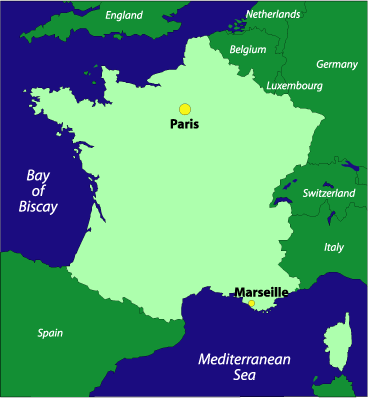
 This is beach country! Located in the Caribbean British Leeward Islands, Antigua, Barbuda, and Redonda, all make up the single nation of Antigua & Barbuda. Antigua alone, being the largest of the British Leewards, claims upward of 300 beaches with plenty of room to bask in the sun, swim, dive, sail, and more. There are reefs and wrecks abound, for underwater exploration, as well as many sites on shore, for those less inclined to the water.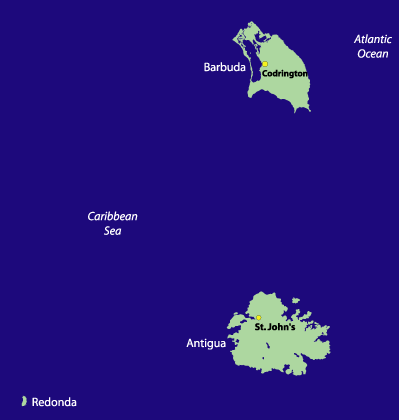
 AntiguaThe best (and busiest) time to go to Antigua is during the (NH) winter: December through February. The daily highs average around 81°F, and the skies are typically clear. The island remains a popular tourist destination well into spring, but by June it starts heating up significantly. July and August are the hottest months, with average highs reaching the 90°F mark.
 Italy was the center of the world for much of early history; naturally, when you go there, you’ll want to immerse yourself in the past. Once upon a time the Italians were letting it all go to waste, but not any more. Now Italy has one of the biggest budgets in the world for restoration and upkeep of it’s historical buildings and artifacts. The problem is, there are so many pieces that need attention, it’s hard to keep up with it all. Whether they’re keeping the leaning tower of Pisa from leaning too far, or restoring a piece of renaissance art, Italy has more public historical treasures than most other countries combined.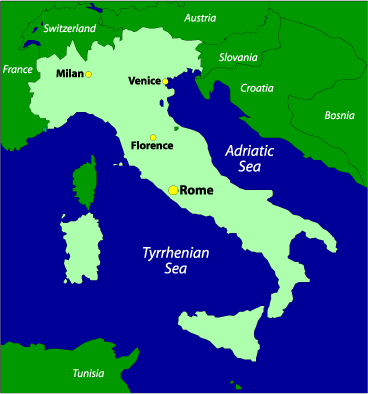
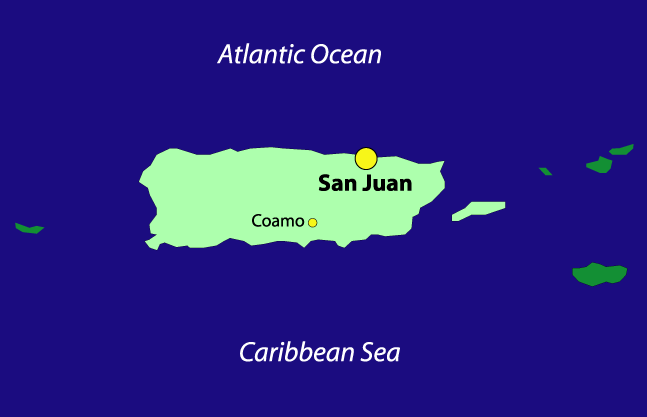
 Puerto Rico may be an economic territory of the United States, but its people are fiercely independent. Rarely will you find an American flag flying high, without a corresponding Puerto Rican flag nearby, sometimes flying even higher. The island’s capitol and largest city San Juan is a maze of old and new, with modern shops and restaurants, shanties, a fortress musuem, sky-scrapers and casinos, and shopping malls all standing in conjunction with each other. Maybe more so than any other place in the Caribbean, old mingles with new in Puerto Rico, and the streets of San Juan are just the beginning.