Figuring out where we are going in the war on terrorism is extremely hard because the Bush administration has chosen to keep us in the dark. What do they have to hide? From what we know of the Bush program, a lot of sobering questions need asking.
The tough talk comes out of the heat of revenge. As we cool down, the broad suggestion of stamping out terrorism all over the world will be modified because what they are saying is so aggressive as to be imperialistic, an amazing digression from our traditions. The administration and the generals may be thinking that by smashing a few weak sisters, the major Moslem nations will roll over and clean up terrorism in their own countries. Historically, however, efforts to smash religious movements with raw power have ended up encouraging the movements.
Because the Bush program is so full of questions, they have chosen to obscure the difficulties by treating us as children, providing little information, attempting to suppress sources, and engaging in the old tricks of wartime propaganda. This kind of thing is suspicious, what are they up to? In order to throw some light on the matter, I have been reading away, and while still left with a lot to learn, here are my so far conclusions.
[ad#468×60]
1) Bush is miscasting Afghanistan as a great triumph in order to build support, not an unnatural course, but one that casts a smoke screen of obscurity, a dangerous precedent.
The Taliban was a repressive over-fundamentalist regime that ruled most of Afghanistan in recent years, but it did not engage in international terrorism. If the Taliban is best done away with from a humanitarian point of view, it has little relevance to the fight against terrorism other than as an important site of terrorist training. Grass roots support in the Moslem world means new sites can be established, though the need to move probably makes it easier to find them. As in Viet Nam, our actions are likely to build enemy numbers because they support bin Laden’s main point about our aggressive intent. Most of the foreigners training in Afghanistan, which we call Al Qaeda, escaped.
The benefit of Afghanistan is not so much a direct attack on terrorism as elimination of a cesspool of anarchy, drugs, and radical Islamist anti-western feeling that was poisoning the economies and international relationships in central Asia. If we can bring order to that long anarchistic country and foster trade and understanding in the region, those countries may be motived to isolate and control radical elements. Pitching bombs is unlikely to defeat, and probably encourages, terrorism directed against us, but if we can use Afghanistan as a laboratory, and slake our thirst for revenge, the venture will have been successful (Afghanistan, though, is a tough laboratory).
2) Bin Laden is the anti-American terrorist, but there are plenty of others not directed toward us. Our worldwide hunt seems likely to provoke others to join the attack on America. Exaggerating bin laden’s importance is not useful to our understanding of the situation. Its purpose is to build enthusiasm through a personalized target.
In addition to his American emphasis, bin Laden has had a high rate of success compared to other terrorists. In general, anti-western terrorism has a high failure rate and the movement appears hesitant and poorly organized. Bin Laden is an organizer and seems to understand that you get no where in the western world with uneducated guerrilla trained fighters. Get rid of him and the movement suffers a major loss. But we are being presented an incorrect picture of him, as there are many heads to this dragon. Presenting bin Laden as the terrorist is good propaganda, but it covers up that terrorism is sponsored by many Moslem countries and supported by others. We need to understand the depth of Moslem feeling against us in order to counter it wisely.
3) Misrepresentation of bin Laden and terrorism in the Moslem world.
In the Moslem world bin Laden’s stature has been tremendously raised by the WTC. All of this fuss about the tape proving he did it is pap for the American public. They see us as evil people guided only by money and themselves as following the word of God. Bin Laden’s ideas resonate, all the more for our invasions. They see terrorism as a necessity, a desperate last weapon to fight our immense power. To them it is David versus Goliath and good versus evil. Carpet bombing and invasion strengthen and give justification to their negative impression of us.
Our actions are probably helping bin Laden by marking him as a new messiah. We need to understand that Pakistan and Iran, to name only the principle sources of terrorism, are against us. Pakistan has always been the main base for terrorism, though in the past directed against Afghanistan and India. Bin Laden’s people are retreating there because it is a safe haven. Virtually nothing has been done to prevent this, though it could easily have been anticipated. Pakistan is working us over for all the money it can get. Iran made minor concessions because they hated the Taliban, but it is the leading source of international terrorism. Saudi Arabia may be our biggest problem. Not only is it a major source of terrorists, terrorist financial support, and religious fanaticism, but the kingdom continued its arrogant course after 9/11. These countries are wondering, where are we on the U.S. list for picking off terrorist-sponsoring countries one by one? Our attitude is, fine, we want them scared.
4) The administration’s campaign of misinformation. While the administration’s thirst for revenge is personalized in bin Laden, it knows the depth of the problem. The Bush people, however, do not think we should know and are doing everything to prevent us from finding out. With Viet Nam, Johnson and Nixon lied, and to avoid the lie this time they tell us nothing and make every effort to suppress the news. I understand they are doing things like pressuring Moslem scholars not to appear on TV. The New York Times is silent, cowed by the nationalistic spirit from pointing out the depth of the problem and the hypocracy of some of our positions. European newspapers print some solid information, but apparently we are pressing them as well. Rummy’s press briefings are amusing, but he is thumbing his nose at the press and at us, while losing no opportunity to villainize.
Another difference with Viet Nam is the pursuit of an old fashioned campaign of propaganda. The administration provides as little information as possible, spins that, and directs its effort toward pumping up the bellicose spirit. This is done by screaming about inhuman evil-doers, waving the flag, talking up brave Americans, endlessly honoring the dead, and monthly ceremonies on the 11th. The simplistic moral denunciations are nothing more than old fashioned propaganda. As usual with propagandists, they misstate the enemy’s motivations, making him harder to understand. Constant reference to murders and criminals covers up the fact that among a few billion Moslems the bin Laden terrorists are heroes. This kind of propaganda is normal for warlike nations, but it is sad to see in America, and sadder to see us eating it up. How much longer will the American people fall for this drivel?
In order to understand the war and its likely difficulties, we need to appreciate that Moslems see terrorists as soldiers for Islam using the only weapon they have against our planes, bombs, and missiles. Impersonal bombing of innocent people is terrorism. As the power nation, we have the attitude that every American life is a treasure and their lives don’t matter. How many civilians have we killed in Afghanistan? Have we already taken an eye for an eye versus WTC? Probably, no one is keeping score, except terrorist recruiters (some information is just beginning to leak out in stories on other subjects). When asked about thirty villagers killed in a carpet bombing in the Tora Bora area, a general said, it was well known we were going to bomb there, they should have left (their homes!). Since they should have expected the bombing, it wasn’t terrorism.
Hope of a sensible course lies in understanding that the problem isn’t just a few terrorists, that hatred of Western ways, and specifically of America, has spread throughout the Moslem world, and it is based on religious principles. Our aggressive approach pours gas on the flames and is likely to strengthen the terrorist movement. Terrorism has always been unofficial, so it will have no trouble going further underground. Afghanistan illustrates that we can conquer, and at the same time do nothing to counter terrorism. Bombs won’t do the job any more than a police state did the job in Israel/Palestine.
We don’t seem to know anything except bombs. They are our foreign policy. Our arrogance is very evident. Can the wiser heads in the administration find an exit from the war strategy? The wolves may insist on Iraq, even though it has been a minor player in terrorism (no active terrorist movement in a dictatorially suppressed country). Going into Iraq will probably boost the terrorism movement, but they are weapons dangerous. Somalia is mentioned, though we would be criticized for picking another soft target and Somalia is about as minor a terrorist threat as you can find (going there makes us look something between stupid and scared). Hopefully, Iraq will feed the hungry mood of American warmongers, and after that we can find a reasonable course.
I think there is a way out of this thing. First, we need a realistic view of the enemy. We are not fighting suicidal maniacs, but people whose faith is so strong they are willing to give up their lives. If we sit down for realistic talks, not with bin Laden, but the major Moslem countries, they are going to want us out of Saudi Arabia. Since we need their oil, and probably the royal Saudi family to protect that oil, an agreement would be difficult. We also need to force the situation in Israel. A number of Moslem countries have shown willingness to be reasonable. The cause is not hopeless. We don’t have to bomb them back to the dark ages, they are already there.
The best hope for controlling Islamist fanatics lies within the countries themselves by encouraging capitalism and a better life. Afghanistan may serve as a focal point for interchange with other Moslem countries, including Iran. This is a long term solution and early capitalistic efforts are always filled with corruption and unfulfilled promise, but we are talking about encouraging development in backward Moslem countries. The worldwide terrorist movement exploded during the Clinton administration, perhaps in no small part from neglect of a weak state department under Christopher and Albright. The intelligence failure with the WTC was in the State department. The hero of the fight against terrorism is much more apt to be Powell than Rumsfeld (more likely someone down the road, for it will take time).
In the meantime, suppression of the news and the law, the administration’s attitude that we can’t be told the truth, and the hatred baiting in speeches laced with demagoguery, is appalling for our country. Warmongering looks like a huge political hit for Bush, but this kind of enthusiasm will be short lived.
John T. Stinson
Conversation between Osama bin Laden and Hosni Mubarak, president of Eqypt (a clearer light on true feelings in the Moslem world)
Mubarak: Congratulations, Osama, you really put it to the infidels with that WTC job.
bin Laden: Thanks, Mr. Mubarak, as they say on Wall Street, it exceeded expectations.
Mubarak: I thought you were some kind of an engineer, but you admitted on the tape you didn’t know the buildings would fall.
Bin Laden: I’m mostly into roads and underground facilities.
Mubarak: Maybe you better hit the lower floors next time so the infidels don’t escape.
Bin Laden: The high floors are more spectacular and we are not so much after bodies as scaring the shit out of them.
Mubarak: Well, you sure did, greatest show of dominos ever. Wonderful job, but don’t be getting soft in your old age. What can I do for you?
bin Laden: I thought you’d like to contribute to my working capital. Everyone’s been kicking in.
Mubarak: Ossie, baby, you’ve gotta nerve after trying to knock me off in Ethiopia few years ago.
Bin Laden: Well, even my godfather, the king, came through and you know what I’ve said about him.
Mubarak: That’s OK, I understand you don’t do it any more with the true believers now that you’ve discovered Americans.
bin Laden: I’ve got this thing going pretty well now, and what with Bush freezing some of my assets and some of the charities, I need a little help. He didn’t tie up much, but I’ve accelerated my plans now that they’re coming after me and I know you don’t want to be left out.
Mubarak: Certainly not, what are you looking for?
bin Laden: I thought 5 or 10 million American dollars was a fair allocation, it’s less than 1% of your annual shake down of the Americans.
Mubarak: I don’t want the brothers to see me as a piker, so you can count on 10. I’ll put it in your account at Egypt National today.
bin Laden: thanks Mr. Mubarak, and I want you to know I appreciate the sacrifice in not banking 25 for turning me in.
Mubarak: You know how I like American dollars, but dictatorshiping isn’t what it used to be. If I turned you in I’d have a revolt on my hands. You can’t mess around with Allah’s chose one these days.
bin Laden: Musharraf told me the same thing, but those American dollars are supremely corrupting, so I want you to know I understand the sacrifice.
Mubarak: Musharraf, eh, I thought he didn’t like you.
Bin Laden: They all say that to put off the Americans, and Mushie made them pay up big for the help.
Mubarak: You are such a thoughtful guy, Ossie. I’ll be watching closely, I want my money’s worth.
bin Laden: How many bodies do you think 10 million is worth?
Mubarak: Oh, I’m getting old, I’m not as bloodthirsty as I used to be. I’ll settle for making those infidels look foolish. A couple of aircraft carriers patrolling each coast, and 24 hour flights over every city for a couple of weeks will do. If you can run the president into Nebraska again, that would be super.
bin Laden: I don’t think that’ s possible, next time he’ll make for the site as fast as possible, like Bill. There’s an election coming, you know.
Mubarak: every time I go to the mosque I praise Allah for that one, but if he rushes to the scene you might be able to knock him off.
bin Laden: Not in the plans. We need Dubya. All that World Wrestling Federation talk about evil-doing murders and criminals brings in hoards of recruits. Besides, that Cheney’s a hard ass, might start throwing A-bombs.
Mubarak: You’ve got some to throw back, I understand.
Bin Laden: sure, but only a few suitcase models. We don’t want them scaring my boys with the big stuff.
Mubarak: How many did you lose in Afghanistan.
bin Laden: We lost a few hundred, but the bombs did more damage to those Afghan hicks than to my men. They devastated those mountain villages, but you can’t do much with caves. Most of the boys got out.
Mubarak: Good luck, Ossie, keep me informed.
bin Laden: sorry Mubbie, we don’t trust anyone, you’ll have to read it in the papers.
[ad#468×60]

 “The land of the free and home of the brave.” This is the motto of the United States, but “free” has nothing to do with traveling there. Hotels, campgrounds, and national parks will all cost you if you want to go. Of course, this doesn’t mean traveling in the U.S. is impossible without loads of cash. Road tripping and staying with friends is just one way to save on the costs associated with being in America, and there is so much to do and see there, you can be virtually anywhere in the country and still have many interesting opportunities open to you. Whether you’re looking for islands, mountains, or historical heritage, the United States has it, and it’s never far from where you are.
 Traveling in the United States can be hard if you want to cover a lot of ground. Unlike many countries in Europe that have great rail systems to transport you across the continent at a reasonable price, being mobile in the United States calls mostly for cars, buses, and airplanes. This makes going long distances expensive, so many people plan to visit one region at a time, be it New England, the Pacific Northwest, or other. But don’t worry about limiting yourself: there is so much variety in the U.S. that you could spend months in any one part of the country before running out of places to go.


 Europeans first arrived at New Zealand in 1642 when Dutch explorer Abel Tasman sailed up the island nation’s western coastline. But Maori history in the island group began long before. The Maoris are a Polynesian people who were master navigators, using the night sky, flight patterns of sea birds, and more to traverse long distances throughout the many islands of the South Pacific. The first Maori set foot on New Zealand roughly around 950 A.D. More settlers followed in the mid-1300s, arriving in a series of large canoes, able to withstand big seas and heavy winds, to which many modern-day Maoris currently trace their heritage.


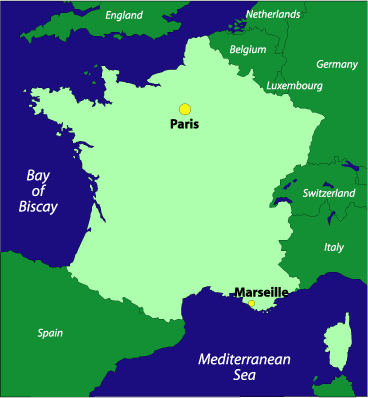
 When most people think of France they think of style. From Paris’s tree-lined boulevards to the beautiful castles of the Loire Valley. The grandeur and romance of France keeps people coming back again and again.
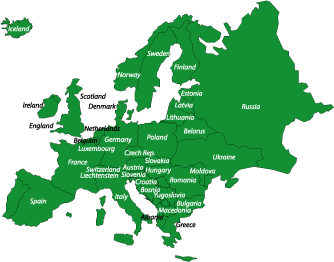
 This is beach country! Located in the Caribbean British Leeward Islands, Antigua, Barbuda, and Redonda, all make up the single nation of Antigua & Barbuda. Antigua alone, being the largest of the British Leewards, claims upward of 300 beaches with plenty of room to bask in the sun, swim, dive, sail, and more. There are reefs and wrecks abound, for underwater exploration, as well as many sites on shore, for those less inclined to the water.
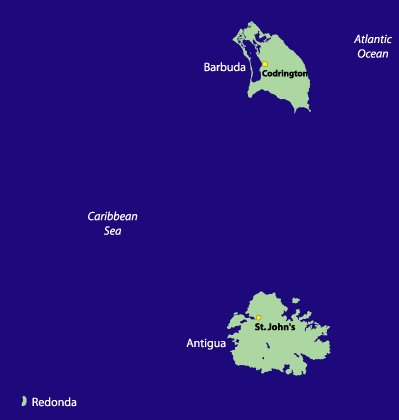
 AntiguaThe best (and busiest) time to go to Antigua is during the (NH) winter: December through February. The daily highs average around 81°F, and the skies are typically clear. The island remains a popular tourist destination well into spring, but by June it starts heating up significantly. July and August are the hottest months, with average highs reaching the 90°F mark.


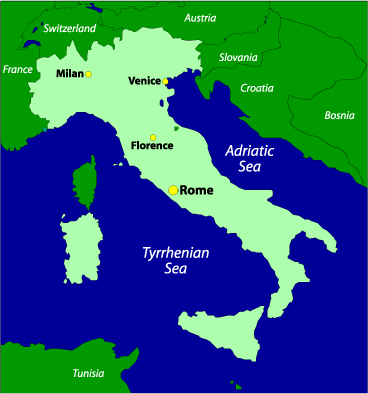
 Italy was the center of the world for much of early history; naturally, when you go there, you’ll want to immerse yourself in the past. Once upon a time the Italians were letting it all go to waste, but not any more. Now Italy has one of the biggest budgets in the world for restoration and upkeep of it’s historical buildings and artifacts. The problem is, there are so many pieces that need attention, it’s hard to keep up with it all. Whether they’re keeping the leaning tower of Pisa from leaning too far, or restoring a piece of renaissance art, Italy has more public historical treasures than most other countries combined.