Blog

  • Alsek River Rafting

    Alsek River Rafting

    The Alsek River is a wilderness river flowing from the Yukon into Northern British Columbia and into Alaska. The surrounding area from the Western edge of the Alsek to East of the East Alsek is known to locals as Dry Bay.

    [mapsmarker marker=”7″]

  • Grenada, Windward Islands

    Grenada, Windward Islands

    Grenada (pronounced /grɪˈneɪdə/) is an island nation that includes the southern Grenadines in the southeastern Caribbean Sea. Grenada is located north of Trinidad and Tobago and Venezuela, and south of Saint Vincent and the Grenadines. The national bird of Grenada is the critically endangered Grenada Dove.

    [ad#468×60]

  • St. Vincent, Windwards Islands

    St. Vincent, Windwards Islands

    Saint Vincent is a volcanic island in the Caribbean, the largest island of the chain called Saint Vincent and the Grenadines. It is located in the Caribbean Sea, between Saint Lucia and Grenada. It is composed of partially submerged volcanic mountains. La Soufrière is still an active volcano .

    The territory was disputed between France and the United Kingdom in the 18th century, before being ceded to the British in 1783. It gained independence on October 27, 1979. Approximately 120,000 people live on the island. Kingstown (population 19,300) is the chief town. The rest of the population resides in the other five main towns of Layou, Barrouallie, Chateaubelair, Georgetown, and Calliaqua.

    [ad#468×60]

  • St. Lucia, Windward Islands Sailing

    St. Lucia, Windward Islands Sailing

    Saint Lucia (pronounced /ËŒseɪnt ˈluːʃɪə/) is an island nation in the eastern Caribbean Sea on the boundary with the Atlantic Ocean. Part of the Lesser Antilles, it is located north of the islands of Saint Vincent and the Grenadines, northwest of Barbados and south of Martinique. It is also known as the “Helen of the West Indies” because it switched between British and French control so often it was likened to the mythical Helen of Troy.

    Saint Lucia is one of the Windward Islands, named for Saint Lucy of Syracuse. It was first visited by Europeans in about the year 1500 and first colonized successfully by France who signed a treaty with the native Carib peoples in 1660. Great Britain took control of the island from 1663 to 1667 then went to war with France over it fourteen times, and finally took complete control in 1814. Representative government came about in 1924 (with universal adult suffrage from 1953) and from 1958 to 1962 the island was a member of the Federation of the West Indies. Finally, on February 22, 1979, Saint Lucia became an independent state of the Commonwealth of Nations. The island nation celebrates this every year with a public holiday.

    [ad#468×60]

  • Dubya – May 2001

    Bush’s presidency has so far followed the course indicated by study of his past. The only real surprise is the absence of any effort to protect the compassionate image. I always thought it was talk, and now he has forged ahead on his pro-business path without the slightest pass at compassion.

    In a mild surprise, he has done a lot of speaking and has been much better prepared than in the past, so as to avoid the embarrassing gaffs of the past. For Republicans, the fact he has not made a complete fool of himself is taken as proof that he is not as stupid as we all thought.

    The most interesting surprise is not really a surprise at all, given the fact that his only non-political success was as front man for the Texas Rangers baseball team. Many of us expected that, given his lack of experience, trouble in expressing himself, and elitist views, he would not be the front man for the administration, but would operate as sort of a team cheerleader. In fact he is up front on everything, in many cases pushing cabinet members into the background when they would have been the more appropriate spokesperson. Thinking supporters were always concerned about his smarts and experience, but the great team was supposed to carry the ball. From what we have seen so far, he has his finger in every pie. If anything, Cheney has been a disappointment, appearing up front only with the highly pro-business, anti-environment energy program. In this case, Bush had already made enough harsh statements that drew loud howls of protest so that he undoubtedly wanted to handed it off to Cheney.

    [ad#468×60]

    The team leader thing is also interesting, for already a number of mistakes have been made that were passed off on cabinet members. It is well to remember that Bush describes the most important quality for a member of the administration as loyalty, that is loyalty to him. This is not the sign of a knowledgeable confident man.

    As expected, all of the motion has been in the direction of support for business. He is pushing defense spending, oil exploration, easing environmental restrictions, pulling back on anti-trust, putting hard right people in all the government agencies, etc. He even seems to be pulling back on education in so far as it involves spending money.

    While the polls are reasonably favorable, there is evidence of a widening feeling against Bush. It is not just environmentalists, but the dreadfully cocky overbearing public speaking style is a turning people off. I know many who say they can’t listen to him, the speeches are simply deplorable. Reagan used the good guy approach, but in Bush’s case what comes through is the elitism, the selfishness, the absence of a link to the common man.

    I predicted that his arrogance and lack of feel for the public interest would get him into trouble, and now trouble has arrived. Here we have a 50-50 senate, which anyone else would have approached tenderly. Perhaps encouraged by the ability of the party to strong arm Republicans who were not happy with his program, especially the tax cut that went mostly to the rich, Bush attempted to ramrod his program through the Senate. Already there are defectors. Now we have the Jeffords situation. Bush tried strong arm tactics, and, appalled, Jeffords has bolted the party. Not normally a sensational deal, but hugely important in a 50-50 situation. All of a sudden, Cheney no longer controls the Senate, thanks to the arrogance of his boss. Nothing is more likely to get you into trouble than arrogance, and Bush has it in spades. I think it is so ingrained that even this setback will not temper the problem.

    Clinton was criticized for governing by polls. That is not such a bad thing when the alternative is decision making by people who have little interest in popular causes, who show not a grain of human kindness.

    [ad#468×60]

  • Puerto Rico

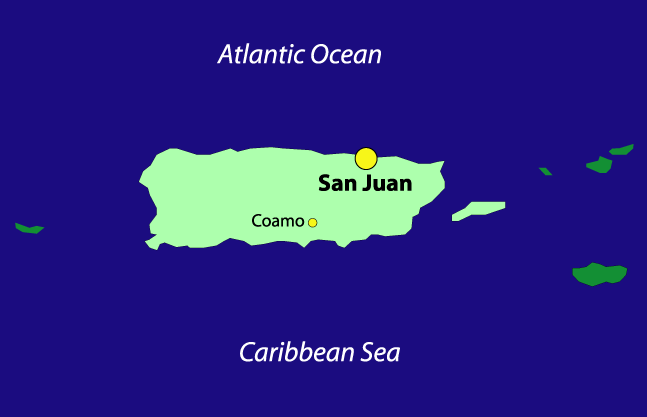
    Puerto Rico FlagPuerto Rico may be an economic territory of the United States, but its people are fiercely independent. Rarely will you find an American flag flying high, without a corresponding Puerto Rican flag nearby, sometimes flying even higher. The island’s capitol and largest city San Juan is a maze of old and new, with modern shops and restaurants, shanties, a fortress musuem, sky-scrapers and casinos, and shopping malls all standing in conjunction with each other. Maybe more so than any other place in the Caribbean, old mingles with new in Puerto Rico, and the streets of San Juan are just the beginning.

    But the island’s population has much more humble origins. in pre-Columbian times, the Taino people–a mostly peaceful indigenous group–had developed an already complex culture on the island that would become known as Puerto Rico. When the conqistador (and later, governor) Juan Ponce de León arrived in 1508, the Taino were ill-prepared to defend themselves against his advances. They were taken as slaves, and by the seventeenth century, nearly all the Taino had been wiped out.

    With the Spanish-American War, the U.S. occupied Puerto Rico and has stood by as the island’s economy has gone up and down over the last century. Compared to many other Caribbean islands, Puerto Rico has a high standard of living, but it still falls far short of average compared to the mainland U.S.

    In recent years, tempers have flared as the debate over Puerto Rican idependence heats up and the U.S. military presense on the island of Vieques has gathered critical attention. But the population continues to reap many fiscal benefits from its commonwealth relationship with the United States. And because Puerto Rico cannot vote in U.S. national elections, achieving control over its future will require complete cecession from America.

    Traveling in Puerto Rico
    Puerto Rico MapWhile Puerto Rico is comparatively inexpensive, it’s easy to spend a lot if you want to. Budget accommodations will cost you US$40-75, while high-end rooms can be as much as US$150 and up. Just glance out the airplane window as you land at San Juan’s international airport and you’ll see the many skyscrapers bearing the names of worldwide banks: ATMs, traveler’s checks, and of course cash are all readily accessible and accepted.

    Renting a car is easily the most convenient way to see the island. There are also busses and a ferry system, which will take you to the eastern islands of Vieques and Culebra. Take a drive through the mountainous center of Puerto Rico to the U.S.’s only tropical rainforest national park, El Yunque. Or head up to the Arecibo Radio Telescope–the largest single-dish radio telescope in the world. Visit the old city of Ponce, or the vast strecthes of beach at Luquillo. No matter where you go in Puerto Rico, you’ll end up just where you want to be.

    Weather in Puerto Rico
    The tourist high season in Puerto Rico is the Northern Hemisphere wintertime. This is due mainly to the number of North Americans who want to escape the cold of their own hometowns. Weather in Puerto Rico is nice year round, but to get the best deals go during hurricane season. The weather doesn’t often turn bad there this time of year, but be sure to check the forecast before you go.

    Puerto Rico Information
    Population: 3,915,798
    Government: Commonwealth of the United States
    Square Miles: 3500 sq miles (9100 sq km)
    Capitol: San Juan (pop 1.6 million)
    Official Languages: Spanish, English
    Religion: Roman Catholic (85%), Protestant
    Major products/industries: Textiles, pharmaceuticals, electronics, agriculture, rum, tourism

  • Enron – January 2001

    This chapter was written long before the Enron debacle came to light, in fact it is about the inevitability of Enrons because of wholesale cheating to boost reported earnings. Enron was not the exception, it was the rule. Enron undoubtedly passed the line and broke accounting rules, but the majority of publicly held companies push as close to the line as possible in order to enhance reported earnings. Arthur Anderson, its auditor, is not a rotten apple, all the major accounting firms aid and abet the process of overstating earnings.

    Solutions do not lie with cleaning up the accounting profession, it is the source that must be attacked – the tremendous payoffs corporate management derives from stretched accounting.

    Will the sensational disclosures lead to a clean up, or will the affair blow over with a few revisions to the rules for 401K plans? I am not optimistic. Enron points out once again the overwhelming power of aggressive corporate management to use company funds to benefit themselves. Sound rules carried out in a vigorous manner can solve the problem. Accountants will give us honest figures if freed from the pressure of management wielding big money for compliant manipulation. Enron paid Arthur Anderson $52 million for accounting services in 2000, $25 million just for auditing, a figure topped by only a few other and much larger public companies. That kind of money buys a lot of cooperation. The answer to the mess is truly independent auditors, both in setting rules and enforcing them.

    I am utterly fascinated by Enron. A day never passes without at least two new revelations. Its tentacles are so widespread that new chapters will be unfolding for a long time. This is a much bigger story than realized. The war is a tiny affair in comparison because Enron and America are about business. Enron brings into focus many deeply troubling problems that have been swept under the rug by the long bull market.

    Enron says a lot about what is wrong with the stock market, for its revealed evils are not at all uncommon. Too many public companies are managed to elevate the stock price, rather for the long term good of the enterprise and the economy. The result is unwise activities that boost earnings over the short term, bad acquisitions, restructuring to erase past mistakes, manipulative accounting that makes investing a guessing game, and an immense waste of capital resources in frivolous ventures. There is a lot more to running a company than hyping the stock.

    Some of the revelations about Enrons accounting are mind boggling. Even more amazing is that many are legal, and therefore in common use. Arthur Anderson, Enron’s accountant, is no different from the other big accounting firms. They are all thoroughly enmeshed with management in exaggerating reported earnings in an effort to elevate stock prices. Every knowledgeable person is aware of this scandal, but no one wants to think or do anything about it for fear of hurting the price of their stocks. Now the mess is out in the open.

    Why not start at the top. George W. Bush had no qualifications for the presidency, he was selected by big business because as governor of Texas he demonstrated political skill and unqualified support for business. He was elected on big corporate money, though not bought, for he is wholeheartedly their man. The question for his presidency was going to be, can big business run the country? Enron says the answer is no. Destruction of the surplus with tax cuts crowded into the high brackets says no. Give Bush the benefit of the doubt, though, the jury is still out on big business’s governmental management talents, but the signs coming out of Enron are not encouraging.

    Next, there is Congress. Enron was built on stock hype and bad accounting. The accounting profession was well aware of spreading misrepresentation, and its governing bodies tried to slow the trend. In the crucial decisions, notably accounting for stock options and separation of auditing and consulting, reform lost because of the intervention of campaign contribution stuffed senators and congressmen. How could these people intervene where they had no expertise when the rule making bodies were doing the right thing? Because corporate management paid them to. The connection is being made between business excesses and campaign contributions.

    At yet another level, Enron demonstrates the dreadful practices that overwhelmed leading investment banks. These people are willing to finance anything they can get away with simply because the fees are large. In Enron’s case they raised the money to support many of the fraudulent partnerships and offshore entities that covered up the company’s true condition. They sold a large institutional placement offering information on the company withheld from stockholders, probably illegally, though judging by the subsequent results, the treasured information should have alerted buyers to stay away. A major commercial bank/investment banker provided a vehicle for hiding losses from recent annual reports. Why did bankers engage in these probably illegal activities? The answer is huge fees, just as with underwriting hundreds of dreadful high technology and internet IPOs. They sold manure through unqualified boosting. Lacking full disclosure, deals that violated the intent of the securities laws became everyday. To an extent investors deceived themselves, but they bought the reputation of the underwriters and the hype they provided more than the companies themselves.

    American capitalism works because of a blending of the free market and government regulation. Left unfettered, the free market gets caught up in intense greed and self- destructs. Karl Marx was about the inevitable self-destruction, except Marx was wrong because government stepped in and controlled the instinctive unfairness in the free market. We operate under a delicate balance between the free market and government regulation that swings back and forth. The free market self-destructs, the government steps in and over-regulates, then the free market regains its energy and outwits government controls, only to once again self destruct in its excesses. The end of the great bull market and the Bush election probably mark the high water mark for the up phase of the free market. Now that its bad aspects are revealed in all their ugliness, the pendulum will swing back toward government control. The problems are profound and the swing to more control will take time, especially with the Bush administration manning the free market ramparts.

    Many of the best minds on the market think stocks will go no where for a good many years until pricing returns to reasonable levels. Those of us who felt the market was reaching a long term peak a couple of years ago did not know what forces would end the long rise. Now we know – bad corporate practices arising out of the market’s own excesses. A flat market will be supported by modest earnings growth, making extreme overpricing stand out. Improved accounting standards will be a force holding down earnings. A slow period for the market will be helpful, as all would be forgotten if we once again entered euphorialand.

    One of the most intriguing questions arising from Enron is why otherwise respectable people use manipulative accounting. The answer is the tremendous incentive in stock options. Options allow management to become extremely rich in a short period of time. We are going to find that twenty or so people at Enron became very rich on options. The present secretary of the army, a former Enroner, was a second line executive who became an eight figure multi-millionaire as the second in command of a division that was guilty of gross figure manipulation. Apparently his job was sales and he did not know the ridiculous accounting tricks being played with the long term energy contracts he brought in. Is it comforting to know that one of Bush’s cabinet members was too dumb to understand what was going on in his own division? He stretched out his sales of Enron stock, required by his government position, so clearly he was ignorant of the gimmickry. Bush shares that kind of innocence. If Clinton’s number one backer had come out as has Enron with Bush, everyone would be screaming because of knowing he had probably given something in return. In Bush’s case, his standard bewilderment about anything complicated makes it easy to believe he failed to understand the implications, particularly when catering to big business is what brought him the presidency.

    There is little appreciation of the extent to which management of public companies has been stealing ownership out from under stockholders. In the more popular companies, options often represent 30% of outstanding shares. Counting already exercised options, management and employee shares can end up representing over 50% of ownership on a free ride. Management gets away with this theft because options, while obviously a form of compensation, never appear as an expense on the income statement because of a special exemption earned through congressional intervention. In addition, Enron, Cisco, Microsoft to a large extent, and practically all high technology companies because of their particular abuse of options, have never paid income taxes because they are permitted to take options as an expense at the highest valuation.

    The option system is crazy. It encourages earnings enhancement because even a temporarily high level for the stock can fix management up for the rest of their lives. The set up involves no risk and no investment, because the stock is usually pay for simultaneously with cashing in the exercised options. Being fully aware of the hype that elevated the stock, management is in position to make timely purchases and sales. While options are supposed to be an incentive for good management, in fact they are just the opposite. The popular slogans, pay for performance and aligning management and shareholder interests, are baloney. One of the subtler entanglements coming to light through Enron is the role of boards of directors. Why have boards allowed management to get away with huge stock option awards, a highly anti-stockholder form of compensation? The answer is that management buys their cooperation through large fees, stock options, and inclusion in company pension plans. The total package is so fat that directors would be acetic spartans not to follow management’s lead and forget their purported job of representing stockholders. Enron brings the highly conflicted position of boards of directors, and their decisions in favor of management and against stockholders, out into the open.

    On management’s part, the temptation to become very rich overrides fear of dishonesty, aided by many of the figure enhancing practices being perfectly legal. If you want to hear insistent pleas of innocence, don’t go to death row, listen to top managers pleading their devotion to Generally Accepted Accounting Principles. Management is no longer concerned about the day of reckoning that goes with bad accounting because restructuring allows the cheating to be erased.

    An interesting undertone to the corrective process is that Bush, ever catering to business interests, brought in as head of the SEC a man totally conflicted by being a leading SEC lawyer for big companies and accounting firms. He began to dismantle many of the progressive moves initiated by his predecessor. He reminds me of Joseph Kennedy, who FDR named as first SEC head under the theory it takes a crook to know a crook. Now Pitt, the new head, looks like a fool, so maybe he can turn himself around and stop protecting the thieves. The cards are face up on the table, and what used to be easy to get away with no longer is. Dick Cheney’s claim that he was only consulting the experts in dealing with oil executives while drawing up energy policy might have been accepted a year ago, now it is greeted with the guffaw it deserves. Suddenly we appreciate the extraordinary greed that has overtaken corporate culture.


  • Inauguration Commentary – January 2001

    The new president is greeted with glee by comedians, but his presidency may be a watershed event. Bush Jr, to a greater extent than any predecessor, is the man of business. Reagan was all for the free market, but he was an idealist able to believe wacky ideas like voodoo economics and star wars. He never followed through on reducing the size of government. Father Bush, we forget so soon, was seen as an empty man lacking idealism. He was a competent administrator who saw the need for reducing the deficit and lost Republican support by raising taxes. Unfortunately, he had harped on no tax increases to get elected and going back on his word created the impression that Bush senior did not stand for anything.

    Not so Dubya, he stands for something – unqualified support for business. Bush has sought to identify himself with education, a nice comfortable political issue, but education is a sideline. The central theme of Bush’s rule in Texas was support for business and that support is what got him elected. Business leaders picked him out as their man and provided the largest pot of money in the history of elections. He was not bought, he is a true believer that businessmen should run the country. Bush will pay absolutely no attention to McCain’s election reform effort. He is the big business candidate McCain’s program is specifically aimed at.

    The cabinet appointments prove the point. Start with treasury, a businessman. Look at defense. Rumsfeld is a known supporter of increased defense spending, a powerful business issue. Bush talks about raising soldier pay, but the real support will be for new weapons. Our defense contractors sold so many advanced weapons overseas that we apparently need new ones to counter all those now in the possession of foreign powers. The appointment of a general as secretary of state (if he weren’t black we would all be shaking our heads at a general in this position) would seem to further the point.

    The lesser appointments are more revealing. The original labor nominee, Chavez, is a union basher and critic of the minimum wage. Could corporations wish for anyone better. Energy: the qualification here is that the new secretary has championed closing the department. Interior: the lady’s only known position is opening up government lands to business. The most subtle is Christy Whitman as head of the Environmental Protective Agency. This may seem like a reward to a fellow member of the eastern establishment, but not so. Whitman’s predecessor introduced one of the most comprehensive environmental programs of any state and she simply disbanded it. Who better to run the EPA in the interests of business.

    [ad#468×60]

    As for Justice, look for a dismantling of the anti-trust effort of recent years. Ashcroft’s own views are less interesting than the fact Bush would pick someone so far to the right (he did owe them a big one for repulsing the McCain bandwagon in South Carolina). The SEC – look for it to be turned over to Wall Street (an established Bush trick is turning a regulatory agency over to those being regulated) and some of the activist Levitt initiatives reversed.

    The takeover of government by corporations goes beyond cabinet appointments. Business representatives, CEOs, lobbyists have swarmed the transition office seeing that sub-cabinet and other positions fall into friendly hands.

    As to Prime Minister Cheney, we are so relieved to have a solid experienced man to shield us from an in-over-his-head Bush that we forget his far right views and the fact that he picked these people.

    Bush endlessly talked of being a healer, but the cabinet appointments reveal the emptiness of his views on bipartisanship. Disguised by ethnic and gender diversity, the Bush appointments are blunt in-your-face moves from a man supposedly placed in a conciliatory position by the questionable nature of his win. His actions demonstrate the extend to which he is unalterably allied with big business, not the most popular interest of the common man.

    The important question, will the alliance of business and the administration be good for the country? A few years ago the judgment would unquestionably have been no. Twenty years ago Bush would have been laughed at as a presidential candidate, now as the business president he is a product of changed times. Business has greatly increased its influence in government and prosperity has never been greater. Starting off with a recession, or a severe slump, means that his timing is good. Over the short run, business probably needs a helping hand and Bush is going to provide it. For the stock market over the next year, we could not ask for a better choice.

    Longer term, the issue breaks down to the relative view of capitalism. The free market is seen by some as solving all economic problems and producing the greatest benefit to the greatest number. The rich may get an apparently unfair slice of the pie, but the poor end up much better off than under any other system. Certainly capitalism has proven itself in modern times. While the returns are mixed overseas because of centuries old cultural barriers, capitalism works in this country.

    So the issue isn’t capitalism, it is the degree to which capitalism compromises democratic principles. Communism did not come out of the old feudal serfdom, it came out of the industrial revolution and the exploitation of labor. Free market capitalism does give rise to unfairness. The rich become greedy, they never have enough. They use money power to accumulate more and lose their sense of justice. Monopoly is an inevitable corporate goal and monopoly slows progress and leads to higher prices, defeating the free market. Enthusiasts point out that the free market ultimately destroys monopolies, but it takes time and in a democracy we are unwilling to wait. The monopoly problem may be moot, for in the fast moving high technology international economy, establishing a monopoly is almost impossible, so the anti-trust laws may have become superfluous. The government beat Microsoft, but with the peaking of the PC, Microsoft is back in a fight for its life. But the problem remains – business means big corporations and big corporations exercise great power in an undemocratic manner.

    [ad#468×60]

    The point is that the completely free market is not utopia, it almost instinctively goes astray. I think we face a serious problem at the moment because of the crazy, greedy, indiscriminate new issuance market brought to us by Wall Street. We are seeing the downside of overselling the market and driving stocks to ridiculous levels. More significant than the immense waste of capital is the false sense of wealth that may have put the consumer behind the eight ball. Greenspan’s efforts to control stock market speculation were directed at preventing just this situation, but he failed. On the subject of Greenspan, apparently he is close to Cheney, so he may be protected, but look for the Bush people to go after him, specifically with blame for the slowdown. Business does not like Greenspan’s powerful and moderating influence on the economy, it wants a free hand.

    In America we developed a government restrained capitalism to control the nastier, undemocratic practices that inevitably develop in a free market. The government is also an important partner in providing services that assist the free market to grow. The idea that government is always a hindrance is ridiculous. On the other hand, coming out of the New Deal, the need to counter the Russian threat, fears about a shortage of energy, the need for a central bank of last resort, and many other examples, government undoubtedly became too active in our lives. The environment needs protection, but the original cleanup laws of twenty-five years ago went too far. The influence of government in our lives has gradually diminished and that probably helped sustain the long prosperity of the 1990s.

    Although business recognizes the contribution of government, it can’t resist fighting to reduce that role. Business wants the roads, but it does not want to pay for them. Business has captured the keys to the regulatory safe and this administration will do whatever it can to eliminate regulation. Will they overdo it? Corporations are not noted for restraint when it comes to their self-interest. The cabinet nominations are evidence of a must-have-it-our-way attitude that gets corporations in trouble. A corporation can be run as an autocracy, the country can’t.

    The question is, will the business takeover be good or bad? I am a firm believer that government restraint is an important cog in the success of our form of capitalism and that given the chance business will go astray. But what do I know, maybe the unfettered market will provide new stimulus. That decision will not be made in the next four years, this is a long term contest. The pendulum of relative strength between government control and the free market has moved in favor of the free market. The result is big business flexing its muscles as never before, but that swing may be reaching a peak.

    You can’t help but admire Bush’s don’t give a damn attitude, but in a democracy a business president probably holds a bad hand. I am disturbed by the constant talk show spinmeisting that this is the greatest cabinet ever, when it clearly lacks in distinction. This may reflect a defensive foreboding among Republicans about the cabinet, or an effort to obscure what this group actually stands for.

    The majority of voters believe in government and anyone letting the big corporations run wild may be placing himself in an unelectable position. But maybe not. Business is on top and the majority of Americans are stockholders with a more benign view of big corporations. Business will never have a better chance to prove it can lead. The next four years will be fascinating for students of capitalism.

    [ad#468×60]

  • To the readers of my notes on George W Bush – November 2000

    By the time some of you read this, the game will be over. One of the ideas of my notes was that Bush’s emptiness should have made him an easy opponent, but in the home stretch he seems a sure winner. What happened?

    I think Gore ran one of the most pathetic campaigns in history. He got himself tied up in policy, in pandering to every voter, and missed his best theme: Bush’s weakness.

    I could watch the debates only briefly, they were too pathetic. Bush’s shortcomings stood out clearly: his lack of grasp of programs, his inane rambling about lifting the nation’s spirits, compassionate conservatism, and so forth. But his weak performance was overwhelmed by Gore’s pomposity, his obnoxious condescension, his gratingly constrictive style, his overemphasis on his own policies that seemed to rob him of the insight to throw Bush’s lies and prevarication back in his face. He was constantly talking about the differences in their policies rather than taking advantage of openings to blow up what Bush said. Bush does have a personal touch Gore completely lacks and it came through. Gore always seems scripted, which makes his policies seem opportunistic rather than real. Thus, while Bush lied much more than Gore, he still seemed the more honest. In this case, his lack of a clue worked in his favor.

    Bush’s favorite line has been about leadership, “you’ve got a leader on your hands!” Of course leadership is the one thing he has never displayed, except as an Andover cheer leader. Bush engaged in a good bit of demagoguery and got away with it. Much of his trash was effective because Gore had no response except back to his boring policies. Gore was afraid to talk about being one of the best VP’s ever, afraid of any relationship with Clinton, afraid even to offset Bush’s claim about nothing happening in Washington in the last eight years by pointing to the obvious target, the Republican congress. Gore left out the record, where he is strong, because it was associated with Clinton. Then all the new stuff made him seem like a bleeding heart liberal.

    [ad#468×60]

    I don’t understand why Gore was unable to respond to the Bush trash talk. Did he want to be honorable and not get into personalities? Bush is weak on policy, so that seems a logical target, but the personal stuff is Bush’s greater weakness. Gore seemed determined not to engage Clinton, but Clinton might have been brilliant skewering Bush. He is such an inviting target and Clinton is such a clever fellow.

    I have to admit to a churning stomach when seeing Bush on TV late in the campaign. He is so aggressively confident now, so fixed on himself. He thrusts his chest out and delivers the empty lines as if they were terribly important. The only positive thing is that the next four years are going to be entertaining, where they might have been dull with Gore. Will the arrogance of birth and position, now fed by this amazing triumph, ruin his presidency. Nothing is more deadly than arrogance.

    The most surprising aspect of the campaign other than Gore’s incompetence is the Bush demagoguery. I noted above my inability to listen to Bush without a sinking feeling. In thinking about it, what gets me is this. It is not so much the emphasis on nothing issues like education (a pitty patty issue everyone is for), tax cuts, social security (so impractical and economically ruinous there isn’t a chance of it happening), dignity in the White House (come on), misrepresenting his position on medical assistance, it’s the way he says it. It’s loud, its chanting, its emotional. Even the voice inflections change depending on whether he is talking in the east or the west. What is he doing?

    I am reading a new book on World War II and in the chapter on Hitler, there it is. Mein Kampf explains that the basis of political power is emotional support from the masses. The strength of a national leader depends on the ability to seize and manipulate emotions. Policies don’t matter, stirring the crowd does. Bush is not talking to his base constituency, Wall Street and the relatively well off, he has been after the masses and the style is Hitler. It shows in the increasingly obvious self-confidence, the strutting, the incredible “you’ve got a leader on your hands.”

    If he is getting visions of greatness, he may not do what the average thinking supporter, who lacks faith in his ability for good reason, wants him to do: sit back and leave the governing to well-selected appointees. This presidency could get much more interesting than I thought.

    [ad#468×60]

  • Puerto Rico

    Puerto Rico