The islands that make up the United Kingdom probably broke off of the mainland of Europe about 8 millennia ago. Orginally occupied by little-known tribal cultures, some of whom are thought to have built Stonehenge, the island region was invaded by the Celts around 500 BC. These Celtic invaders drove most of the island communities into the areas that now make up the Scottish Highlands and Welsh mountains. In 54 BC, Juluis Caesar set up a ruling government in the southern regions and built roads, towns, and fortresses. During this time, various religions were introduced and agriculture and trade flourished. England–the area of the United Kingdom encompassing the southern and southeastern portion of Great Britain (south from roughly the Cheviot Hills in Scotland and east from roughly the eastern foothills of the Cambrian Mountains in Wales)–is a land slow to transform into the 21st century; still, modern-day England is a far cry from the England of the mid-20th century. The country wants to promote its old-world hertitage with a new-world flavor. More and more, the royal family seems to fade from the public eye, replaced by actors, artists, musicians, and “celebrity” politicians.
Traveling in England
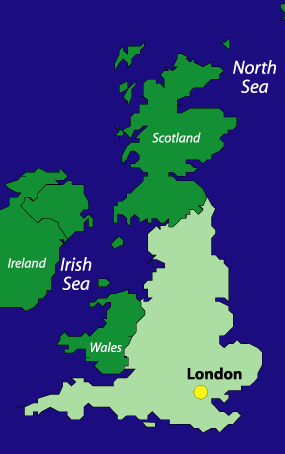 The costs of traveling in England can drain your funds quickly. The more you do, the more it will costs you, so if you are looking for an inexpensive vacation, England (and especially London) may not be the place. Accessing funds in England shouldn’t be any problem, though, as traveler’s checks, ATMs, and credit cards are all widely excepted. England can be extremely expensive and London, in particular, can be a big drain on your funds. While in London you will need to budget at least US$35 per day for basic survival (dorm accommodation, a one-day travel card, and food). Even moderate sightseeing or nightlife can easily add at least another US$25 to this. If you stay in a hotel and eat restaurant meals you could spend more than US$90 per day, without living extravagantly.
 Once you get out of the city, costs will drop, particularly if you have a transport pass and if you cook your own meals. You’ll still need at least US$30 a day, and if you stay in B&Bs, eat one restaurant meal per day, and don’t skip out on courtesy entry fees, you’ll need about US$65 a day.
Weather in England
Weather in England is something of a local obsession. England’s weather is typically mild and the ever-present rain is usually light. The worst times to visit England, weatherwise, would be between November and February, when the days are shortest and the air temperature is cold. The best times are between April and September, when the weather is warmer and most commercial operations are open. Beware, however, that during these months, England–specifically London–can be overrun with tourists; accomodations should be arranged well in advance, as well as any other reservations for popular tourist events such as festivals, shows, etc.
England Information
 Population: 50 million
Government: Parliamentary Democracy
Square Miles: 50,085 sq mi (129,720 sq km)
Capitol: London
Official Language: English
People: Anglo-Saxons, Scots, Welsh, Irish, West Indians, Pakistanis, Indians
Religion: Church of England, Methodist, Baptist, Catholic, Muslim, Hindu, and Sikh
Major products/industries: Banking and finance, steel, transport equipment, oil and gas, tourism
 Colonized in the 16th century by the Portuguese, Macau has the distinction of being the first European settlement in East Asia. After four centuries of growth under Portugese rule, much of that time fending off other European aggressors, the two islands and peninsula that make up Macau were turned over to China as a Special Administrative Region, or SAR.

 As near to out-of-this-world as only a few habited places on this earth are, Bangladesh challenges the visitor to find fulfillment despite excessive population density, national poverty, and robust environmental extremes. The rewards for those who take on such a challenge, though, are unique and intriguing insights into the rich regional Bengali culture and the current state of South Asian and global society.

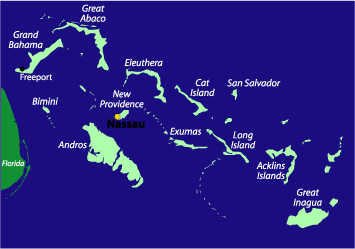
 Being so close the United States has made the Bahamas one of the easiest of the “island paradises” to visit. From its sprawling capitol Nassau, to its many smaller islands, the Bahamas have everything other Caribbean islands have and more. The Bahamas are made up of 700 islands and 2500 cays, which make it a wonderful place for sailing and diving, and with so many locations, you’ll never get bored.

 High on the itinerary of any traveler to South America is Peru, the third largest country in the continent. Peru is the home to several ancient Andean civilizations — most notably the Incas, who ruled until the Spanish invasion in 1533.
 The newly independent nation of Georgia is hard to describe in terms of one particular region. Some consider it part of the Middle East, others Europe, and still others Asia. The reason for this may be because it is so closely related, both geographically and culturally, with all of these places. Once it broke from the former USSR, Georgia suffered some civil unrest, but as the situation stablizes, Georgia is becoming a major player in world affairs.

 Situated about 575 miles southeast of Miami, the Turks and Caicos make up a Caribbean archipelago with few people and a long history. The original residents of the Turks and Caicos were the indigenous Tainos; however, as in much of the rest of the region, these peaceful people were driven into extinction by war and disease, in large part by way of the arrival of Europeans in the post-Columbian era. During the height of the colonial times, the island group was handed off between the English, French, and Spanish, never remaining a possession of any one nation to develop a positive identity. In the mid-1600s, an industrious group of Bermudians emigrated to the Turks and Caicos to find their fortune peddling “white gold,” that is, salt. Many of the salinas, or salt ponds, mills, and historic structures can still be found scattered throughout the islands. The market for salt from the Turks and Caicos disappeared for good in the 1960s, but for a time during the 1600s and 1700s, these man-made salt flats dominated production and export of the substance around the world, the main recipients of which were the cod-fishing communities of the northeastern North American colonies.

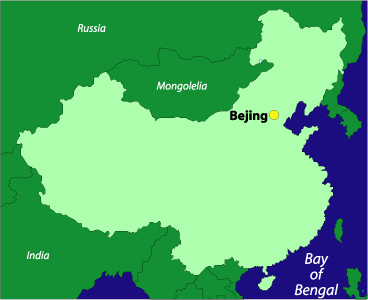
 In the years since the Communist Revolution, the public face of China has been very difficult to read. Politically and economically, it has appeared at once uniform and homogenous, standing by a staunch Maoist line and keeping all non-oldguard ideas at bay, as well as open and curious about western capitalist opportunities, modernism, diversity, and cooperation. In the west, China has been viewed as somewhat of an enigma: suppressing freedom of expression and communication (the Chinese government is infamous for extreme censorship of any and all media), openly violating globally accepted standards of human rights while claiming ignorance or slander, and military posturing that is meant to discourage nations such as the United States from looking too closely at what goes on behind their closed doors; all the while urban Chinese are quickly embracing modern technoloy and communication methods such as the Internet, cities have turned into boomtowns where everything is for sale, and the Chinese government has made efforts to draw in western industry and capitalize on business and growth that would send them in a direction opposite the Communist ideals of Chairman Mao and his Cultural Revolution.
 Even with the American travel ban, Cuba continues to thrive as a tourist destination for Europeans and otherwise. Before Castro, the Caribbeans largest island was very popular among U.S.-based tourists and business people; now, however, it takes a slightly more more adventurous sort to go there from America. But given the opportunity, those people simply can’t be kept away. When the travel ban does get lifted you can be sure that Cuba will again be one of the busiest destinations in the Caribbean.

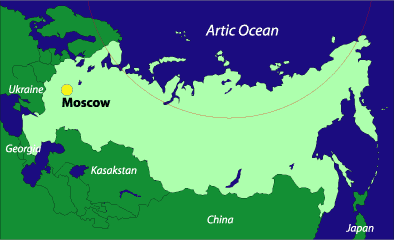
 The 9th-century founding of Novgorod by the Viking Rurik initiated a more than thousand-year history of wealth and war, trial and loss, conquest, Communism, and tyranny. The monarchic splendor and seething peasant ideology of old Russia, coupled with the complex social, economic, and political changes brought about during the Soviet era, survive today in one form or another in what is possibly the most enigmatic yet of this country’s many incarnations.