Blog

  • Market Commentary – March 2003

    My work tells me the market is not going anywhere, and if it does the direction is likely to be down. We are probably in one of these extended flat periods that can serve as an alternative to a gut wrenching bottom. I hope so, but what is the evidence we may go down?

    First, this appears to be a major bear market in the category of 1929-1932 and 1973-1974. Such declines are marked by major changes in the economy and the way the investors perceive equities. So far there is evidence of important change in the economy, though it is probably not yet reflected in stock prices, but investor perceptions have barely begun to adjust. The lack of attitude change is reflected in the way high technology stocks lead every rally, even though their earnings remain terrible and pricing high. High tech products continue to sell well, Dell for instance is selling more computers every year, but profits are down. That is not the magic formula to success, but you would not know it from the price of Dell’s stock.

    Wall Street thinks it is 1994, with its strategists recommending high equity exposure, and cash in mutual funds at low levels. Investors are waking up, but their minds are still influenced by Wall Street bulls. Bull/bear opinion statistics are positive (heavily bearish), but the all day stock market show has a parade of money managers selling the bull case. Mixed into the bull crowd are a few quiet bears. I suppose it is because I share their point of view, but these people sound thoughtful and intelligent, while the bulls sound like they are pushing stocks for a living. It is also comforting to have Warren Buffett and John Templeton in your corner (maybe you have to be seventy and have gone through a previous secular decline to get a feel for these things).

    [ad#468×60]

    The consumer held the economy together, but now consumer support is weakening. The downtrend in consumer sales gains has not reached zero, but getting close. It could weaken further with employment numbers making no progress and an indication consumers are tightening their pocketbooks because of worry about the future. Some of this tightening is from necessity, revealed in high and rising credit card and other consumer credit delinquency. The buying inspiration from no interest loans is old hat now. More directly, the great mortgage refinancing boom that injected hundreds of billions into the economy in the last two years appears to be over. Lower long term interest rates would extend refinancing, but that is likely only if the economy weakens, so the medicine is worse than the cure.

    Experienced hands have an uncomfortable feeling about the strength in housing. Every instinct says it can’t last. Enthusiasts say there is no housing bubble, but if not a bubble certainly a boom. If it ends, important support for the economy is removed. Some of the housing boom comes from conversion from apartment living, but apartment vacancies are rising and rents falling, so the mathematics is working against the trend. An end to the housing boom could mean trouble because, not only would the money coming out of refinancing disappear, but prices are likely to weaken, reducing the wealth affect and discouraging consumption. Housing will probably level off or slump a bit, not a catastrophe, but adding to the sluggishness of the economy.

    The dollar is going to weaken further, perhaps substantially. The happy folk say that is great because the trade deficit will ease as foreign goods rise in price and domestic products become more competitive, but the dollar is already off a lot and the trade deficit continues to rise (many far east currencies, notably China’s, are pegged to the dollar). The trade deficit guarantees that foreigners will be getting a large dollar inflow, but the weakness is leading to unloading those dollars.

    Our image as the land of opportunity has gone up in the smoke of internet and high technology disintegration. The exploding deficit is not a confidence builder, and our fecklessly aggressive foreign policy is alienating the rest of the world. Not only does this leave us isolated to pick up the cost of the foreign ventures, but it strains any desire by the rest of the world to help us out. We are in a bind. We probably ought to be raising taxes, but can’t in a weak economy, and Bush is so committed to tax cuts he would never reverse course, especially as his father’s responsible tax increase may have defeated his second term. Assuming Bush gets a second term and vigorously pursues the war on terror, we will be breaking new ground on deficits with unknown consequences.

    We have no trouble financing the exploding deficit at the moment, but suppose the economy picks up and there is demand for money. The right wing economists claim deficits have no influence on interest rates, citing the experience of the last year, but that is ridiculous, of course rising deficits influence interest rates. If the economy picks up enough to create demand for money, interest rates could go up rapidly.

    [ad#468×60]

    Then there is fiscal policy. A swing from a couple of hundred billion surplus to several hundred billion dollar deficit and interest rates going from over 6% to 1 1/4%, has merely succeeded in ending the decline. These numbers suggest that our problems are not the traditional ones. We are suffering a hangover from the greatest speculative blowoff of all time. Bush has no ideas for directly countering this drag. His only proposal is lower taxes, mostly for the upper brackets, under the theory they produce greater savings and greater investment, the old trickle down that lifts all boats. But upper bracket taxes were far higher during our years of greatest growth. There seems to be no connection between upper bracket tax rates and investment, it is a matter of opportunity, not tax rates. Good investments will find funding.

    With Wall Street having directed investment dollars down a rathole of sexy internet and non-earning high technology companies, and talked industries like utilities into idiotic diversifications, while the government acts like a spendthrift with low return weapons, we are not getting much return on capital. The apparent absence of good investment opportunity expresses the hangover of the speculative bust, and in time will correct, though less so than in the past because we are a mature economy.

    Not only are investors turned off by losses, the lack of investment opportunity in the U.S. is influenced by, to use one word where I mean many, China. We may be a consumer economy, I think the data is that industrial employment is only 15% of the total and industry makes up only 30% of GNP. It is a precious 30%, however, and the 30% is eroding. I wonder, what percentage of the products sold in Wal-Mart comes from abroad? And what is the trend? We bought a stock called Salton a few years ago. Salton has become the king of kitchen appliances, an original American business. GE, Westinghouse, Sunbeam, and many others in kitchen appliances, are disappearing, some of the brands names bought by Salton. Everything Salton sells comes from China, or a neighboring country. George Foreman grills, new innovative stuff, it all comes from China. Though undoubtedly included in our industrial base, Salton is not a manufacturer, it is a distributor of Chinese goods. We have been able to hold onto larger appliances like washing machines, ovens, and refrigerators, but GE is planning to get out, just as it did small appliances. Is there a message? Have you seen a U.S label on any item of clothing in recent years? Textiles, the foundation business of the industrial revolution, now going. We did save the automobile industry when it seemed headed abroad, so it isn’t a battle we must always lose, but we are losing.

    I feel the change when it comes to picking stocks. There is nothing exciting out there any more. I feel as if I am picking over the same old tired lists, looking for a stock whose only attraction is its price. Perhaps declining opportunity is why investors lost their head over internet stocks, though the absence of profits told experienced hands it made no sense. I recall visiting WD-40 thirty years ago when it had six employees and distribution only in the west. The opportunity was easy to see, the product was simple, and the manufacturing process was two men stirring a not very large vat in the back room. We hit a home run with Movie Gallery, but that was a special case of combining a weak market for small company stocks and recovery from a troubled period, allowing us in at an extraordinary price. There will be more of those, but how much better to find consistent growth companies. Movie Gallery has a couple more good years, but its market is tenuous, it’s not something to lock away in the safe deposit box. I see opportunity in health care, HMO’s for instance are very cheap, but the medical care area is in a crisis of rising costs, and HMO’s have not proven to be the hoped for answer.

    Being a price opportunist, I operate well in a flattish market, but I hoped a major bear market would allow us to get into solid long term situations in my old age. Drugs, maybe, but the growth rates are skidding and they are coming under more and more pressure because of runaway health costs. Remember how drugs plunged under the Hilary threat in 1993 and 1994? Well, we are going to end up with a Hilary-like plan to control medical costs (though not under Bush). Considering everything, I think it will be a break if the market follows the hinted direction and goes a lot lower. Then we can get the opportunity to make real money before I lose my eyesight. Maybe I should become an expert on China, but its too late to teach an old dog new tricks. Besides, those guys who claim to know all about foreign stocks don’t do as well as I do.

    I have been too gloomy lately. Next month I will write about the good stuff. I smell a good year out there, if I can avoid losing too much of your money first (we are off 4-5%, not bad considering that our companies are issuing one bad news bulletin after another, though discouraging with a 30-35% cash position and another 20% in conservative high dividend payers).

    [ad#468×60]

  • Monthly Commentary – March 2003

    My work tells me the market is not going anywhere, and if it does the direction is likely to be down. We are probably in one of these extended flat periods that can serve as an alternative to a gut wrenching bottom. I hope so, but what is the evidence we may go down?

    First, this appears to be a major bear market in the category of 1929-1932 and 1973-1974. Such declines are marked by major changes in the economy and the way the investors perceive equities. So far there is evidence of important change in the economy, though it is probably not yet reflected in stock prices, but investor perceptions have barely begun to adjust. The lack of attitude change is reflected in the way high technology stocks lead every rally, even though their earnings remain terrible and pricing high. High tech products continue to sell well, Dell for instance is selling more computers every year, but profits are down. That is not the magic formula to success, but you would not know it from the price of Dell’s stock.

    Wall Street thinks it is 1994, with its strategists recommending high equity exposure, and cash in mutual funds at low levels. Investors are waking up, but their minds are still influenced by Wall Street bulls. Bull/bear opinion statistics are positive (heavily bearish), but the all day stock market show has a parade of money managers selling the bull case. Mixed into the bull crowd are a few quiet bears. I suppose it is because I share their point of view, but these people sound thoughtful and intelligent, while the bulls sound like they are pushing stocks for a living. It is also comforting to have Warren Buffett and John Templeton in your corner (maybe you have to be seventy and have gone through a previous secular decline to get a feel for these things).

    The consumer held the economy together, but now consumer support is weakening. The downtrend in consumer sales gains has not reached zero, but getting close. It could weaken further with employment numbers making no progress and an indication consumers are tightening their pocketbooks because of worry about the future. Some of this tightening is from necessity, revealed in high and rising credit card and other consumer credit delinquency. The buying inspiration from no interest loans is old hat now. More directly, the great mortgage refinancing boom that injected hundreds of billions into the economy in the last two years appears to be over. Lower long term interest rates would extend refinancing, but that is likely only if the economy weakens, so the medicine is worse than the cure.

    Experienced hands have an uncomfortable feeling about the strength in housing. Every instinct says it can’t last. Enthusiasts say there is no housing bubble, but if not a bubble certainly a boom. If it ends, important support for the economy is removed. Some of the housing boom comes from conversion from apartment living, but apartment vacancies are rising and rents falling, so the mathematics is working against the trend. An end to the housing boom could mean trouble because, not only would the money coming out of refinancing disappear, but prices are likely to weaken, reducing the wealth affect and discouraging consumption. Housing will probably level off or slump a bit, not a catastrophe, but adding to the sluggishness of the economy.

    The dollar is going to weaken further, perhaps substantially. The happy folk say that is great because the trade deficit will ease as foreign goods rise in price and domestic products become more competitive, but the dollar is already off a lot and the trade deficit continues to rise (many far east currencies, notably China’s, are pegged to the dollar). The trade deficit guarantees that foreigners will be getting a large dollar inflow, but the weakness is leading to unloading those dollars.

    Our image as the land of opportunity has gone up in the smoke of internet and high technology disintegration. The exploding deficit is not a confidence builder, and our fecklessly aggressive foreign policy is alienating the rest of the world. Not only does this leave us isolated to pick up the cost of the foreign ventures, but it strains any desire by the rest of the world to help us out. We are in a bind. We probably ought to be raising taxes, but can’t in a weak economy, and Bush is so committed to tax cuts he would never reverse course, especially as his father’s responsible tax increase may have defeated his second term. Assuming Bush gets a second term and vigorously pursues the war on terror, we will be breaking new ground on deficits with unknown consequences.

    We have no trouble financing the exploding deficit at the moment, but suppose the economy picks up and there is demand for money. The right wing economists claim deficits have no influence on interest rates, citing the experience of the last year, but that is ridiculous, of course rising deficits influence interest rates. If the economy picks up enough to create demand for money, interest rates could go up rapidly.

    Then there is fiscal policy. A swing from a couple of hundred billion surplus to several hundred billion dollar deficit and interest rates going from over 6% to 1 1/4%, has merely succeeded in ending the decline. These numbers suggest that our problems are not the traditional ones. We are suffering a hangover from the greatest speculative blowoff of all time. Bush has no ideas for directly countering this drag. His only proposal is lower taxes, mostly for the upper brackets, under the theory they produce greater savings and greater investment, the old trickle down that lifts all boats. But upper bracket taxes were far higher during our years of greatest growth. There seems to be no connection between upper bracket tax rates and investment, it is a matter of opportunity, not tax rates. Good investments will find funding.

    With Wall Street having directed investment dollars down a rathole of sexy internet and non-earning high technology companies, and talked industries like utilities into idiotic diversifications, while the government acts like a spendthrift with low return weapons, we are not getting much return on capital. The apparent absence of good investment opportunity expresses the hangover of the speculative bust, and in time will correct, though less so than in the past because we are a mature economy.

    Not only are investors turned off by losses, the lack of investment opportunity in the U.S. is influenced by, to use one word where I mean many, China. We may be a consumer economy, I think the data is that industrial employment is only 15% of the total and industry makes up only 30% of GNP. It is a precious 30%, however, and the 30% is eroding. I wonder, what percentage of the products sold in Wal-Mart comes from abroad? And what is the trend? We bought a stock called Salton a few years ago. Salton has become the king of kitchen appliances, an original American business. GE, Westinghouse, Sunbeam, and many others in kitchen appliances, are disappearing, some of the brands names bought by Salton. Everything Salton sells comes from China, or a neighboring country. George Foreman grills, new innovative stuff, it all comes from China. Though undoubtedly included in our industrial base, Salton is not a manufacturer, it is a distributor of Chinese goods. We have been able to hold onto larger appliances like washing machines, ovens, and refrigerators, but GE is planning to get out, just as it did small appliances. Is there a message? Have you seen a U.S label on any item of clothing in recent years? Textiles, the foundation business of the industrial revolution, now going. We did save the automobile industry when it seemed headed abroad, so it isn’t a battle we must always lose, but we are losing.

    I feel the change when it comes to picking stocks. There is nothing exciting out there any more. I feel as if I am picking over the same old tired lists, looking for a stock whose only attraction is its price. Perhaps declining opportunity is why investors lost their head over internet stocks, though the absence of profits told experienced hands it made no sense. I recall visiting WD-40 thirty years ago when it had six employees and distribution only in the west. The opportunity was easy to see, the product was simple, and the manufacturing process was two men stirring a not very large vat in the back room. We hit a home run with Movie Gallery, but that was a special case of combining a weak market for small company stocks and recovery from a troubled period, allowing us in at an extraordinary price. There will be more of those, but how much better to find consistent growth companies. Movie Gallery has a couple more good years, but its market is tenuous, it’s not something to lock away in the safe deposit box. I see opportunity in health care, HMO’s for instance are very cheap, but the medical care area is in a crisis of rising costs, and HMO’s have not proven to be the hoped for answer.

    Being a price opportunist, I operate well in a flattish market, but I hoped a major bear market would allow us to get into solid long term situations in my old age. Drugs, maybe, but the growth rates are skidding and they are coming under more and more pressure because of runaway health costs. Remember how drugs plunged under the Hilary threat in 1993 and 1994? Well, we are going to end up with a Hilary-like plan to control medical costs (though not under Bush). Considering everything, I think it will be a break if the market follows the hinted direction and goes a lot lower. Then we can get the opportunity to make real money before I lose my eyesight. Maybe I should become an expert on China, but its too late to teach an old dog new tricks. Besides, those guys who claim to know all about foreign stocks don’t do as well as I do.

    I have been too gloomy lately. Next month I will write about the good stuff. I smell a good year out there, if I can avoid losing too much of your money first (we are off 4-5%, not bad considering that our companies are issuing one bad news bulletin after another, though discouraging with a 30-35% cash position and another 20% in conservative high dividend payers).

  • China

    China FlagIn the years since the Communist Revolution, the public face of China has been very difficult to read. Politically and economically, it has appeared at once uniform and homogenous, standing by a staunch Maoist line and keeping all non-oldguard ideas at bay, as well as open and curious about western capitalist opportunities, modernism, diversity, and cooperation. In the west, China has been viewed as somewhat of an enigma: suppressing freedom of expression and communication (the Chinese government is infamous for extreme censorship of any and all media), openly violating globally accepted standards of human rights while claiming ignorance or slander, and military posturing that is meant to discourage nations such as the United States from looking too closely at what goes on behind their closed doors; all the while urban Chinese are quickly embracing modern technoloy and communication methods such as the Internet, cities have turned into boomtowns where everything is for sale, and the Chinese government has made efforts to draw in western industry and capitalize on business and growth that would send them in a direction opposite the Communist ideals of Chairman Mao and his Cultural Revolution.

    For many thousands of years, the Chinese culture has been one of walls. Finished in the earliest days of unified China–during the Qin dynasty–the Great Wall literally surrounds much of the nation. This is more symbolic than functional, but the years since its completion have seen many more political and cultural barriers built, intended as much to keep Chinese pride and culture in as they are to keep the western world out.

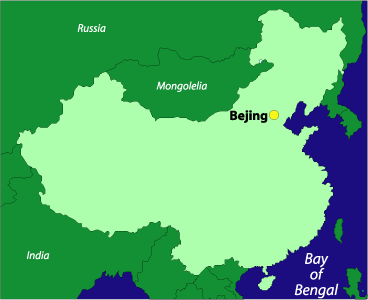
    The age of colonialism came early for China, as armies swept across much of Southeast Asia conquering lands for their emperors. But as of the sixteenth century, westerners began knocking on China’s doors in droves–beginning with the Portuguese, in 1516, and soon followed by the British, French, Americans, Germans, Russians, and more. So many outside China Mapnations wanted a part of China that they literally divided up the country among themselves into “spheres of influence.” This was the beginning of the economic pillaging and a cultural oppression that eventually led to such calamities as the Opium Wars, America’s “Open Door” policy, the Boxer Rebellion and China’s civil war, and finally to the Chinese Communist Revolution itself.

    A smaller nation than before (although, at roughly 1 million square miles, still huge by any account), with a much larger population, weaker economy, and rash of environmental and other problems to face, China is now making some efforts to align itself with western policies, without totally abandoning the Communist foundations upon which modern Chinese culture is based.

    As China tip-toes into new-world economics, and as the voices of dissent begin to grow too loud to ignore, it will be very interesting to see if this ancient and great culture evolves from being defined by walls, to being identified with its openness and eagerness to join the modern world.

    Traveling in China
    Visas are required by all foreigners to enter mainland China, with the exception of a 24-hour reprieve for anyone with a ticket for a connecting flight out of the country. Visas can be gotten from Chinese consulates and embassies in most countries. Currently, a visa is not required for western nationals to enter either Hong Kong or Macau.

    The environment in China is varied–from the soaring and snowy Himalayas to the flat plains of the Yangzi River valley and the Inner Mongolia Plateau. The most dramatic region of China, from a geologic point of view, is arguably the Yunnan-Guizhbou Plateau in the southwest. Here, the limestone bedrock has been carved away by the elements, creating jaw-dropping waterfalls, underground caverns, and gorge rapids to make the most expert river runner nervous. Unfortunately, because of over-population, pollution, and the effects of stripping the land for agriculture, many of China’s indigenous species are either endangered or extinct. The few that remain, however, include some of the world’s most appreciated–including the panda, snow leopard, yak, and elephant. Plant life has suffered as well, though not quite as much as fauna; the northern subarctic region is home to China’s largest forest, and the steamier south has more diverse plant life in its rainforests. The bottom line is, this is a country of more than a billion people; under the pressure of such a huge population, and without the govenmental or economic support needed to encourage conservation, much of China’s potential for ecological wealth has been destroyed.

    Health risks include rabies, bilharzia, dengue fever, malaria and cholera. Immunization against cholera, hepatitis A and B, Japanese encephalitis, polio, rabies, and typhoid is necessary before going to China.

    Weather in China
    Weather is China varies greatly, as expected in a country of its size. Most people visit in the spring (March through April) and fall (September through October), when average daytime temperatures range from the mid-60s to the mid-80s (in degrees Fahrenheit). This is, however, the hottest time of year in the south, and coincides with typhoon season along the southern coast. It’s best to do your research according to where you’ll be and when. Otherwise, it is very difficult to try to predict weather for the entire country.

    People’s Republic of China Informaton
    Population: 1.25 billion
    Government: Communist republic
    Square Miles: 9,596,960 sq km (mainland)
    Capitol: Beijing (pop 13.8 million)
    Official Language: Putonghua (Beijing Mandarin dialect), Cantonese
    People: Han Chinese (93%), plus 55 ethnic minorities
    Religion: Confucianism, Buddhism, Taoism (no stats available); Muslim (14 million), Christian (7 million)
    Major products/industries: Iron, steel, coal, machinery, textiles

  • An American Aristocracy? – March 2003

    In trying to figure out why George W. Bush bothers me so, I may have found the answer in the book, Founding Brothers. Adams and Jefferson had years of correspondence after retirement and in discussing the differences between the U.S. and Europe they got into an argument over aristocracy. Both believed that superior people must provide leadership, but Adams leaned toward the idea that ability was inherited and Jefferson thought the cream would rise to the top in a free society regardless of inheritance. Of course, Jefferson’s view is the heart of democracy and it made this country, but in their day the ability of a common man to rise from nothing had not yet been demonstrated.

    The Virginians, especially Washington, Jefferson and Madison, were of the landed aristocracy, if not so much by inheritance as by force of personality and rich wives. Washington appears to have taken on imperial airs as president, but his deeply felt sense of justice and common sense made him a true democrat. Ironic that the Boston (Adams) view is pro-aristocracy, but it makes sense: Adams was the only founding father with a son, who later became president. Both Adams’ were among the least successful presidents (both were one termers).

    My discomfort with Bush arises out of experiences in school with those I call “WASP elites”. Some elites were smart and had a lot on the ball, but their attitude of entitlement made them ill-equipped to govern in a democracy. My partiality does not eliminate everyone. Jim Baker, a Princeton classmate, was definitely a WASP elite, Texas version. Baker, though, is different. I don’t know how he got into running campaigns, but as I recall he first emerged running Ford’s reelection, then Bush’s run in 1980. Both were defeats, Bush’s leaving his supporters with an empty feeling. He acquired the designation “wimp” out of that campaign. Despite these failures, Baker so impressed his rivals that he was invited to run Reagan’s campaign. Then as part of a triumvirate in the White House chief of staff position, he rose to the sole post, even though the other two were Reagan cronies. He then maneuvered himself out of the White House into Secretary of the Treasury in the second term, ran Bush’s successful campaign, then got State. Bush’s wife blames the second term loss on him for not taking charge of the campaign from the beginning, indirectly a huge compliment to Baker. Then Baker masterminded the stealing of the 2000 election for his old friend’s son. This is a wildly successful man whose proven ability easily overrides my objection to WASP elites.

    [ad#468×60]

    So, what is the difference with Dubya? It starts, appropriately, with father. He earned the wimp label, despite flying off aircraft carriers, phi beta kappa, success in business, and an amazingly varied career of important appointments. When he got the leadership of the country he came across as a nice guy, but weak. His great triumph, the Iraq War, turned to nothing by an unwillingness to follow through and throw out the most oppressive dictator in the world outside Africa. I still recall discovering with amazement during my St. Paul’s reunion in 1993 that a majority of my class had voted for Clinton (more class members went to Yale than any other college, as well). They had a kinship with Bush and he didn’t come across as a winner, so they voted against him.

    Now we get sonny boy, unlike his father a man of no accomplishment (if you can say that of someone winning the biggest prize in the world) and who indeed appears dumb. Partly it is father. If father didn’t have it, why should son, who seems a man of much less ability and certainly much less experience. Son is a better politician and a forceful schmoozer, but can you make a presidency on those talents?

    After reading the book, my feeling developed around the Jefferson/Adams exchange over aristocracy. The trouble with Europe and the rest of the world, the reason we ended up on top, is that we don’t have aristocrats and are led by men who rise on the basis of merit. There is no inherited station in this country. Yes, there is inherited wealth and Rockefellers and Kennedys did become successful political leaders, but they are the exception and the Kennedys would not be considered aristocrats. Money undoubtedly did it for them and money does talk in this country, but these families produced outstanding individuals. Aristocrats in the old world originally earned position through ability, but after generations passed and the successors retained position without ability, aristocrats dragged down those countries.

    [ad#468×60]

    In Dubya I think we have an aristocrat who didn’t in any way earn his position. He got there purely and simply because of his father. Papa had a senator father, who was apparently a very forceful figure, but Bush Sr. did make it on his own. His route to the presidency was a strange one: almost 20 years of appointed positions of stature (first envoy to China, UN envoy, head of the CIA, vice president), in none of which he made much of an impression. If his resume is strange in the variety of appointed positions, it is still remarkable. Dubya, on the other hand, would probably have been a total loss without father: no Yale, no Harvard Business School, no Texas Rangers, no governorship, no presidency. He is just another good time Charlie, probably a broker in the Houston office of a Wall Street firm. And that, I think, is what bothers me about W. We don’t want sons of aristocrats as our presidents. It is a sign of a weakening nation.

    On the subject of aristocracy, Adams names five pillars: beauty, wealth, birth, genius, and virtues. To me W qualifies only on birth. These qualities may provide a clue to the visceral hatred of Clinton. The president by his very position becomes an aristocrat. In Clinton’s case, he wins on beauty and genius, perhaps the two qualities most likely to provoke jealousy. He failed on wealth, birth and virtue, which led to an almost pathological hatred among those who consider themselves aristocrats. They could not accept such a man as one of them. Since he was an impostor, they felt justified in sleezy maneuvers to bring him down.

    The sense of entitlement among American aristocrats may actually have won the election for Dubya. The anti-Clinton ardor among the elite got them to thinking that any means were legitimate to win. This sentiment slipped over to Gore, whose great shortcoming as a potential aristocrat is an absence of beauty (even Tipper got fat, taking away some of his cover). I could never have imagined anyone attempting to win an election restricting the vote, as the Republicans did. I also could not have imagined that the Supreme Court would intervene decisively where they did not belong and endorse the act of restricting the vote. Baker, on the other hand, understood that enough justices felt they belonged to the aristocratic elite and shared the anti-Clinton/Goreism. Thus, he had the vision to push on to the Supreme Court despite being summarily rejected in Florida and the regional federal courts.

    Visiting this subject raises the question of whether we may be developing a wealthy positional aristocracy. Dubya himself is the best example. One of the foundations of an American aristocracy is elimination of the inheritance tax, something the new president is passionate about (noteworthy for a man who is not passionate about much). Recently, I heard a far-righter say, “I challenge anyone to find a justification for the inheritance tax.” The justification is to reduce the possibility of creating a moneyed aristocracy in this country. The proliferation of $100 million and up individuals may pose a problem in the future, for a 55% tax on a billion still leaves $450 million.

    Many of the very rich I have known share my feeling. The foremost example is Warren Buffett, who points out the critical role the estate tax plays in promoting economic growth by helping create a society where success is based on merit rather than inheritance. He is fearful that leaders will be created by money rather than competition. “Without the estate tax you in effect will have an aristocracy of wealth, which means you pass down the ability to command the resources of the nation based on heredity rather than merit”.

    One of the most interesting developments of Bush’s stand on eliminating the inheritance tax is the banding together of a group of wealthy people to speak out against the proposal. This is a matter that both expresses Bush’s aristocratic viewpoint and his political incompetence at the policy level. He sees what is beneficial to him as good for everyone, when his interests are far apart from what helps the man on the street. He just does not get it when it comes to his personal prerogatives and in the end that is likely to bring him down.

    [ad#468×60]

  • Bombay Stories

    Editor’s Note: Marshall Schoenthal is a Washington, D.C.-based manager for a technology company, living in Bombay, India, for one year. The following travel log aims to illustrate not just elements of Indian culture, but also the thoughts and reactions of a twenty-something Westerner transplanted into a new and different world. We hope to offer regular updates from Marshall in the coming months.Wednesday, March 26, 2003
    Folded Laundry (notice the tag)Not much to talk about today other than work, which continues to be busy. We have landed a couple of new project that require us to hire some new people (always a challenging task, especially here). Daily life is what continues to fascinate me. I got back my first load of laundry last week. Although my mother at an early age did a good job with laundry and my old roommate would sometimes fold my clothes, I have to say I enjoy the service here.

    Having everything done for you does not come without a cost. First of all, not everything comes back, and sometimes you get someone else’s clothes. Secondly, everything gets tagged which requires a hole to be punched in all your clothes. This hole is not reused–the next week a new hole is punched. While the holes themselves are small, I expect most of my clothes to be left in Mumbai at the end of the year. I have not seen the cleaning process but it is supposed to be quite amazing.

    Sunday, March 23, 2003
    Sunday was spent touring Bombay. We walked around the Gateway of India, built to commemorate the visit of King George V and Queen Mary to Bombay. Then we went to get some good bargains. I decided to buy a 1914 brass compass build by the Brinton Compass company. This would have been great if there was such a thing as “Brinton Compass,” it is actually the “Brunton Compass” and the one I have was build in India, not England, in 2001. Oh well, lesson learned. Sunday night my roommate and I avoided our apartment while 15 guys from the office watched India get crushed by Australia in cricket. Needless to say they left rather disappointed.

    Saturday, March 22, 2003
    Bombay Royal Yacht ClubI have come to terms with the general idea that nothing is the same in Bombay as in the rest of the world. Saturday was the day I had been looking forward to. Getting out on the water, having a couple of races, drinking some beer and enjoying time away from the office. Although I enjoyed the day immensely, it was not the same as a day back at Fishing Bay. The best way to explain the differences is to just go step by step through the day.

    Pre-Race Activities
    Prior to leaving the club, there was the typical amount of confusion, “Where is my crew?”, “Where is my boat owner?”, “Do we have water?”, “How many races?” etc…, but this is where most of the similarities stop. First of all, I didn’t have to run to the store for my bottle of water, I purchased it for 10 rupees (20 cents) at the club.
    After getting all my needed supplies, we walked over to the Gateway of India to be taken out to our boat in the launch.

    Stepping on the boat I was a little nervous, I figured the J-24 would be in horrible condition. What I forgot is that it cost next to nothing to have someone take care of your boat full time. The deck was spotless and down below looked like it was right out of the box (no mold, no pool of water, no smell of stale beer and two-year old bag of chips). The sails (softer than my bed sheets) were already on the deck, everything was rigged up, and we were ready to go sailing.

    Sailing
    Racing would include six five-leg races on a triangle course with the longest leg taking no more than ten minutes, each race was over in thirty minutes. With only three J-24s on the line the starting strategy was simple stay away from the other two boats who decided they would rather match race each other. The other three guys on the boat had not sailed together very often so crew work left a little to be desired. I worked the fore deck which kept me away from what I figured would be the yelling in the back of the boat. This didn’t happen. Confrontation is not a big thing with Indians, so even when we hit someone or someone hit us, very little was said and no protest flags were flown; everyone just did their turns without saying a word. It was strangely civilized. We had a good day of racing with one 1st, three 2nds, and two 3rds.

    Lunch was not on the boat and I figured that I would just go hungry. I was use to not having much food on a boat so this was not a big deal. But after the third race, we were approach by the lunch boat that gave us our sandwiches and drinks.

    After racing I started to make up lines and roll sails, but was told to wait until we had the boat boy help us.

    Post Sailing Activities
    After a day of sailing in the hot sun, I was excited to relax at the club and have a couple of cold King Fishers (a popular Indian beer). This did not happen. We had finger sandwiches and tea. Again very civilized compared to my States-side sailing experiences, but something I think I will work on changing over the next year. The awards ceremony was put on hold until Monday night because racing and the Sunday night party had to be cancelled due to the World Cup Cricket match. Overall it was a great day on the water, with great people.

    Friday, March 21, 2003
    I finally left the office early to have drinks with Cyrus who is helping me get a temporary membership to the yacht club here. Although I arrived in Bombay toward the end of the sailing season it will still be good to have a place to relax… While out with Cyrus, I was asked about Iraq; I responded with “What time does the sea breeze usually pick up?”

    Thursday, March 20, 2003
    Prior to departing for India, I had resolved that the War in Iraq was the last thing I wanted to discuss. Not that I was tired of hearing about it, or that I did not care, but I felt that it was a conversation that would cause tension with my host and colleagues. I have done my best to hold to this principal.

    Back in Washington [D.C.], you get tired of everyone talking about the last “happening,” be it the latest election or the president’s actions. While it is enlightening to watch current events from the other side of the world as a minority in a foreign country, I will say, I miss the opportunity to debate and argue. Most people here have been interested in my thoughts on the Iraq situation, and on the U.S. in general, but I continue to avoid heated discussions. I look forward to learning from living abroad during this period in time.

    With that in mind, I must say, I think Martin Sheen, is completely wrong. In his Op/Ed in the Los Angeles Times, recently, he stated:

    “And although my opinion is not any more valuable or relevant merely because I am an actor, that fact does not render it unimportant. Some have suggested otherwise, trying to denigrate the validity of this opinion and those of my colleagues solely due to our celebrity status. This is insulting not only to us but to other people of conscience who love their country enough to risk its wrath by going against the grain of powerful government policy.

    “Activism by celebrities does carry added responsibilities. Statements, demonstrations and marches that include public figures undoubtedly receive a measure of press, providing access to a stage that others often cannot reach. As a result, we are often called to give voice to the voiceless and a presence to the marginalized.”

    I feel that Sheen is misguided in why his opinions are broadcast around the world. It is not because he is a voice for the voiceless, but solely because he is an actor who plays the role of the president of the United States on television. The voiceless do have a voice, it is called a vote. Sheen was not elected by the “voiceless” to speak for them, he was given a pulpit it speak because he is an actor on a highly rated television show.

    If Sheen so desires to speak for the voiceless then he should run for office, if successful then he deserves to speak for the masses. Until this time he should speak on issues he is knowledgeable about and for people he represents: actors, actresses, producers, television and movie studio executives, etc…

    Just my thoughts…I will return to telling stories of the culture and of places I see. Tonight I am having drinks at the Bombay Royal Yacht Club with the commodore, hopefully they will let me join.

    Tuesday, March 18, 2003
    Holi–I had no idea what this was until today. I will say that I was warned by everyone in the office not to go out or I would be hit by water balloons, shot with water guns, and have colored powder dumped on me. Waking up this morning I didn’t think much about it, but Mike my flat mate was already gone. Thinking that he had some inside info, I hurried to get to the office before the celebrating began. The ride to work was the most pleasant of my stay here, few cars on the street, less smog, fewer people, etc. Arriving in the office, I joked with Mike that everyone had overblown the extent of this celebration.

    Holi Celebration all over usLooking out over the city we saw very little going on. We had expected to see mass water and color fights, drinking, basically I wanted to see the Mumbai version of Mardi Gras. Getting back to work, we figured we had escaped Holi. We had not…

    Fraser (the head of the office here) would not let us be in India without, as he said, getting a little color. Here is the outcome.

    I am waiting at the office for a videoconference, looking forward to the reaction of my clients in London, when they see me covered in color. The security guards in the office are having a great time laughing at the foreigner who now has a little color.

    Monday, March 17, 2003
    I finally was able to go out on my own yesterday. Since I arrived, everyone has been great, taking me to lunch, driving me home, helping me buy a phone, etc. So it was nice to just walk around Bandra for a couple of hours and see if I could make it home all by myself. I will say that it was different being alone, I was much more aware of what was going on around me especially when I was “attacked” by a gang of Indian kids. Attacked is a strong word, but it was the first real shock of the trip.

    While standing at a corner trying to figure out how I was going to get home and looking completely lost, I was suddenly hit by about a cup of water. It only hit my leg so I didn’t really think much of it. When the next water balloon hit my hip, I started to think, Does the flight leave for D.C. at 10 or 11 A.M.? Once I heard the laughter of children, I understood that I was just the subject of their good fun. I finished my walk home feeling proud of such a small accomplishment.

    Sunday night I finally met some people outside of work. The two girls among the group who I had some association with have a company called Diva Make-up that does make up on “Bollywood” movies. I felt like I had it easy when I arrived compared to their journey. I was picked up at the airport, shown a place to live, given a desk at work, and basically cared for. Virginia and Lindsey essentially came over here and figured it out on their own, so while I might be adventurous, I am not in the same league as a lot of people. Anyway, I had dinner with them, talked about the culture shock that I am supposed to be going through, the war (not something I tend to ever bring up), life in Mumbai, differences between here and the U.S., etc. It was nice to finally talk about something other than project plans, testing resources, JAVA code, and delivery dates. I also had my fortune read with tarot cards, the end conclusion is my past was not that great, but the future is looking bright. Lindsey started to read more into it, but I felt that I should leave it simple.

    Sunday, March 16, 2003
    Friday night was spent with some of the guys from the office at Janta, which was described to me as a bar. It was more like the Indian version of the “He-Man Woman-Haters Club.” Basically this was a room of tables for men to sit around, smoke, and drink. Not only were there no women in the bar, but no woman had ever even thought of going there. Otherwise, it was basically the same experience you have anywhere, coworkers sitting around griping about work and making fun of each other. I went home early.

    Saturday, was my first trip to South Bombay. The purpose of the trip was for me to go sailing with some guys from the Royal Bombay Yacht Club but this didn’t go so well, because we were a little late getting started, so I didn’t make the start of the race. I did get a tour of the yacht club and it is very nice–exactly what I would imagine from a club built by the British over 150 years ago. I am supposed to talk to the commodore of the club next week about membership and racing in their J-24 match race next weekend. Hopefully this will work out and I will be sailing soon.

    We had lunch at Leopold’s, a well known dining spot in Bombay. I could tell that this was more of a tourist spot than Bandra, many more western people walking around. Didn’t do much Saturday night other than cook up some sausage and eggs to get my stomach back on track.

    Friday, March 14, 2003
    So I went out for the first time last night, a place called Olives – basically the “Daily Grill” [Washington, D.C. restaurant] of Bandera (this is the pop.1,000,000+ suburb that I live in). As Rakshit (a friend of mine from work) said, this is not India. Other than everyone being Indian, it could have been any bar in the U.S., except I only spent $10 for five drinks and was “angry” that it cost so much.

    Tuesday, March 11, 2003
    Bombay (Mumbai), IndiaWhen I arrived in Mumbai Sunday at 2 A.M., the only way the guys from my office found me was to look for “the guy who looked the most lost”–that was me. After a nine-hour flight from London with a horrible hangover, sitting next to a smelly Frenchman who knew nothing about arm rest etiquette, I was ready to be anywhere but on that plane.

    My stay in India started with a very traditional Indian cultural event, drinking beer until 5 A.M. Saturday was rather simple, wait for someone to pick me up, get lunch, buy a mobile phone, have dinner, and sleep.

    Since Sunday, I have done nothing but work and sleep (my priorities are out of whack).

    If you want my initial opinion of Mumbai (otherwise known as Bombay), it is exactly what people told me. Bigger, dirtier, more polluted, with more people than any city you have ever visited. What nobody told me what that it is inhabited by mad rickshaw drivers who drive right at you before swerving at the last minute. Stores smaller than a 7-11 have more stuff than a Super Wal-Mart. When you try to do things like get your own water in the office, people look at you as if you’re mad. Finally and most importantly, the people here put “Southern hospitality” to shame. Nobody will let me eat alone, much less take a rickshaw home alone.

    All in all, the first couple of days have been sensory overload, but I think it is going to be fun (if I can get away from work).

  • Capturing the Human Spirit: Thoughts and Images from the 2002 Salt Lake Winter Games

    Photographs by Jamie Schapiro


    As spring of 2003 begins, I find myself looking back to a year ago, when the Salt Lake Olympic Games were coming to a jubilant close. It was a period of great pride for me to witness representatives from around the world coming together in the spirit of competition, friendship, and humanity.

    I remember the moment I learned that Salt Lake City would be hosting the 2002 Olympic Winter Games. It was the summer of 1995 and just thinking about a new millennium was daunting, much less a millennium that would begin with the celebrations and excitement of these games in a place so familiar to me. At that point I did not realize that, when the games began almost seven years later, they would provide an opportunity for my entire family to come together and, more poignantly, a chance for our country to begin recovering from one of the greatest tragedies it has ever suffered. I am fortunate to be a part-time resident of Park City, Utah–not far from Salt Lake City–and there was never any doubt that my family would be present for the Olympics; however, I could never have guessed that my brother, photographer Jamie Schapiro, would have earned the perfect vantage.

    After a seven-year bout with the professional world in San Francisco, Jamie decided to quit his job at a dot-com in the beginning of 2001 and spend eight weeks traveling in New Zealand. He bought a car, slept in a tent, and rediscovered his true passion for photography amid the sweeping glaciers, snowy peaks, herds of sheep, and fresh Kiwi air. Upon his return that April, Jamie decided to establish himself as a professional photographer, unaware that the opportunity of a lifetime would come to him less than a year later, when he was offered the position as one of three photographers hired by the Salt Lake Organizing Committee to capture the “human element” of the 2002 Olympic and Paralympic Winter Games.

    As it turned out the games were much more multidimensional than I anticipated. The footage on television hardly addressed the myriad of cultures that meshed together in Salt Lake that winter. At every event, fans frantically waved flags from dozens of nations, cheering for skiers from traditionally underrepresented countries like Sri Lanka and Bermuda. Every emotion imaginable could be seen in the faces of the athletes and the spectators. Volunteers in their yellow uniforms, and their National Guard counterparts greeted everyone with a smile and a wave of their metal-detecting wands. Kids from around the globe jumped together over an Olympic fountain in Salt Lake, while others swapped pins at the Coca-Cola trading posts. The games were truly a joining of people: different backgrounds and cultures were not ignored but celebrated, and as this small section of the United States quickly transformed into a global community, everything seemed to be underscored by ideas of liberty and acceptance–ideas that, to me, represent cornerstones of American culture.

    Somehow Jamie managed to catch every nuance that made the 2002 Olympic Winter Games so extraordinary. One of the benefits of attending the games was being able to share them with my family. Jamie, however, was often hard to find. He would stay out late, setting up his equipment on building tops to get shots of Salt Lake City in its limelight, then wake up early the next morning to capture a glowing sunrise over the Rockies. We would hardly go anywhere without stopping to wait for him as he photographed the lines of buses or hundreds of practitioners of Falun Gong meditating on the side of the road in peaceful protest to the Chinese government’s censure of their beliefs. Nevertheless, what often seemed a too-hasty shot nearly always turned out a fitting example of the human element at that moment, and one you would barely have noticed had it not caught the corner of your eye.

    If a picture speaks a thousand words, Jamie’s photographs tell a story all by themselves. They speak neither of controversy nor of victory, but simply of humanity.

    This month, Travel Outward is exhibiting a selection of Jamie’s photographs from the 2002 Salt Lake Winter Games. Those interested in learning more about his work, or purchasing prints can do so at http://www.jamieschapiro.com.

  • Two Worlds, One Dubai

    Dubai’s financial districtIn 2001 my boyfriend and I traveled to the United Arab Emirates (UAE) to visit a friend who had been working there since 2000. Realizing an opportunity to tour this unique Arab nation with someone who knew his way around the place wouldn’t come again soon, we began the tedious process of obtaining visas and invitations from what would be our host country for a few weeks that winter.We arrived in Dubai, one of the seven emirates in the UAE, after stopping in Zurich and Saudi Arabia. What we found was a city that seemed to grow even in the short time we were there. Dubai is an emerging tourist destination and apparent refuge for expats in the heart of the Middle East. At its core, it is a symbiotic blend of opposites: camel races occur every Friday, women are veiled, the ruling Sheikh Maktoum bin Rashid Al Maktoum has six wives (but only five palaces), and drinking alcohol is forbidden if you are Muslim; yet cell-phone-talking, sports-car-driving nationals proliferate in this city where some of the most daring and original examples of modern architecture–including the Burj al Arab, the ambitiously tall hotel that towers over every other hotel in the world–stretch skyward in defiance of old ways. Presumably the significant expatriate population, combined with Dubai’s openness to visitors makes it a city with a consistently malleable personality.

    Sun-lit mosqueWhen I woke up the first morning, groggy and out of sync with the inordinate amount of sunlight streaming into my room, I was immediately awed by how well tradition merged with an unceasing desire to be modern. At first I was jarred–though, eventually calmed–by the sound of a nearby bell ringing. I looked out the window and identified the source of this sound: a beautiful, tall mosque with delicate minarets perched atop round foundations. A moment later, I witnessed a Ferrari racing past our building. It took a few days, but I quickly grew accustomed to this juxtaposition. Dubai has built an aggressively modern city while clinging to important traditions. Religion, predictably, has a prevailing influence. The call to prayer is itself meditative, as bells chime men and women throughout the city toward their religion five times daily. Since non-Muslims are not allowed inside places of worship, I could only peer in after the devout dozens unbuckled their sandals and entered to pray. Perhaps the mosques retain their mystery that way–I am unable to imagine what exactly draws the majority of a country inside to prayer and meditation each day, and while the answer may not be found within those hallowed walls, admittedly, I found myself curious for a look.

    Shoppers at a soukThough the mosque was off limits, I could explore the rest of the city freely. Dubai expands along both banks of a long and famous creek, and its central business district is divided into two parts: Deira on the northern side of the creek, and Bur Dubai to the south. Each side is full of mosques and busy souks (markets), impressive buildings, shopping malls, hotels, schools, and residences. Outside this center, the city extends to the neighboring mercantile emirate of Sharjah to the north, and south and west along the Gulf, through the more conservative emirates of Abu Dhabi, Ajman, Umm All Quwain, Fujairah, and Ras Al Khaimah. Each emirate has a distinct personality, and Dubai is the most westernized and open to tourists.

    The advantage to traveling in Dubai is that Westerners are rarely excluded. Female tourists need not don burqas, nor must they confine themselves to certain areas of the city. I explored every corner I could. Dubai is earnest in its invitation to tourists, particularly Europeans, with the hope of establishing a livelihood that will last when the oil runs out. However, their openness does not always lead to comfort. To explore the business district of Dubai, I first had to take a flat, barge-like boat, called a dhow, across the harbor. Each boat carried approximately 50 passengers, and I was the only woman each way. To step off the boat required several leg-stretching steps that made exiting in a skirt appear unavoidably immodest. These boats did not cater to women; women found little place in the massive, yet intriguing, new architecture that housed Dubai’s impressive list of foreign companies: HSBC, Merrill Lynch, and more. Across the creek and past these giants of architecture, one enters one of the larger shopping districts of Dubai. I happily skipped over the business area to explore these markets.

    Dhow crossing Dubai CreekHuge sacks of spices flank the walls of interconnected open-air markets. I loved this place. Strong smells of coriander and fenugreek wafted through as veiled women negotiated and wide-eyed tourists searched for unique souvenirs. In true Dubai fashion, markets found their opposite across town in huge modern shopping malls, boasting boutiques full of Chanel instead of coriander. Supposedly, the women in Dubai love to shop and wear designer clothes under their traditional dress, and if the sheer availability of designer wear is any hint, in addition to the number of gorgeous heels I saw poking out from beneath drab burqas, this rumor may be true. Compared to its neighbors, the UAE is not as restrictive of its women. Women can drive. They are educated. They sometimes hold jobs and are often not entirely covered. Men typically wear a white, loose-fitting garment that floats to the ankle, called a kandoura, or dishdasha. The women’s robes–or abayahs–are similar, but colored black. Men and women both wear head coverings (for men the gutra, for women, if it also protects the face, the burqa) ostensibly to protect them from the sun. The patterns and colors of the men’s head coverings reveal a man’s homeland, but a woman’s is simply black. Women in Dubai and throughout the UAE wear makeup and jewelry, and sometimes paint themselves with henna, in intricately beautiful patterns. I wish women in my family had such a custom. I grew up in a small town in New England; as a child, I wasn’t even allowed to wear eye shadow, never mind such detailed and artistic patterns in ink, painted all over my hands, arms, and forehead. It’s painstaking work to paint these designs; it takes time and great patience, which seem to translate easily in this special art.

    Though tradition does ground Dubai somewhat, it is a city that abounds in difference and choice. The people who live in Dubai come from all over, and the expatriate population, whether from Pakistan, Nepal, or Europe, comprises almost three-quarters of the total population. The variety of cuisine alone is indicative of Dubai’s diversity. While visiting, I ate Moroccan, Indian, Turkish, French, and I had some of the best sushi I’ve had anywhere. Part of Dubai’s uniqueness is in its variety–in its firm decision to be different and undefined by its Middle Easternness. Set just above the eastern part of Saudi Arabia, lying next to Oman, and barely bordering Qatar, Dubai is trying to reposition itself culturally, even if its geography is fixed. This attempt is evident in its welcome to foreigners, its call to McDonald’s and the Gap, and its leniency toward women. Yet, like other countries in the region, it remains strictly devoted to religion, traditional clothing, its monarchy, and its industry.

    Dubai did not spring up overnight, though it sometimes feels that way. Although regional history dates back roughly to the Bronze Age, it wasn’t until the 1800s when Dubai–just a small fishing village at the time–was taken over by the same family who rules today (the Al Maktoum family); the majority of its development did not begin until the discovery of oil in the 1960s. But while its oil-rich neighbors may be a source of income for Dubai, the city’s reputation is first as a trade center–once rich in pearls, textiles, and gold, it is now a trading post for everything and anything under the sun. A port on the Persian Gulf just a short distance from Iran, India, and other headline neighbors, Dubai has always been a progressive trade center and importer, with some of the largest souks on the Gulf Coast. As trade developed there, merchants from nearby countries began to settle permanently in the area. This growth precipitated Dubai’s relationship with Great Britain as a preferred trade partner, and eventually protector (until the British left the Middle East in 1971), and led to its inclusion in the federation known today as the United Arab Emirates. The emirates prospered shortly after their coming together, due to the discovery of oil in 1966, which rapidly transformed everything about the UAE; but Dubai was able to keep hold of its place as the region’s “free-trade” center, where capitalism and opportunity reign.

    Remnant of a wind towerDubai entered its current period of swift growth in the late 1960s and early 1970s. Much of its current architecture was built only a few decades ago, and just occasionally will you witness one of the old wind towers, an early form of air conditioning in Dubai. This tactile sense of modernity and sudden growth is evident throughout the city, so much so that when I encountered an older building, such as a mosque that had been standing since the nineteenth century, I did not quite know quite what to make of it. Many of these “artifacts” were exciting to me simply because of their rarity. There is one historical and archaeological museum in the city that contains Bedouin-crafted clay pots, the remnants of original buildings, evidence of the pearling industry, and memories of a more nomadic culture. Touring this museum meant leaving the present Dubai behind. The museum chronicled the city’s growth from its early days as a stop-over destination for nomadic Bedouin tribes, to its period under British protection, to its discovery of oil just a short time ago–the majority of the pictures are post-1960s. I had never before seen a museum with such a bereft historical record. There is still, however, the palpable feeling that Dubai did not grow up all at once, but rather out of a tradition. And there are pieces of that tradition and elements of pre-oil Dubai, as a center for trade and fine crafts. Dubai still has some of the most beautiful and heavily traded gold in the world. The neighboring emirate of Sharjah still trades rugs that are handmade by families who have been honing that craft for generations. But Dubai is consistent in its contradictions, as evidenced by the rivaling billboards near where I stayed: one, a picture of Sheikh Maktoum waving and reminding all of his power; the other, an advertisement for the Gap, encouraging individuality through denim and striped scarves.

    Beyond the city, the UAE is not easy to define either. Situated on the Persian Gulf and in between deserts, those visiting the UAE can enjoy recreation in either extreme. In the desert you can hike through mountainous dunes and ride “quads” (pared-down ATVs) through them. I am unsure of the ecological damage these vehicles cause, but even I have to admit, as someone who dislikes jet skis, snowmobiles, and anything resembling an ATV, they looked like a good time. There is also “wadi bashing,” where a group explores the dried-up creek beds, or wadis, of the desolate mountains and desert region, in search of new discovery. The desert is the only inland playground near Dubai. It is the only undeveloped expanse of land available for romping around and exploring freely. On the shore, there is a gorgeous stretch of white sand beach, but no one seemed to enjoy it–at least not in the winter. The water is a clear, seemingly creature-free aqua, and with daily temperatures at a steady 80°F (in January and February, when we visited), I never understood the aversion to the beach. My friend told me that since this was the coldest part of the year, most people abandoned the beach. They saw the ocean as the only respite from the unbearably hot summer, and did not want to waste their time sunbathing in the winter. As a native New Englander, I found it vexing to deny a good swim in 80° sun, but then again, there were many things I did yet not understand about this place. The apartment my friend lives in is on the beach, and I never tired of looking out to see if anyone snuck in a quick swim around lunchtime, or thought to put down a blanket at sunset. But no one did. Many people come to Dubai to work, not to vacation.

    During the unbearably hot summers, manual labor does not cease. The state law dictates that once temperatures rise to 60°C, laborers may not work. People say that even on the hottest of days, every meteorologist reports a “scorching 59°,” and everyone goes to their job. The municipal projects in Dubai are unbelievably efficient. Even in the few weeks I was there, I saw what seemed like more progress on a nearby hotel than I have seen on any one section of Boston’s notorious “Big Dig” in five years. Dubai draws labor from nearby countries like Pakistan and Nepal where the wage is so low and the quality of life is so poor that these immigrants are willing to work throughout heat and long hours for the higher pay. Thus, Dubai has become a refuge to heads of families from all over the Middle East and Asia, working to send money back home while enjoying a better life in Dubai.

    On a brief excursion to nearby Fujairah, we found that people did take advantage of the water. After several days in Dubai, we drove east to snorkel near this small town. Fujairah, at the easternmost tip of the UAE, lies on the Arabian Sea, a body of water that is not as bold a turquoise as the Persian Gulf. From behind my snorkel and mask, I viewed small sharks, sea turtles, coral, and many kinds of brightly colored fish. The fish darted by as we paddled around a small rock formation that provided good hiding places for the underwater natives. Fujairah is simply another reminder of the UAE’s diversity, both geographically and historically. It is not cosmopolitan like Dubai; the road to it is relatively barren, mountainous, and hard to build on. There was an occasional open-air market, which provided the only color we saw along the way: bright fruit and tropical plants. The UAE is less populated inland and away from Dubai, and thus it feels more open. Its buildings are neither as tall nor as close together, and in only a couple of hours, Dubai seemed far behind us.

    Camels led onto race courseAs a sports spectator, those traveling to or living in Dubai have options. Weekly camel races occur each Friday and last hours. Tiny young boys are recruited from nearby places to ride animals I’d never thought of as speedy. But the camels are fast, and the boys are light, and somehow the hours pass as the humps stream by with little arms and legs keeping hold atop them. After one race, my friends and I talked to a few of the riders and camel trainers. My host, who fortunately speaks Arabic, related the praise one trainer spoke of his animal and about how fortunate the boys are to ride them. According to the trainer, it is very lucky to be chosen as a camel rider because your family is paid well and you achieve social status. Many families, trying to take advantage of this opportunity, move from a less desirable country to live in Dubai. Many of the young jockeys were from Bangladesh and would earn more money in one race than their fathers did in a month of labor. I never decided if I thought this was good or bad. The boys, we learned from our friend, woke early, trained hard, and were forced to live apart from their families for long stretches of time. Very few of them were more than nine years old, and many people view the practice of putting these children through the hardships of this lifestyle as unjust. On the other hand, their quality of life apparently did improve, they were fed well, and it at least appeared that they bonded with their animals. More famous than the camel races is Dubai’s World Cup, one of the most prestigious horse races in the world. An ingenious decision on the part of Sheikh Maktoum to host this race, as well as a tennis open (both of which occur in March of each year) and a fast-growing multinational golf tournament, the World Cup draws tourists and much international attention. The purse is huge, the tourists are wealthy, and everyone congregates to enrich Dubai literally and figuratively. Dubai’s leaders know that the emirate cannot rely on oil forever, nor can it function solely on trade. It has thus invested in international tourism instead.

    As a relatively newly developed country, I think Dubai struggles more with its identity than other places. It is still deciding exactly what kind of place it wants to be. Shiekh Maktoum loves his horses, his billboards, and his wives. No one is yet forcing Dubai to decide on any one identity. As turmoil has erupted in the Middle East, many in the region openly resent Americans. The climate in the Middle East has shifted, even in such an open-minded place as the UAE. My friend, who still lives and works in Dubai, sends reports of new bullet-proof glass in most offices buildings. I am glad we traveled when we did. I like to think the camel racers would be as friendly now as they were then, and the Nepalese woman who worked at my hotel would still want to tell me her life story. I like to think the drivers of the creek-crossing dhows would smile in the same welcoming way. But, of course, the future remains uncertain. The UAE is carefully balanced between old and new, open and critical, progressive and traditional. And for now, that balance holds steady.

  • Market Commentary – February 2003

    Having progressed about half way through the quarter’s earnings reports, I am altering my view that the market remains severely overpriced. That judgment is true as determined by the price earnings ratio on the S&P-500, still about twenty-eight times earnings, but the reported number is skewered to the high side by many companies with losses and the high price of its high technology components. For most stocks, the price is neither high nor low, but some where in the middle. I am finding one company after another with a PE ratio in the fifteen to eighteen range, neither attractive nor notably unattractive. What I am not finding is bargains. After such a severe bear market, this is disappointing and unusual. Every bear market in memory has generated great buys, so the absence is not encouraging for the market. From these observations, I draw a number of conclusions.

    First, the direction of the market will be determined by whether or not the economy comes back and earnings advance. Off a low base, profits have jumped back, but at a level far under the previous peak, and there is no sign that the economy is picking up to serve as a basis for further gains. The majority of companies continue to warn of slowness. In each of the last two years, the experts assured us of a second half rebound, and it didn’t happen. Will it this time? Who knows. Optimism about a pick up seems to be based less on solid evidence than the feeling that an upturn is inevitable after such a long period of slowness. On the other hand, the economy looks slower from a long term perspective. One industry after another is losing out to foreign sources. Sometimes the company is merely contracting out its manufacturing and profits do not suffer, but domestic jobs do. The latest I have come across is furniture. We are winning the arms war, but losing the economic war.

    Also suggesting non-growth is a worldwide trend is to flatness. It started in Japan long ago, and for years Europe has failed to achieve a sustained pick up. Why not us? The Fed has shot its bolt, though it could simply print money. The administration shows little interest in programs to boost the economy, rather it is using the need for help as an excuse for more tax breaks for the rich. Not much stimulus there.

    Second, forget the talk of Iraq war fears holding back the market, that is baloney. The economy is what counts. Will Iraq help or hurt the economy? Again, who knows. One thing for sure, we will pay the full cost of this war and its aftermath is going to be very expensive, so no war is probably the best alternative. And the market seems to do better when there is hope for no war or a coalition war. If we do get war, the already declining dollar will weaken, foreign money will continue to come out of our market, and deficits are going to explode (they already have). Sooner or later, that will lead to higher interest rates, not exactly a help to the economy or the markets. The Bush administration’s international aggressiveness introduces a new equation to the stock market, and it is not likely to be a positive one.

    Third, if the bear market is over, any recovery is apt to follow the pattern of recent months: a hesitant back and forth movement. Major bottoms of the past, 1932 and the end of 1974 come to mind, were made because stocks had gone down too much and were extremely cheap. On both occasions, the economy remained weak, but prices had reached an extremity of valuation, and stocks went up regardless. That is not the case this time. As I suggest, stocks may be close to fairly priced, but they are not cheap, the norm at the end of a major bear market. As a result, any recovery in stocks will be gradual.

    Finally, I see nothing in the technical pattern to suggest that we have entered a new bull market, therefore as a believer in the trend, I have to presume that we remain in a bear market. New bull markets identify themselves by broad based strength. On a stock by stock basis, bad news has little affect because stocks are washed out and ready to go on favorable news. In recent months we are still experiencing disasters of the day. The market does not look right, and when you wonder why, there is no difficulty finding reasons. I never try to guess the economy, I look at what the market is doing and assume the economy will take the cue. The present cue is stagnation, with a high risk that the outcome will be negative because there is no indicated trend change.

    The non-taxed dividend proposal is the most interesting new front for investors. Double taxation of dividends has been around for a long time without harm to the economy, and the timing for a change is terrible since it provides only minor stimulus at the cost of adding to a soaring deficit. But our economy seems to need help, and the Bush proposal may indicate a movement toward comprehensive overhaul of the tax code (I think Bush is reckless, but that is not all bad). Making dividends non-taxable to corporations, rather than to individuals, would be a telling move, so that in its present form the proposal is not all that bold. If the benefit went to corporations, they would increase dividends significantly, at ultimately greater benefit to stockholders, earnings would get a considerable boost, and the stock market would probably recover. Moreover, the preference for debt to equity would be substantially reduced and balance sheets improved, a plus for the bond market as well (though a lot more stock coming into the market is negative).

    The present proposal has not been well received, even by Republicans, but resistance may work out best. Once the debate is under way, the benefit might be shifted to corporations. In turn, that would mean such a loss of revenue at a time of mounting deficits that the entire tax code would have to come under review. The Bush idea has stirred the pot, maybe something unexpected will happen.

    Although we are unlikely to get the fully untaxed dividend, we will get something. Investors were already looking at dividends as a surer way of making money in stocks, and whatever we get will further stimulate interest.

    Our stocks have been in a strange pattern since the October low, particularly this year. We ran way behind the sharp upmove in early January, then did much better than the market once it sold off. That pattern continues on a day to day basis – we don’t do much on the big up days, but decline only slightly, sometimes even have a small gain, on the big down days. Since downers have predominated in the last three weeks, we look OK. But the pattern is strange. I think it says we are in the right stocks, that the rallies have been led by the wrong stocks, and if this market ever gets straightened out, with sound stocks going up and speculative ones trailing, we will do well. If a third bottom in the range of the August and October lows holds, we should get another strong rally. If so, I have solid candidates warming up in the bullpen that have not been bought because the market looks so bad.

  • Adolph Bush – February 2003

    “Anesthesia, no matter how well administered, eventually wears off”- Frank Rich, N.Y. Times

    I have had an eerie feeling about George Bush from the beginning. He seemed a spoiled brat of no accomplishment who must be a poor president. That his vision did not extend below his own social level has been confirmed by his only domestic program, a determined effort to lower taxes, a policy that largely benefits the rich. Although he has done a remarkable job gaining political popularity, he has not dealt with the troubled economy and his policy of international aggression has earned us hatred all over the world.

    Despite the record, he is popular. How? Two factors are responsible: 1) he has developed into a brilliant politician and 2) he has skillfully played upon the emotions aroused by 9/11. Let us look at the record to see if the popularity is deserved.

    As background, Bush has little interest in government policy, and as a result the administrative side is left to others. At the same time, he is keenly interested in keeping attention focused on himself, so that other cabinet members do not get any notice. The result is that no one knows what is going on in this administration. That is important because obscurity has allowed the right to carry out anti-government programs unobserved. Some of what they are doing will end up as positive, but it is suspicious because of being done on the sly. Meanwhile, the game of politics is what entrances Bush, he merely adopts an issue here and there for its political impact.

    As for domestic accomplishment, he pushed for and got a mild version of an education program, but the changes have never been funded and it is now forgotten. It was compassionate impressionism, and the right does not like government programs of any kind. The main Bush program, the one he ran on, was a tax cut. Remember, give the people back their money. If the economy had kept going, Bush would not have gotten much, but fortunately for his tax program, he immediately ran into a recession. Now tax cuts could be economic stimulus, and suddenly were wise. We ended up with a new tax law far different from his proposal, but Bush got credit for it anyway, although it was a bipartisan effort at economic stimulus. The early benefits went mostly to the lower brackets, the upper bracket cuts were delayed, and the entire plan was set to expire in ten years because wiser heads were aware that financial pressures will mount after 2010 because of a major increase in retirement.

    Bush was not satisfied and almost at once began pushing for acceleration of the delays in the high brackets. When the Democrats made an effort for further tax moves because the economy remained weak, Bush pushed harder for acceleration and also for making the law permanent, not a sensible cause with any tax law, especially with deficits exploding. To defend the high bracket cuts that became increasingly questionable with the need to boost the economy, the president pulled a twist that has become his standard mode of operation, tagging any effort at changing the tax law as a tax increase. The notion that curtailing the reductions that had not yet taken place was a tax increase is ridiculous, but it seemed to create the desired impression. Not only did he use the need for more stimulus in this way, he introduced yet a further high bracket focused request to make dividends tax free. You could hardly get less stimulus for the dollars lost, yet typically Bush pushed it as a stimulus program.

    Bush’s lack of interest in a truly stimulative tax program derives from an overriding belief that no one should be taxed at more than 25%. If that leaves the government short, then cut government. This is standard right wing dictum, but abrogates present management of the government and the economy. This fiscal irresponsibility comes out of Bush’s lack of interest in economics. He simply ignores economists, as reflected in the departure of his entire economic team because no one was paying any attention to them and they were insufficiently cooperative in bending their economic beliefs to his political needs. Being on the Bush team means blindly following whatever he wants. He has never proposed a program for specifically dealing with the weak economy, as Clinton or Gore would have, a problem because we seem to be facing a new and more intractable situation.

    The style of baiting with high sounding motives and switching to a hidden intent first appeared in the tax area, and has become Bush’s keynote, repeated over and over. For instance, the call for a prescription drug benefit started as a disguised attempt to curtail overall medicare benefits, while appearing to be the compassionate supporter of the aged. Something has to be done about soaring medicare costs, but rather than attacking the problem frontally amid careful study, we get a program aimed at tricking people into getting out of medicare and medicaid through a drug benefit (drugs may be expensive, but they are a minor factor in rising medical costs). The hydrogen power research project is fine, but it is an attempt to cover up despoiling the environment. Bush initiatives are almost always based on putting a favorable light on something the American people would not approve if addressed directly. Tax benefits of his programs always appear as averages, where huge benefits at the top average out reasonably well, but the median taxpayer often gets nothing. He uses statistics in the most dishonest manner, something all presidents are guilty of, but never to such an extent.

    Another example of domestic deviousness, escaped through the distraction of 9/11, is the business scandals. The Enron blow up could have been disastrous, for big business created the Bush candidacy, and Enron was his foremost corporate supporter. It had gotten several people into the administration, including a cabinet member, and its fingers were all over the proposed energy program. Suddenly, the very corporate leaders responsible for Bush’s rise were revealed as greedy cheats using their position at public corporations to line their own pockets. Bush’s problem was compounded by his man at the SEC having sworn to eliminate the reforms of his predecessor (standard practice for anti-regulation Bush). One gaff after another led to SEC chief Pitt being canned, but again Bush pulled a slick one, naming an old Wall Street hand to head the SEC, where he will be in position to protect the interests of the major brokerage companies. Again, Bush displayed that his loyalties always lie with corporations and the rich, he never has any interest in the common good.

    During the Enron and accounting fuss, Bush stuck loyally by his business constituency and would not hear of reform, until the Worldcom bust created such outrage that something had to be done. Only then did he sign the Sarbanes law increasing the powers of the SEC and adding supervision to the accounting industry.

    After signing the bill and rendering his usual tough guy speech about locking up the crooks (his backers!!), the president went right back to fostering his business supporters. He sought to undermine the new law by under-funding, to defang the new accounting oversight board by appointing a bumbling old man with little knowledge of accounting, and to protect the besieged brokerage industry by appointing a Wall Street stooge as new head of the SEC. Bush’s most repeated act of governance has been sabotaging regulation to the advantage of his corporate and Wall Street supporters. They put up the money and he dishes out the rewards (it’s called loyalty, a trait he admires above all others).

    With 9/11 arriving almost simultaneously with Enron, Bush had lucked out again. He is fortunate in having a soft press. The right wing press would have crucified a Democratic president under these circumstances. The Democrats don’t have that kind of opportunistic partisan support, and the legitimate press seems to have a guilty conscience because of unfair treatment of Clinton over White Water. Another difference seems to be that Clinton drew an automatic distrust that went with an over-smart over-sexed poor boy from the sticks, whereas Bush has an establishment propriety that creates a clean impression. One of his most remarkable feats is maintaining an aura of cleanliness despite support for corporations that would normally be considered suspicious.

    Bush escaped unscathed from this contemptible record not merely because of 9/11, but also due to a knack for being perceived as a man of the people. That is no mean feat for an upper crust Ivy League aristocrat whose vision does not go beyond his own tax bracket. How did Bush get away with this favorable impression?

    There are a several parts. First, he has no personal interest in right wing, or any other, policy, ideology is not his thing. He is a politician who wants to get elected, and that is the only thing on his mind. Gingrich loudly positioned himself behind the right wing program, opening himself up for counterattack. Bush is silent. He leaves the dirty work to Cheney and those actually running the government, who operate quietly, covered by the headline grabbing Bush ranting on taxes and terrorism, Osama and Saddam. What little involvement Bush has is in backwater issues like education and stem cells. When questioned on domestic matters, he changes the subject by answering in terms of tax cuts or fighting terrorism. He can turn almost any question into getting Saddam, or earlier Osama. In control of the forum, he simply does not answer questions that might be embarrassing. In a recent conference on the economy with a group of financiers and economists, they got nothing, everything led to Iraq. Press sessions are used for propaganda about tax cuts and war on terrorism. He takes full advantage that anything he says is news, no matter how innocuous or repetitive. The 3/6 press briefing was a total loss from the point of view of actually answering the questions, and when anyone tried to follow up, he moved on. Using this formula, he no longer seems the idiot before the press because he never allows himself to be trapped in anything of substance that might make him appear awkward. But I want to pose a question – how can you trust a man who won’t answer simply questions?

    The Bush presidency has marked a new phenomenon on the American political scene, management of the daily news to create a favorable impression of what is happening and what they are doing, taking advantage of the average voter’s gullibility. Right wing opinion molders are skilled Wall Street traders taking advantage of the public’s emotions. Their remarkably success has extended to taking over whole TV networks, and continually planting their people on talk shows as experts, or using their business influence to get far right programming, as in a show by a panel of the Wall Street Journal editorial staff. The ordinary listener is unaware that it would be hard to get more to the right than this gang.

    Next in the Bush act is the Texas cornpone drawl. Bush, the eastern establishment Yalie, has succeeded in pulling off a kind of slow, barroom-casual, slurred country speech with a gospel evangelical tone that makes him seem exactly what he is not. His acting has improved immensely, supported by a schedule that in a typical week includes four carefully scripted appearances outside the capital. Like no other president, he is always on the stump. No president has ever made so many speeches, or had so many speech writers. This is his role, and he is good at it (lately the cornpone drawl has been curtailed to appear statesmanlike). Others run the government, he makes speeches and smoozes. This is covered up by the press reporting everything as a Bush initiative when he usually has nothing to do with it, while cabinet members and staff have disappeared from public view. The minions are coached to praise his participation and judgment. The effort to built up the boss is orchestrated on a scale never before seen in American politics. Speeches are not directed at a specific topic, but at personal image building.

    A keynote to the Bush presidency is his extraordinary self-centerness. Here is an example, drawn from a puff job book by one of his speech writers. The speech writer writes what he considers a good speech on some subject, and Bush, who spends a great deal of effort editing, had marked up the speech so badly that the speech writer asks, what does all this mean. The answer, “you don’t get it, the speech is about me”, not whatever the subject was supposed to be. That’s Bush, detached from events, but absolutely determined to hog whatever credit is available and ceaselessly working on his image. Let’s face it, that’s weird, weak, and most unfortunate for a president of the USA. It is a vital job, not merely a stage for enhancing image.

    The most remarkable example of the emptiness of Bush’s domestic policy, and a foremost example of his political cleverness, is home defense. Following 9/11 you had to be blind not to see the need for a program of home defense. Bush did nothing, encouraged by the right wing abhorrence of any government program other than defense. The only exception was a massively overdone airport security program to salve the public and give an impression of activity. From a practical point of view, the airport set up is ridiculous, but it was good showmanship.

    Inaction on home defense brought the Democrats to attempting home security legislation, only to pull back because Bush was opposed (we don’t want another government agency). The Democrats blew a heaven sent opportunity, failing to recognize that the Republicans and Bush could never have vetoed such a bill. When hearings about the shortcomings in intelligence and lack of action elsewhere captured the news, Bush, with an ever keen political ear, quickly slapped together a proposal for a massive new agency.

    At this point Bush’s politically devious mind reached the point of brilliance. He proposed that the new agency not abide by civil service standards, a maneuver that put the Democrats in a bind because of their labor constituency (since a major reduction in civil service jobs was involved, the old personnel system will continue). Bush was then in position to assert that the Democrats were sabotaging home defense! You gotta love a guy able to pull off a dirty trick like that, real genius. As the election approached, he emphasized the imperative need to act immediately (when Bush finds a new political cause, it must always be done immediately), and the Democrats were holding things up. This affair was hilarious if you have no concern about truth and proper management of the government. With no program of his own and little interest in government, he feels free to work all the political angles, but you have to ask yourself if Bush recognizes the seriousness of his responsibilities, or is someone having fun playing games.

    The home security department is likely to be a mess, because Bush’s interest does not extend beyond political expediency, confirmed by the unwillingness to fund new initiatives (admittedly hard with an exploding deficit). The massive, slapped together department is the wrong way to go about a serious task. It is almost as if the new department was sabotaged in its creation because the right does not believe in government programs. Eventually, another terrorist attack will be a great political event for Bush, and he can build capital throwing money at whatever area is hit, but the concept is prevention.

    Why would we, a democratic nation, be attracted to a man with no compassion for the public good, who supports survival of the fittest laissez faire capitalism that led to the rise of socialism and Communism two hundred years ago. The answer is that he is expert at covering up his true direction, achieved through clever political maneuvering and distracting the public with fears of terrorism and warlike revenge. Social programs will be smothered in a rising federal deficit, exactly the purpose of right wing reactionaries in control of policy. The opportunity to do something about a rotten financial system is already going by the boards, just as these people want. Moderate Republicans, who might have restrained the extremism, have knuckled under, impressed by the right’s winning ways.

    The right wing program is impossible to understand until you realize that destroying programs they regard as socialistic is their goal. It is as if our form of liberal democracy, marked by the union of capitalism and governmental regulation in the interest of fairness, had not proven itself. These people want to go back to the jungle, to policies that failed long ago. They recognize that the law of the jungle will not sell in a democracy, so it has to be hidden behind warlike bluster, tax cuts that sabotage social programs, and dishonest numbers. The tax cuts were not intended to give back “your” money, but to destroy a surplus that permitted emotionally hated government spending (anyone looking at the numbers knew the surplus was a temporary bull market phenomenon). Huge deficits are of no concern because they foster the anti-government program. No one knows the consequences of soaring deficits. This president is recklessly playing with our future in support of right wing ideology that is not favored by the large majority of people.

    Unanimity gives the right wing a force far beyond its numbers, but a one directional government lacking debate inevitably becomes undemocratic. Employing expertly drawn myths of politically clever people like Bush, they are fooling voters. The sad part is that some right wing programs are fine, I think particularly of tort reform, a serious effort to trim costly bureaucracy and excess in government programs, and overhauling the tax system, but Bush shows no interest in these because they lack political impact.

    Reagan believed in the right wing philosophy, but he was a fair person and did not attempt to stuff it down our throats. As a result, not much happened. Cutting social programs is nickel and dime stuff that could help, but takes years of serious effort. Defense offers the only potential for substantial cuts. But the right remains determined and they have learned to work behind the scenes and cover up their actions. These people are both clever and ruthless, they know how to use power once they get it. The right needed a politically astute cover up artist, and they found one. Bush himself seems to believe in little other than that no one ought to pay taxes of more than 25% of income, but that position plays into the right’s hand, and he is happy to lend his support for political assistance. It is testimony to Bush’s absence of vision that a man so devoted to politics, an apparently devoit Christian, with no real interest in right wing causes, could allow himself to be maneuvered in these directions. In fact, Bush is our best hope of preventing right wing extremism. Being intensely political, he shows some appreciation that right wing positions could cost him a second term.

    Meanwhile, we are left with a domestic policy of inaction because the right wing program is to tear down. When all is said and done, we are a democracy and the right will lose. A government that lives off misrepresentation will ultimately fail. In both economic and international affairs, this administration is an utter failure. It can use war to distract the public only so long.

    If Bush’s domestic policy is a blank in the face of rising problems, foreign policy is a disaster. Bush started out on a strange course, doing his utmost to offend other nations by abrogating old treaties for no apparent purpose and backing out of virtually all worldwide cooperative efforts. Again, this is standard right wing dogma, and it has now come back to haunt him over Iraq.

    The overwhelming factor in Bush’s success at home is the war. 9/11 may be the luckiest event in presidential history, and the least lucky for the rest of us. The Bush popularity outside the right wing could not have been sustained without the warrior cover, for the difference between what his administration is doing and what he claims it is doing is just too great. 9/11 came to the rescue. You have to hand it to Bush, he realized the latitude the terrorist attack provided, and its ability to turn him from a bumbling aristocrat into a down home national hero. “War” provides an excuse for politically advantageous propaganda to deceive the public, justified as in the national interest.

    Let us go back and look at his war on terrorism, which has rescued a political career headed for the rocks. While it made Bush, the war on terrorism has not amounted to much. Freeing the oppressed people of Afghanistan was never our purpose, it had to be substituted when we failed to get Osama and most of his followers. When the terrorists holed up in Pakistan, Bush chickened out on chasing them down, as promised, and the war was fading away. Now his loud bombastic threats, so politically successful sat home, so outrageously viewed abroad, looked hollow. Something had to be done. Bush pulled another master switch by turning attention from Osama to his father’s old enemy, Saddam. Rumsfeld had been talking about getting Saddam all along, now was obviously the time. Although there has never been any evidence that Saddam participated in international terrorism, he has potential for becoming dangerous, he was a most oppressive ruler, and he had defied the arms control agreement from the beginning. Going after him was a reasonably logical next step. Iraq also had the advantage of offering a big target, when it looked as if terrorists would present no large objectives suitable for our big arms approach.

    The war on terrorism was hard to make a real war. A “war like no other war” covered up the reality that al Qaeda was nothing more than a few thousand ragtag religious fanatics (even including other terrorist groups, you are not talking about even a small army). We could not fight them with massive forces, it was a more subtle job. Such a “war” is better seen as a patient police action, using a combination of reaction and prevention. Terrorism is a common phenomenon around the world and many countries have learned to live with it, as we are going to have to.

    The Cheney/Rumsfeld warmongers came up with a solution. Using the concept that terrorism can’t survive without state sponsorship, they determined to fight or threaten into submission terrorist sponsoring states, but a base was needed and Afghanistan was not suitable. Iraq was the key: take over Iraq, which we had a reasonable excuse for doing, and use it as a base against the rest of the Arab world. Oil gave Iraq the potential to be a successful economic nation, and we might be able to establish a successful democracy.

    Bush then utterly butchered the Iraq program. He led off with his usual lionlike roar of emotional threats directed not only at Saddam, but at anyone questioning the legitimacy of such a move. Overstatement has continued ever since, leading to a failure to make a plain and simple case that was strong without invective. Having alarmed the rest of the world with his fevered ranting, Bush then made the mistake of yielding to Powell and going to the U.N. As delay met delay, and we became ever more shrill, we looked increasingly unhinged to the rest of the world and turned them against us. As a final indignity, we are threatening those who have a vote in the U.N. on proceeding against Iraq. Now we are backed in a corner where we have to go, and alone, or appear weak. Meanwhile we have the earned the hatred of the rest of the world and stirred up a nuclear hornets nest.

    What should Bush have done once the decision was made that Iraq was the next step in the war? First, the American people, as well as the rest of the world, needed to be convinced this was the right thing to do. Having looked at the facts, I believe this could have been done, but we never made a reasoned case. Bush screamed about evil ones and imaginary terrors Saddam was about to unleash, blowing the argument with juvenile bluster. The performance was so bad that the rest of the world began to wonder if Bush was not a lot more dangerous than Saddam. Many Americans and most foreigners were turned off. Clinton, for instance, or certainly Albright if Clinton was too hard a pill for them to swallow, could have been enlisted in support after all the troubles they had with Saddam, adding great strength to the argument, but the Bush presidency is all about Bush. He could not pass up the opportunity to swagger. The idea of a joint and thoughtful effort where he would have had to share is completely against his personality. Powell should have been send around the world in a diplomatic effort to re-form the coalition, and while it is doubtful he would have succeeded, he probably could have gotten a promise to sit on the sidelines. In the meantime, we should have been building our forces, the only hope of getting Saddam to give up. Powell was a liability in wanting the UN and was simply wrong that Saddam could be scared into leaving without troops breathing down his neck, but Powell should have been told to get on the team (Powell seems to be the only one that can get away with defying Bush, and if he were not black and the only one in the administration foreigners trust, he would be gone). Meanwhile, Bush continued his effort at intimidation, even going before the U.N. and threatening them with talk of irrelevance. The Bush U.N. speech, seen as great here, was a disaster internationally. You don’t build a coalition by insulting potential allies, a high school graduate knows that. If we had moved ahead it would all be over now. Instead the world has lined up against us, we are supported only by those directly threatened by Saddam (the oil countries in the mideast), and a few bought off others and small countries sucking up to us for one reason or another. The people in every one of our so called coalition partners detest what we are doing, while we blithely brag about all our support. U.S. voters buy the sham, the rest of the world is appalled at our dishonesty. When you put the Iraq package together, it is difficult to recall a greater diplomatic fuck up in the history of the world.

    The idea of fighting the war on terrorism through a takeover of Iraq is intriguing, and it might work, but the odds are long. Sitting right in the middle of the Moslem terrorist world allows us to strike, but it also makes us highly vulnerable to terrorism. A military government in the land of the enemy is an ideal set up for guerrilla warfare and terrorism. It is not unlike our situation in Viet Nam, not to mention Somalia and Lebanon. It could work, but there is plenty of reason to bet it won’t. Given the added factor that the cost will be huge and ongoing at a time our deficit is soaring, the wisdom of the move is even more questionable. It is a reckless gamble by the combination of a president who has never shown any willingness to think out problems and a militarist clique that has taken over our foreign policy. The polls say it is good politics, and that makes it right for Bush.

    Another important factor weighs against invading Iraq, the moral one. The Iraq invasion and what will follow is devastating for our position as the great land of peace, principles, and fairness. Strange that a group of evangelically inclined Bible pounders could go off on such a course, but the grouping of militarism, anti-government, and evangelical Christianity characterizes the hard right. What they overlook is the tragic break with our history and the principles that made us great. It not only saddens the rest of the world, but turns them against us. Imagine the U.S., founder and inspiration of the U.N., who worked for 58 years for peace with its help, threatening its very existence to satisfy our thirst for revenge about 9/11. It’s a very sad day for America.

    An even more tragic consequence of Bush’s loud-mouthed menacing is the sudden re-emergence of a nuclear threat. In our college days after the war we envisioned a chaotic world of A-bombs in the hands of irresponsible small nations. It never happened because the world was mostly at peace and responsible countries made an effort to keep A-bombs away from that sort of country. Suddenly it is real because of the threat we pose to the rest of the world. When you parade about threatening everyone, the other side is going to look for protection. The only protection against us is the A-bomb. Why didn’t we go after Pakistan, where al Qaeda retreated? We felt its government would control terrorists, but after all the threats about harboring, others took note that Pakistan had the bomb. The “axis of evil” is probably the dumbest remark ever in a state of the union address. For a dramatic sound bite, he neglected to consider what Iran and North Korea were likely to do after being singled out. I doubt any other president in history would have acted so irresponsibly. Iran had to have accelerated its nuclear program and we have seen the reaction in North Korea. Bush had already threatened the 1994 nuclear control agreement with North Korea, apparently just because he decided he didn’t like its head man, or anything accomplished by Bill Clinton. To compound the idiocy, we refused even to talk to them, though from every indication North Korea appears to be looking for a bribe, something similar, though undoubtedly more costly, than the agreement Clinton worked out. This is arrogant stupidity on a grand scale. Bush may have accomplished the inconceivable, let the nuclear genie out of the bottle. If it was a Democrat, the right wing would be screaming impeachment, but Bush has the public worked up to such a state of blind patriotism that few noticed this incredibly folly.

    If history is a guide, the Bush administration foreign policy is headed for a serious accident. The foundation of that policy is to get our way by war or the threat of war. These people are off in groundbreaking direction (for us) that has historically been tragic for any nation going down that path. The haughty, uncooperative, muscle flexing aggression probably originates with Cheney, and Bush glorifies in the Falstaff role of muscle flexing leader. His fixation on himself is the clue to Bush’s willingness to do something so stupid. The precipitous break with our peaceful honest broker tradition is rapidly making us the most hated nation in the history of the world. How can the world’s most hated nation be other than an inspiration to terrorists?

    The disastrously flawed international policy is part arrogance, and part Bush sounding off for votes at home. Loud-mouthed bully-boy talk by the leader of the world’s most powerful nation could hardly be more counterproductive, but it has succeeded in driving the American people into a kind of get ’em at all costs mood that generates popularity for himself. As a nation we have reached that peculiar state of mind where doing anything thoughtful is shouted down as appeasement.

    Few of us at home, though many overseas, have noted that the Bush approach – playing on the psychology of revenge, threats aimed at raising the temperature of the people, heavy doses of propaganda about questionable successes and impending dangers, and, above all, focusing attention on ogre villains – is a political program developed by none other than Adolph Hitler. Hitler succeeded because of the depressed state of morale in Germany following World War I; Bush is succeeding because of the shock to American’s feeling of safety at home. Bush has surprising personal similarities to Hitler, such as the intense interest in politics and disinterest in the governmental process, an insistence on absolute non-discussive loyalty, and self-important talk of being a great leader (embarrassing for a normal person). The effort is to transform the boasting into an image of tough guy fighting leader in whom we should place unquestioning patriotic trust. Sadly, it is working for Bush, as it did for Adolph. I do not want to make out Bush and Hitler as the same when they are obviously different (Hitler would be insulted to be equated with such an airhead). The point is that the political tactics being employed by the Bush administration are right out of Hitler’s book, and Bush is ideally suited to carrying them out.

    The Bush role is to sell a Hitler-like course to the American people, and it is altogether sad that he has succeeded, while his impetuous rhetoric hastens our loss of esteem. We are going to win the battles, but lose the war, for nations that have behaved this way in the past (the you-know-who lookalike again) have always come to grief. The old saying, power corrupts and absolute power corrupts absolutely, is coming home to roost in America. It may be the saddest time in our history. Already the tough talk is beginning to bring on one crisis after another.

    In all the politicking, Bush has become a man who never tells it straight. He relates non-taxed dividends to job creation and helping small business, though the thread is thin and the major beneficiaries elsewhere. Prevarication is less noticeable in one whose public conversation amounts to silly utterances about evil doers and tax cuts as the answer to all our problems. Politicians are not known for telling the truth, what is troublesome is that Bush has somehow created a trust that allows him to get away with it. Although he changes the facts to suit the occasion, he never changes direction, and the fixation is not seen as narrow-minded, but great leadership.

    The image of leadership is a big thing with Bush, perhaps because he is such an unlikely leader. He is a man of absolutely no accomplishment in life OTHER than the remarkable achievement, all the more remarkable for his lack of prior accomplishment, of getting elected governor of Texas and then of the U.S. No other president has achieved such a miracle on so few credentials. On the leadership issue, he is the only man I have ever seen who constantly praises his own leadership, as if it can be willed by advertising. He brags about it, casting every decision as a great achievement. Bob Woodward’s interviews with Bush in his strange new book, Bush at War, center on self-congratulation to a sickening degree, while also revealing his detachment from events and intense devotion to “communications”, the euphemism for politics. All this self-back patting would be comical if he were not our president. This is a man who takes criticism as disloyalty, like a spoiled child who has to be right. Bush has an amazing talent for creating an impression of strength, yet most of the talk is misrepresentative justification for tax cuts or overstated finger pointing at evil doers (again reminiscent of Hitler). Many of those who listen to the words rather than being carried away by the emotion are appalled, and can’t stand listening to him. I felt the same, so boastful, so obnoxiously pleased with himself, so black and white, so repetitive, so sophomoric, but now I listen, amazed at his gall and the willingness of the American people to fall for the jingoistic braggadocio.

    Our approach to the war on terror is all emotion, lacking in any effort to get at the underlying causes of Moslem hatred. Smash ’em and forget ’em, they are just evil (admittedly, dealing with people whose leaders want to go back to the seventh century is an experience we are not equipped to deal with). Eventually someone is going to research the obvious question – why do they hate us so intensely and what can we do about it (apparently the “communications” staff did ask the question, but on failing to come up with an answer – where in hell did they look – forgot it).

    Bush’s lack of compunction about misrepresentation is not unusual for a politician, but he does it as a matter of routine, and avoids being caught because the public trusts him, though the very actions prove him unworthy of that trust. He and his people have no shame, to them it is winning the great game of politics, and they cover up their true intentions with clever talk that when stripped down is simply lies. Eventually this kind of thing has to backfire. It’s like stealing, you can’t get away with it forever. Voters may be gullible, but they can be fooled only so long. At some point the legitimate press is going to get tired of this stuff and turn on Bush.

    If you think about it, the Bush act is some where between amazing and appalling (the Hitler look alike again). The fact that he has gotten away with childish foot stomping and dirty political tricks encourages more of the same. This course must lead to serious trouble. This is a well brought up, well educated, son of a president, yet his actions in no way resemble those of a gentleman, or someone interested in governing in a fair and judicious manner.

    Bush will fascinate historians like no other president in our history, especially if he gets a second term. It is impossible to imagine a man more opposite from Abraham Lincoln. Lincoln didn’t go to church, but thought constantly about the downtrodden. Bush is a religious freak, but couldn’t care less about the downtrodden. Who is in fact more Christian? We have never had a president who said one thing and did another to the extent of this one, or a president who endlessly boasted and carried on about his marvelous leadership. No doubt we have had many egotistical presidents, but they did not advertise. I doubt any president has been more reliant on instinct (and he’s proud of it!). Imagine relying on instinct when his decisions affect the entire world. Reliance on instinct probably reflects a lack of maturity that leads to fear of careful consideration. A man of conviction would want to participate in policy matters and be willing to discuss his actions. Bush does not evaluate, he reacts emotionally. That results in stirring talk, but dumb decisions.

    The Bush bluster and bullying is characteristic of those with deep seated lack of confidence, a bit like Lyndon Johnson without the brains and experience in government. The penchant for threatening anyone who gets in his way is not a sign of inner strength. One of his more interesting characteristics is a lack of awareness of who he is. If you want to make him mad, refer to his patrician background. Apparently he sees himself as a man of the people, even though his lack of interest in social programs and emphasis on tax cuts for the well off starkly reveal the patrician point of view. It seems impossible that he could not recognize ending taxes on dividends as a huge break for the privileged few, a virulent form of class warfare, to use the term he uses for its opponents. This self-interested way of seeing things is not unusual for a patrician, but it is amazing for someone able to win the presidency in modern times. Steve Forbes is in a similar position, but his arrogant fruitcake demeanor could never win. This suggests that Bush may actually believe some of the baloney he spouts, that it isn’t all politics.

    Bush psychology may be overdone, for he is a devotedly political animal. The bombast reflects not just an absence of character, but is directed at domestic political consumption, making Bush a combination of under-confident blusterer and political Machiavellian. Whatever the case, it is interesting that the wanna-be cheerleader of prep school days now behaves like a swaggering football hero. As I say, he will be a fascinating study for historians.

    How much permanent damage can the Bush crowd do? Unless voters wise up about the bad situation we are now in with the rest of the world, and that domestic programs are aimed at boosting the rich and destroying social programs, he is likely to be reelected. Four more years and the damage could be serious. We will end up in a dark corner internationally, saddled with a crushing deficit and shrunken dollar, regularly struck by terrorists. My own inclination is that by the time of a second term, voters must recognize an undemocratic domestic policy and a shipwrecked foreign policy. The increasingly crowded Democrat candidate field reflects a feeling of looming catastrophe. But Bush is much cleverer than I thought, a true master of misrepresentation. I have been reading a book on Hitler, and it is amazing how his popularity continued to grow by means of rabble-rousing speeches, suppression of free speech, and originally bloodless military victories. Germans ate up his line, just as Americans are Bush’s today. But we are not the traumatized Germans of the 1930s, we will come to our senses.

    While it seems strange that a man from the eastern establishment, with an internationalist father of conventional domestic and economic thinking, should have Bush’s positions, they are simply standard right wing dogma. Despite his background, Bush is a Texan at heart, and we should not be surprised that he holds the same beliefs as Dick Armey, Tom Delay, and Phil Gramm. These positions can be summarized as less government and less taxes on the domestic front and a kind of isolationist aggression internationally. While I see tax cuts as playing to his fat cat friends, with income and taxes so concentrated today in the upper few, any tax reduction must necessarily go largely to the benefit of the high brackets. This very fact, though, suggests that tax cuts are not the answer to today’s troubled economy.

    The problem for Bush personally and for us with him as our leader is that he is a weak man, as revealed in a frivolous past of non accomplishment and the present self-absorbtion, self-congratulation, unwillingness to debate or answer for his actions, and the constant deception. When confronted with a grand plan for action in the war on terror, and having to choose between different directions proposed by Rumsfeld and Powell, his weakness meant that he was bound to make bad decisions. Some combination of doubt and shortage of comprehension or thought inevitably led him astray. I think it likely that the Bush presidency will be one of the saddest in our history. Hopefully, mercifully for both him and us, it will be short.

  • Saddam – Running Cover For Dick? – February 2003

    Free flowing propaganda about the pressing need to get Saddam, in which kernels of truth are built into wild imaginings as to his intent, worries Americans, and frightens the rest of the world. It took me a while and some study, but I am leaning to the idea that kicking out Saddam is the right move, that he really is dangerous, and that Iraq is a reasonable next step in the war on terror. The case is plenty good enough not to have been spoiled with exaggerated rhetoric. The American public could easily have been convinced, and, more significantly, foreign support was there for the asking, by making a straightforward case, as father Bush did in 1990, instead of sounding off like spoiled brats and bashing anyone offering resistance.

    Although the administration sounds like a bunch of warmongering klutzes, there is something behind the bluster. While they are so secretive that their own cause has been injured, there is something sensible going on here. I have been trying to figure out what it is.

    Our indecisiveness stands out because of the loud rhetoric, but it probably results from a struggle between two camps: the non-war Powell side and the Cheney/Rumsfeld warmongers. On the Powell side, the plan all along has been to use threats to get Saddam to comply. Assuming he wasn’t the frenzied madman we portrayed, it was logical to assume that if we were firm enough (that is, took decisive steps to invade, the only way to deal with him) he would give up his weapons in order to remain in power. Unfortunately for Powell, we had threatened too often in the past, and Saddam had worked wonders with the U.N. and felt he could again, so we have had to follow through by positioning troops. The Cheney side is anxious to get on with it because, if Saddam saves himself at the eleventh hour, he will remain a threat and their plans will be thrown awry. In the end, Saddam will make the decision, which is unfortunate for us if he remains (so I am rooting against Powell at this point).

    What about the troubling political vacuum should Saddam be eliminated. The warmongers have a plan. Here it is.

    The following theory on what the hard liners are thinking comes from the February 17 The New Yorker, in an article titled After Iraq by Nicholas Lemann. Lemann uncovered a plan in the defense department, a mighty aggressive and optimistic one, but at least a rational approach. Remarkably, no one seems to have noticed because of intense concentration elsewhere. It goes this way.

    The belief is that terrorism can survive only with state support (right wing pundits have begun to recite this as gospel). One of the reasons we did not go after Pakistan, the new home of al Qaeda, is that the government there makes a passing attempt at not letting terrorists run free. Better to support the military government because if it falls, fundamentalists, who support terrorists, will take over. Pakistan’s possession of the A-bomb adds to our reluctance, but the official reason is that the present government is “safe” as related to terrorism.

    Saddam, while not active in terrorism, provides a heaven sent opportunity for an aggressive strategy in the war on terrorism. The concept is to make Iraq an example, to put fear into other Moslem states that we mean what we say and will knock them off if they support terrorists. Iraq sits right in the middle of the Moslem world on the border of both Iran and Syria, the two main terrorist supporting countries. We will be right there, with all our arms, saying, clean up the terrorists or it is your turn to be crushed. Military force, or hopefully threat, will be used to bring enough pressure on the governments to get them to reform, modernize, renounce terrorism, and go after terrorists in their own countries. At the same time, gradual creation of a humane representative government in Iraq, operating in the Japan occupation style, will have a spillover effect on the entire region.

    Combine the idea that terrorists require state support with the immense pressure we will be able to apply by sitting squarely in the midst of the Moslem world, and you have a strategy for winning the war on terror. The apparently foolish urgency relates to Powell’s fear that time is running for out his peaceful solution (which is not a solution as regards to Iraq and Saddam), and Cheney/Rumfeld’s even worse fear that Saddam will wiggle off the hook at the eleventh hour.

    Supporting the idea of a forcible military government is that nothing is heard any more about regime change because we have no interest in a new regime, we will be in charge (at least for several years). This is the vital change brought about by 9/11, the inadequacy of regime change and the need for an occupation government. I understand we are pretty much ignoring the people who might have taken over (they are very fragmented anyway), and they are beginning to get worried. Liberal fears that removing Saddam will leave chaos behind are wrong. The fact that Iraq is a Versailles Treaty 1919 put together is all the better for the plan since it is relatively ungovernable anyway.

    The hard line theory is to make terrorism like piracy and the slave trade, unacceptable in the world (Bush is good at articulating this when he isn’t carrying on about evil ones). Moslem countries used to be proud of their piracy, but we wiped it out (after Mediterranean countries themselves failed). We think it can be done again by putting pressure on every country to consider terrorism as similar to poison gas (used only once by Iraq/Iran since World War I) and the A-bomb (used only once/twice by us), that is to say, not acceptable for a civilized nation. The hardliners believe that, because of jealousy and our support for hated Israel, terrorism can’t be ended through moral pressure. We’ve got to force it by making an example of what can happen to them and be on the spot to back up the threat. Afghanistan was a diversion, a get al Qaeda and Osama campaign that failed. We are accused of neglecting Afghanistan, but that was a side show. We won’t neglect Iraq, because it is the key to the plan for defeating terrorism.

    Iraq offers another plus: it has the economic potential in its oil to be self-sustaining, and become a successful economic nation. We are going to supervise a major oil development program by seeing that reliable contracts are issued to oil companies in exchange for rapid development (another reason why we have to remain in control) because oil fits neatly into the overall plan. Oil can be used in addition to military pressure to bring non-oil countries, notably Syria, in line, perhaps even to produce enough oil to pressure Iran and Saudi Arabia.

    The hints coming out of Washington support this as the plan. It is reasonably sensible from the militarist point of view, but whether or not it is doable remains to be seen. The biggest danger is a perfect terrorist set up, an occupying army in an uncooperative country, where nationalism is added to the motivation of religion. Even if some see us as providing freedom from an oppressive regime, that good will is apt to quickly wear thin. It is Lebanon and Somolia all over again on a grand scale. The plan is also probably too optimistic about threat versus shooting, and any more invasions will make us look like a conquering hoard. I suspect we are overlooking the religious factor that makes terrorism more difficult to stamp out, the horrible example being set by Israel, and the difficulty of conventional forces against an at home guerrilla movement (Viet Nam already forgotten). Another probably unanticipated difficulty was the severity of the shock around the world, especially in Europe, at our provoking a war, a problem that will be intensified by an occupation government. I sense we have at least temporarily lost our world leadership, other than militarily, because of the hopeless diplomacy of the Bush administration, but it might be recovered some time in the future.

    No matter which alternative unfolds, the strategy could not be revealed. The very man Lemann talked to refused to say anything the other day before a Senate committee, leaving the impression we have no plan for a post-Saddam Iraq. There was a hint at a two year program for Iraq, but the real plan involves a lot longer.

    Revealing a plan to use Iraq as a long term foil to terrorism might have created even greater resistance. Even if countries like France understood what we were up to, the plan is extended, fraught with future problems, and undoubtedly very expensive, so they did not want any part of it. Both France and Germany are emotionally opposed to occupation, whereas we have the arrogance to think that everything we do is well intentioned. The perhaps unintended consequence is that we are going to be left with the full cost of the war and the occupation. While everyone is trying to figure out the cost of the war, the more pertinent question is probably the cost of maintaining a large army in Iraq for years, and the lack of maneuverability a large force there leaves us elsewhere. In the administration’s mind, some of that cost can be covered by Iraq oil royalties on greatly increased production, but taking their royalties to pay for our occupation will create even greater bitterness abroad.

    Another reason for secrecy is Bush’s determination for more tax cuts. Apparently we are looking at a deficit building toward $400 billion, before a war that might cost $100 billion (we have had to do a lot of bribing, not just to Turkey, so the cost will probably be much higher), and occupation another $50 billion a year. Put that on top of $50-100 billion more in tax cuts (remember, the largest portion of the 2001 cuts, those in the top brackets, have barely begun) and who knows where we are headed. It may seem inconceivable that Bush would take such a reckless course, but the far right is in charge of domestic policy and they view any tax cut as good. They are emotionally committed to chopping social programs, and how better to accomplish that goal than to make it a matter of national security.

    The lesson on the Iraq controversy is the bankruptcy of the Bush foreign policy. As soon as he came to office, the bashing of foreigners began, we pointedly refused to cooperation in any global effort, and most of our treaties were renounced. When the decision was made to make Iraq the second step in the war on terror, the Bushies immediately began bashing anyone who did not step up and offer support. The situation was made worse, both for foreigners and at home, by exaggerating the immediacy of the affair.

    It is likely that the tense international situation could have been avoided by reforming the old coalition through friendly face to face diplomacy. Proceeding recklessly ahead, while bashing anyone expressing caution, was the kind of thoughtless hot headed arrogance this administration has become noted for. When Powell talked them into going through the U.N., the case was already in trouble because of the president’s excessive rhetoric, then Bush made a tragic mistake: he went to the U.N., made a grand, highly exaggerated, talk down his nose speech, and then threatened all who would not provide support. He even concluded with the extraordinarily unwise statement that the U.N. would render itself irrelevant by not following his lead, referring to them as a budding League of Nations. While seen as a great fiery speech in the U.S., at least in conservative circles, it was a truly amazing blunder, a blueprint for turning friends into enemies. These kinds of words are almost never used in diplomacy because they are so counter-productive. All of this is incomprehensible until you remember that the radical right wing wants to destroy the U.N. and exercise our superior military power to get what we want (in other words, the people calling the shots are seriously dangerous). However, after throwing away any hope for help and backing ourselves into a corner, we ought to go ahead and clean up Saddam.

    Reviewing the history of our ins and outs with Saddam, the following events are likely. The U.N. difficulties encourage Saddam to remain firm, but he will fold with action. We always open with lengthy bombing and when that begins, the game will be on. He will be back-tracking, we won’t. He will try to remain by giving up the weapons (not all at once, chemicals first), thereby enlisting support from the rest of the world, we will want to go on, get him, and execute the plan. It will be a process, not a sudden happening. In this final showdown, our ridiculous diplomacy will make life much harder for us, but at this point we might as well win the war, and hope that Bush, if not his militaristic aides, has learned from the mistakes.