Photographs of the giant aquarium in the Atlantis Resort, Nassau, Bahamas.


[ad#468×60]


Photographs of the giant aquarium in the Atlantis Resort, Nassau, Bahamas.
[ad#468×60]
 Even with the American travel ban, Cuba continues to thrive as a tourist destination for Europeans and otherwise. Before Castro, the Caribbeans largest island was very popular among U.S.-based tourists and business people; now, however, it takes a slightly more more adventurous sort to go there from America. But given the opportunity, those people simply can’t be kept away. When the travel ban does get lifted you can be sure that Cuba will again be one of the busiest destinations in the Caribbean.
If you would like to see the Cuba of modern American “mythology,” it’s better to go now. Once the U.S. government warms up to that nation enough to lift economic sanctions, as well as the travel ban, there will be a flood of investment into Cuba’s tourist economy that is sure to change the face of the culture fundamentally.
Cuba still has the colonial architecture that makes its cities so appealing … even if the surface is well worn, the beauty is still there. There are also many wonderful beaches and lush highlands to hike. But if you are an American and plan on visiting Cuba, it will take some work. There are a number of programs that will sponsor government-approved trips from the U.S., or you can depart from a country that doesn’t have a travel ban in place (although this is technically “working the system,” as the American economic sanctions preclude spending unlicensed U.S. dollars in Cuba–ironic in that it’s these illegal dollars that help keep the Cuban economy afloat)
Traveling to/in Cuba
 Flights to Cuba depart from Canada, the Caribbean, Central and South America, and Europe. Because of the American travel ban, most people from the U.S. go through the Bahamas, Mexico, or Canada. A few cruise ships have started to go to Cuba, but most of them have to originate in the Bahamas, as they aren’t allowed to go from the U.S. There are also many private pleasure crafts that visit Cuba regularly. Americans, though, should be cautious as the current U.S. administration is more strict about visiting Cuba; you could end up with a fine from the government when you return.
Another alternative is to find a government-approved program on which to “piggy-back.” There are a number of academic, social, or research programs (among others) that obtain licenses from the U.S. government to travel to Cuba. These same programs often–legally–sell spaces on their trips for tourists. More information about the U.S. sanctions against Cuba, travel restrictions, and guidelines for licensing and travel to Cuba can be found at http://www.ustreas.gov/offices/enforcement/ofac/sanctions/index.html.
There is a domestic airline, Cubana Airlines, that will get you around the country once there. You can also travel by bus on the dollars-only Viázul line or pay pesos for a less expensive–and less comfortable–camiones particulares, privately owned trucks that can be found throughout the island. There is a train system, as well, though it is not as reliable as it once was.
Weather in Cuba
The weather in Cuba is much like the other places in the Caribbean, which means there really isn’t a bad time to go. The rainy season is between May and October–the hottest time of year in Cuba. Like the rest of the Caribbean, droves of tourists arrive from the north between December and April–the coldest time of year for Europe, Canada, and the like.
Cuba Information
 Population: 11 million
Government: Communist republic
Square Miles: 110,860 sq km
Capitol: Havana (pop 2,200,000) Brades, in Carr’s Bay/Little Bay (established after eruption)
Official Languages: Spanish
People: 60% Spanish descent, 22% mixed-race, 11% African descent, 1% Chinese
Religion: 47% Catholic, 4% Protestant, 2% SanterÃa
Major products/industries: Sugar, minerals, tobacco, agricultural, medicine & tourism
 As part of our effort to bring you essential stories and information on travel and culture, Travel Outward presents you with our first ever “Traveler Profile,” where we will examine the lives of individuals making a name for themselves in adventure travel, education, and the cultural experience. For this inaugural piece we introduce you to Nancy Collins, co-founder and president of the adventure travel company Global Adrenaline. In the coming months, we hope to offer more material from the logbooks of Global Adrenaline, including feature articles based on the adventures they bring you.The word “overachiever” comes to mind, as I examine her resume. Her education alone is impressive, if not intimidating–she graduated with honors from Princeton University with a degree in economics, earned her Master’s of Science in development economics from Oxford University, and an MBA from Harvard, all before turning 32. Then there’s her employment history: five years working in corporate finance between New York and Sydney, Australia, with the investment bank J.P. Morgan; two summers with the International Rescue Committee (IRC) helping to pave the way for that nonprofit refugee relief organization to provide long-term care to people in need; and a year with the World Bank managing funds for much-needed supply of power to countries around the globe. All the while she was seeking action, adventure, friends, knowledge, and more by planning trips for her classmates, coworkers, family, and herself.
It’s true, this is the resume of a classic overachiever. But to be sure, she’s now doing exactly what she wants. As the president and co-founder of the adventure travel company Global Adrenaline, Nancy Collins is bringing curious people to remote regions of the world that they might never have otherwise considered. And subsequently, she’s helping to foster rich ideas, images, and knowledge of those places and cultures in the minds of a growing population of travelers.
And what of all the development, business, and economics education she amassed over the years? Well, according to Collins, it’s helping her achieve these goals in the best way she knows how.
Nancy Collins comes from a military family. Her father was in the U.S. Navy, and she spent her childhood moving around the country, mainly between Southern California and Washington, D.C. She speaks with the clipped pace of someone not used to staying in one place for very long, and while she didn’t get into the “business” of planning trips until the end of her undergraduate years, she acknowledges that her mobile upbringing influenced her as a planner and organizer, as though she’d been doing it all her life.
“When I went to college,” she says, “I thought I’d be a doctor. Then I thought I wanted to be a math major.” But a few stabs at the complexities of advanced linear algebra quickly changed her mind, and Collins took on economics as her primary area of interest. On the side she started organizing class functions and get-togethers, and after graduating, she followed in the footsteps of so many young people with a background in economics: she went into finance. Over the course of her years working with J.P. Morgan in both New York and Sydney, Collins developed a heartfelt respect for the company that she is quick to voice today. “J.P. Morgan was great,” she says. “If I were to get back into that kind of work, I wouldn’t want it to be with any other company.”
But in the end, she was drawn back to school. Collins entered a Master’s program in developing economics at Oxford, and followed that with an MBA from Harvard Business School (HBS). She spent the summers between in Macedonia, Kenya, Tanzania, and Burundi with the IRC, and also continued her hobby as a travel and social planner.
“I’ve always had an interest in developing countries,” she says. Upon completing her program at Harvard, she went to the World Bank in Washington, D.C., as an investment officer helping to fund the construction of power plants in Chile, Argentina, and India. But Collins grew restless. She appreciates the results the World Bank’s labors, but Collins wanted to find a place with less bureaucracy that allowed her more personal freedom and control over the challenges she took on.
Soon after leaving the World Bank, her career took yet another turn. A group of friends contacted her with a proposition–“They told me about a company they were starting and said they wanted me to be a part of it. They didn’t know what part yet, but knew I would make a good fit.” In their own words, her new partners needed “somebody who can make order out of chaos.” And they were sure Collins could do just that. The company was London-based Altgate Capital–an internet startup that worked closely with the European finance community–and while it was a short-lived endeavor (Altgate has since closed its doors), it opened Collins’ eyes to the potential of being her own boss. Within months of leaving Altgate, she and new two business partners founded the adventure travel company Global Adrenaline. It was an opportunity to combine her interests in developing world cultures, her talents as a travel and events organizer, and her desire for more autonomy in her working life.
At Global Adrenaline, the business is about “planning trips for young, educated professional people,” Collins says. “There aren’t many companies that focus on that market alone.”
The adventure travel industry is a crowded one. There are scores of companies that include in their clientele the niche market at which Global Adrenaline is aimed specifically, and many of those are much larger than Global Adrenaline will ever be. But very few set their sights solely on young academics and professionals, and that, according to Nancy Collins, is part of what makes her company so unique.
“To be good at what you do, you have to be focused on your customer,” she says, “…people are looking for very different things in terms of educational and physical aspects of their trip: the 12-year-old will want one thing, the 30-year-old will want another, and the 60-year-old will want still another.”
Global Adrenaline markets itself primarily to a group of people they know will be both intellectually curious and physically able–their clients want to go where they’ll be able to experience pristine nature and cultures that haven’t been overrun by bus tours and billboards. They want to go where the average family vacationers will not, if only because it’s hard to get there. But the company differentiates itself from its peers in another way–while many of the bigger names in the industry will cater to either backpackers on a shoestring budget or wealthier individuals who can afford extravagance when they travel, Global Adrenaline likes to balance elements of luxury with the realities of traveling in the third world, and they try to make this experience affordable across a broad range of incomes.
“It would be wonderful if we could be truly global,” Collins says, referring to the company’s name, “but we add a lot more value by organizing trips to places that are challenging in very specific ways.” Part of this sense of challenge comes from traveling to more remote regions that take an extra measure of effort to reach. Global Adrenaline has organized programs such as cruising to the Falkland Islands and the rugged Antarctic Peninsula, rafting and kayaking the rivers of Patagonia, trekking through the Tsering Kang Himalaya in Bhutan, or climbing the snowy heights of Mount Kilimanjaro. They set themselves apart by including in their staff of local guides, individuals who are authorities in specific fields. For instance, on a trip that takes adventurers hiking to the north face of Mount Everest, one of the specialist guides is also a professor of Tibetan studies at a major New Zealand university who is fluent in local dialects and an expert in Tibetan culture. It goes without saying, there are great benefits to having someone with such intimate cultural understanding as a guide.
But for Nancy Collins, there’s more to consider when building a travel program than the interests of her clients. Part of her–and thus, Global Adrenaline’s–philosophy is to give back to the communities they visit. “We make certain kinds of business choices that will be economically advantageous to local communities,” says Collins. “We develop itineraries so they have culturally sensitive and educational elements.”
This means, for example, providing accommodation in locally owned inns and houses, and using local suppliers, guides, and more, in an effort to ensure that all the money spent in each community goes back to that community, and not to governments and organizations that are likely to spend it elsewhere.
Collins is open about seeking clients eager to delve into the realities of a culture, even if those realities are at times harsher than our own. But it should be made clear that Global Adrenaline clients aren’t expected to sacrifice their overall comfort in the name of cultural immersion. Each trip is staffed by guides who double as gourmet cooks, fixing daily rations that often blend local flavors with western-style cuisine; and while accommodations are typically split between lodges and tents, Collins works to ensure her clients are happy and comfortable in both: lodges tend to be reasonably priced three- or four-star establishments, and camp sites are often chosen for their spectacular settings and can include solar showers and a private “toilet tent.”
“I’m definitely more detail oriented, than a ‘big-picture’ person,” says Collins, “which has worked out perfectly because, when you’re planning a trip for someone, everything has to be perfect.”
When asked about her own ideas on the people and places she is getting to know, Collins’ tone turns to that of an academic who began her journey studying the world through economics. “Broad generalizations can be made across cultures in terms of their level of economic development,” she says. “There are a lot of things that are common to developing countries that are different for developed countries…” She goes on to talk about family size, income, education, and religious freedom as indicators of social development, referring often to the gaps between first-world and third-world nations. They are valid and well-constructed points that demonstrate her insight into the evolution of modern societies, but behind the academic jargon, one senses Collins has a greater, if simpler, understanding of what she would like her clients to take away from their trips: there are opportunities to learn that goodness exists in the differences between us, and we can interact with these communities in a way that benefits everyone. Certainly, in global times such as these, there are few more important lessons.
Collins, herself, has gone on most of the trips her company offers, and–like any good business person should–she makes sure all of Global Adrenaline’s employees have a chance to experience them as well. “My favorite trips are the ones furthest from anything resembling civilization,” she says. “I think I get the most out of a trip when I am challenged both physically and mentally. I don’t like to be spoon fed a cultural experience–you have to go out and do it.”
As with most things in Nancy Collins’ life, the future of Global Adrenaline cannot be predicted. She’s sure of its longevity–“it will be here ten years from now,” she says with confidence–but the rest remains to be seen. “It takes a lot out of you on a personal level to start a business, but I wouldn’t do anything differently. It’s very personally rewarding to dump yourself into something that you have a vision for.”
Collins follows a “learn-as-you-go” mentality, believing that Global Adrenaline will grow larger as it matures; but while undoubtedly she would like to see her company included among the big names in adventure travel, she seems hesitant to turn it into a physically large company. “That’s not what I want it to be,” she says. “When it’s smaller, it’s more like a family.” And if there’s one lesson she’s taken away from this challenge, it’s this: “you realize just how important friends and family are.”
One senses there are many more turns in Nancy Collins’ life that even she cannot foretell. From Princeton to the World Bank to Global Adrenaline, she is an adventurer on an epic journey. And while we may not be there every step of the way, we can at least feel at ease in the knowledge that this is one person who’s working hard to make our world a better place.
Despite fair strength in recent months, and what appears to be a January effect in the most beaten down stocks, I think the evidence is that the bear market remains in force. If so, in another month the length of the decline will match the 1929-1932 bear market, though it is much milder in severity. That mildness may not be good, for despite the long decline stocks remain high priced. In the spring the bear market would enter its fourth year, which would raise the question, are we in a Japanese style decline, now in its thirteenth year?
The situation in Japan supposedly could not happen here because their monetary authorities fiddled while Tokyo burned. In reality, Japan did react, but failed to stem the tide. As to the idea that we would move more decisively, by going along with the speculative boom, the Fed failed when it might have had enough influence to make a difference. Fed inaction is a primary reason we are in this pickle in the first place, and subsequent moves failed to lift the economy, indicating that its influence may have been forfeited. Now the administration is proposing added tax cuts where the major benefits go to the rich, who don’t need stimulus. There is a pattern here – the same kind of inadequate action we criticize the Japanese for.
The Japanese seemed to do everything wrong, and we may be following. The recklessness disregard for deficits just might worsen our situation. Has anyone noticed that the dollar is off 25% against the Euro? The few who have claim that is great! But if we defend the dollar, interest rates go up, and if we don’t, there could be a run on the dollar. Our new belligerent foreign policy could add to the pressure.
Crazy stock markets, like Japan’s in the late 1980s and ours in the late 1990s, have always been followed by severe declines. When you dig yourself a deep enough hole, it isn’t easy to get out.
[ad#468×60]
We are also following the Japanese model in the absence of a severe recession that clears the slate for recovery and prompts more decisive action to help the economy. According to government statistics, we barely had a recession, and the economy advanced all of last year. As I have noted before, there is something fishy about this data, and it has the effect of generating complacency. Far from being cheering, then, the benign economy suggests we are following Japan’s lead.
Another similarity is ongoing high stock prices. The Japanese market continued to be recommended for years after the downturn because prices were cheap compared to earlier levels and investors were unwilling to accept that the Japanese miracle had ended. As a result, Japanese stocks remained extraordinarily high when earnings retreated along with prices. The same pattern prevails here, and hope springs eternal because of the belief that somehow our economy is invulnerable. A value myth has been created by the assumption that earnings will quickly return to 1999 levels, even though there is no sign of that happening. A recent earnings rebound is only as measured against 2001 levels that were loaded with inventory and downsizing charges.
As for the nuts still buying high technology stocks, they too remind me of the true believers about Japan in that they refuse to face up to the evidence that times have changed. The present tech rally, like the others over the last three years, appears almost orchestrated by traders, rather than based on fundamentals. I suspect that traders start the rallies in hopes of rekindling memories of 1999, and they succeed temporarily as shorts cover and momentum players jump aboard. One of the foremost reasons for thinking the bear market will extend is the recent action of tech stocks.
The circumstances that make me believe the bear market is not over fall into three categories: 1) an absence of the kind of give-upsmanship you would expect after such a long decline, 2) the failure of stock prices to reflect the reality of a slower economy and slower growth prospects, and 3) our changed circumstances internationally as reflected in a weak dollar, hatred of the Bush policies all over the world, and diminishing industrial might. We could have a decent rally if the economy picks up a bit, but the great bull market is over, and our circumstances have changed. Ultimately the bear will work its way out, though, either in another severe decline or a lengthy period of relatively flat prices. Most of the best thinkers believe we will have such a flat phase, but that good money can be made, as in the 1975-1981 period preceding the market takeoff in the summer of 1982. However, compared to 1975 there is a serious problem. Then stocks were extraordinarily cheap, today they aren’t.
Part of the fast start in 2003 arises from the Bush proposal to make dividends tax free, a move estimated to lift the market 10 to 20%. I would accept that number, and more, if the tax freedom for dividends had gone to corporations, for then they would have been strongly influenced to raise dividends (there is no real influence in the present proposal, other that stockholder pressure), reported earnings would rise meaningfully, and the new system could have been used to straighten out balance sheets. Such a policy would have been highly stimulative, though difficult to pay for without some offset in higher personal taxes, which probably explains why Bush chose short term political expediency and feeding his fat cat friends.
As to how much boost the market may get, the S&P-500 yields 1.7% and the overall market less, so a big payoff is unlikely. On a tax adjusted basis, only about ½ of 1% is added to already low dividend income, not enough to make much difference. The very rich with substantial dividends would be a huge beneficiary, but between the low market yield and a goodly portion of dividend payments already being tax free, it is hard to see much boost to the economy. Even conservative economists see little help, other than a better tone for consumer spending out of the assumed rise in the stock market. The Bush proposal is not drawing much support, and he is undoubtedly following a strategy of asking for more than he expects to get, so the plan will be trimmed to a 50% exclusion, or more likely a dollar exclusion like $5,000 to $10,000 (which would get him off the hook about favoring the very rich). While the overall affect is helpful to the stock market, it is not apt to be decisive. The economy is what counts, and at the moment it seems to need more direct help.
[ad#468×60]
A bear market, however, is not without hope. For instance, a 1.7% dividend is not enough to lift the overall market much, but far higher payers are out there. Not many stocks yield 4.5% or more, where you get a meaningful plus from a non-tax status, but they are out there. In addition, while stocks in general remain overpriced, low priced special situations have been available all along. These led to our great year in 2001. I blew 2002 by becoming overconfident, but we still suffered only a small decline in a generally terrible year.
I am less optimistic than two years ago, however, because extreme bargains were far more numerous then. Still, there are attractive, if not extremely attractive, stocks, and the changing environment will produce special opportunities as the year unfolds. With a little luck, and a better ear for trouble, we could have another good year even if the bear market continues.
[ad#468×60]
 The 9th-century founding of Novgorod by the Viking Rurik initiated a more than thousand-year history of wealth and war, trial and loss, conquest, Communism, and tyranny. The monarchic splendor and seething peasant ideology of old Russia, coupled with the complex social, economic, and political changes brought about during the Soviet era, survive today in one form or another in what is possibly the most enigmatic yet of this country’s many incarnations.
The Russian people cannot be defined merely by geography, climate, language, ethnicity, or shared history. Despite its comparatively small population (Indonesia, a country roughly nine times smaller, has a population twice as large), the Russians bring with them heritage and cultural diversity tied to Western and Eastern Europe, Scandinavia, the Near East and Asian Steppe, the Arctic north, and East Asia. Among Russia’s conquering parties since its inception are the Swedes, the Tatars, and the Mongols, to say nothing of the long-emergent Western culture that has been alternately embraced and rejected by changing governments. If you want to know Russia, you have to know its people: the soul of this country and its dramatic, often jubilant, and sometimes terrifying history is spelled out by their actions and their lives.
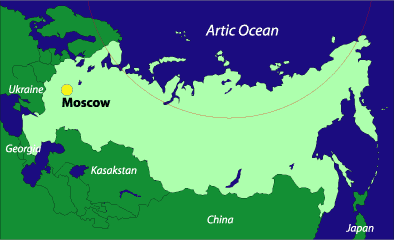 Modern Russia, in the post-Gorbachev era, has been plagued by economic instability, political indecision, and corruption both within government and civil organizations outside of them. Crime and drug abuse are at shocking highs, and protectionist politicians and shady industrial leaders are seemingly at odds with each other. Despite this, there remains a great deal of optimism among the Russian people. Theirs is a society bred out of hardship, but also out of great respect for academia, the arts, and sciences.
NOTE: Travelers are advised against travel in Chechnya and Dagestan. It is currently unsafe to travel in these areas, as well as in neighboring Ingushetia. Other areas of concern are North Ossetia, Stavropol, Karachayevo-Cherkessiya, and Kabardino-Balkariya. Consular support in each of these areas can be negligible or nonexistent.
Traveling in Russia
All visitors to Russia require a visa. Meal prices range from US$5-$10 (budget) to to US$15-$25 (higher end). Lodging prices go from US$15-$45 (budget) to US$100+ (high end). Carrying cash (in U.S. dollars) can be risky, especially in larger cities where crime rates have soared; however, the U.S. dollar is the easiest to convert. Traveler’s checks can be frustratingly difficult to change, and credit card advances are generally available in the cities, but not in the rural areas.
High-end hotels and restaurants will typically include a tip in your bill. Porters may expect a tip of roughly US$1 per bag, and while shop prices are often non-negotiable, you’ll be expected to bargain in markets.
Daily flights to Moscow can be taken from New York, most major European cities, as well as Hong Kong and other Asian centers. Many European cities also fly direct to St. Petersburg. Train routes into Russia run mostly through Helsinki, Warsaw, Prague, and Budapest, with some trains originating in Paris and Amsterdam. Also, the Trans-Siberian Railway connects to a Beijing line. There is ferry service from parts of Scandinavia, Germany, Turkey, and Georgia.
Within European Russia, the best methods of travel are train, bus, or–in the summer–passenger boats on the rivers. If you’re going farther afield, take note that deregulation in the domestic airline industry has made flying not just inconvenient, but often unsafe. Try to book a domestic flight with an international teminus, since international flights are required to meet a specific standard.
Health concerns may include Diphtheria, Hepatitis, Rabies, Typhoid.
Weather in Russia
Because of the sprawling size of Russia, no one climatalogical summary would suffice. Moscow and St. Petersburg have similar summer temperatures (averaging roughly 24°C). Moscow is in the thick of winter by the end of November, emerging from the cold around mid-April. Winter temps average around -12°C. St. Petersburg’s average winter temperature is about -8°C. Vladivostok, on the Pacific coast, has somewhat milder weather than elsewhere in the Russian Far East. The northeastern town of Oymyakon, is the coldest inhabited place on earth, with winter temperatures plunging to -65°C.
Russian Federation Information
Population:
145.5 million
Government: Federation
Area: 17 million sq km
Capitol: Moscow (pop 9 million)
Language: Russian
People: 81% Russian, 4% Tatar, 3% Ukrainian and numerous ethnic minorities
Religion: Russian Orthodox, Islam, Animist
Major products/industries: Oil, coal, iron ore, timber, automotive, agricultural and construction equipment
 Egypt might be considered the world’s oldest tourist destination. With a plethora of cultural artifacts dating back thousands of years, and a long history of artistic, political, intellectual, and commercial milestones, the country and region have been attracting travelers since ancient times. The pyramids and tombs are not the only reason to visit Egypt. There is an extraordinary amount of art and architecture including relics from centuries of Greek, Roman, and Arabic occupation. All along the River Nile you can see different parts of Egyptian history that have survived thousands of years of cultural change and the rapid growth.
But Egypt, like so many ancient lands, has entered the modern world paradoxically. Laborers often use the tools of their ancestors to farm, while the automobile traffic in the cities can be maddening. These contrasts are all over Egypt, and how much modernization Egypt accepts will ultimately effect the past, as well as the future of this great land.
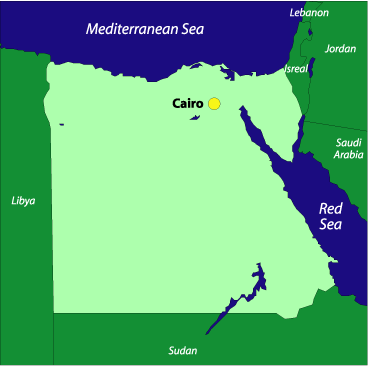 Most flights connect to Egypt through European cities. Flying domestically in Egypt can be expensive, but there are trains, buses, and boats that will take you anywhere you want to go. Trains and buses can be extremely crowded because they usually wait until they cannot fit another body, before pulling away from the station. This may be uncomfortable, but it’s a great way to immerse yourself in the culture.
Everyone traveling to Egypt is required to obtain a visa, avaible from Egyptian embassies worldwide. However, if you are from the United Stated, the European Union, Canada, or one of GCC countries, you can get a visa upon arrival at one of the larger airports, but you may want to deal with this beforehand, to avoid the trouble. Most visas last for one month, but they can generally be extended.
Traveling in Egypt is cheap: most meals cost under US$5, good hotels can be found for under US$50 a night, many are under US$25.
There are plenty of pickpockets around so it is a good idea to be extra careful with cash or valuables. Traveler’s checks are still a good way to carry cash as long as they are American Express or Visa. Credit Cards are accepted in some places, and there are ATM’s in larger cities.
Weather in Egypt
South of Cairo, toward Luxor and Aswan, the blazing heat can be very uncomforable between June and August. However, this is also the most crowded time of year around the Mediterranean Coast. So when you choose to go depends entirely on what you want to do. The best time to travel south of Cairo is December to February. If you want to enjoy the north shore, March to May is the least crowded time when the weather will still be warm.
Health Concerns in Egypt
Bilharzia ranks second behind malaria as a public health concern in tropical and subtropical areas. You can get this disease through contact with infected water, and in Egypt, it is mainly found in the waters of the Nile.
Diagnosing bilharzia is done by checking a patient’s urine or fecal matter. If you want to keep from getting this disease it is best to stay away from fresh water rivers and streams, especially near agricultural areas. For more information check out the following website: http: //www.who.ch/.
 Egypt Information
Population: 69.5 million
Government: Republic
Square Miles: 622,272 sq mi (1,001,449 sq km)
Capitols: Cairo
Languages: Arabic
People: Berbers, Bedouins, and Nubians
Religion: 94% Islam, 6% Christian
Major products/industries: Oil & gas, metals, tourism, agriculture (especially cotton), and Suez Canal revenues
 Australia is one of the world’s most unique natural habitats. Because it is isolated from most of the world, it has a wide variety of animals unique to its continent, and landscape that seems as impossible to live in as it is stunningly beautiful. It’s hard to justify trying to see all of Australia in just one trip. You will see some of the best beaches, experience some of the most inspiring wildlife, and meet among the finest people the world has to offer.
The Australian Aborigines, have the longest continuous cultural history in the world, and were in Australia thousands of years before anyone else set foot on the continent.
Europeans explorers came to Australia in the 16th century: first the Portuguese, then the Dutch explorers, and finally English pirate William Dampier. Captain James Cook sailed the eastern coast in 1770, on his famous voyage stopping at Botany Bay and literally running into the Great Barrier Reef. He claimed the continent for the British.
In 1787, a fleet of 11 ships, 750 male and female convicts, and four companies of marines landed in Botany Bay. For the new arrivals, Australia was a harsh and horrible place; starvation was a constant threat.
Traveling in Australia
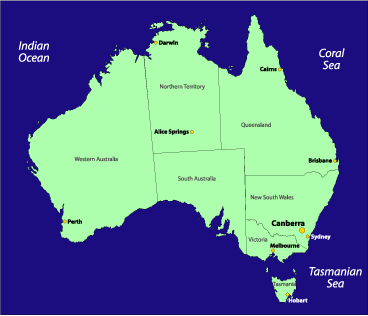 Australia’s climate differs a great deal depending on what part of the continent you are visiting. If you plan on staying in the southeast, near Melbourne or Sydney the climate is very nice year round. But up north in Queensland and the Northern Territory it can be brutal. The Australian continent is roughly the size of the United States; unless you plan to take a single long trip there, it will be difficult to see and do all that’s available to you. Focusing on specific parts of the continent is the best plan, so you get the most out of your experience. But don’t think that because you’ve seen Sydney, that you have seen Australia. That would be like going to New York City and saying you’ve seen the U.S. There’s a lot more to this beautiful land than its flagship city.
Weather in Australia
Much of Australia has great weather throughout the year, and there really isn’t a bad time to go. However, from December to February (Southern Hemispheric summer) it can be quite hot, and is best to be on the southern beaches. In the northern parts, in summer, it’s often wet and humid. The oceans to the north can also be unswimable due to the box jellyfish, which is one of many poisonous animal species in Australia.
AustraliaAustralia
Population:
19.5 million
Government:
Independent member of the British Commonwealth
Square Miles:
2,966,200 sq mi (7,682,300 sq km)
Capitol:
Canberra (pop: 313,000)
Official Language:
English, Aboriginal languages
People:
94% European descent, 4% Asian, 1.5% Aboriginal
Religion:
75% Christian, 1% Muslim, 1% Buddhist
Major products/industries:
Minerals, oil, coal, gold, wool, cereals, meat
 I was already aware of the intricacies of British culture, having lived in England previously as a history teacher at a rural boarding school, during my first year out of college. But I later moved to the capital city–working toward a Master’s degree in Environment and Development at the London School of Economics–which made that prior experience seem about as exciting as reading VCR instructions. What struck me most was London’s diversity, geographical mix, and relentless pulse.
By their very nature, cities will always be more diverse than rural communities, but London seems to stand out above the rest. On my 45-minute bus ride home from university, each day, I would regularly hear over five different languages, including regional African dialects  spoken by statuesque women in fully robed regalia. My local borough (I lived in Herne Hill, near Brixton) equips its police officers with a handbook on how to approach citizens in over 20 languages. Walking from the bus stop to my house, I passed by Jamaicans, Trinidadians, Poles, and Koreans; flags waving and music blaring outside their shops and homes. All of this brought to mind a metaphor usually reserved for my native country: London is truly a great mixed salad.
 There is much less national identity in London, these days, as opposed to, say, during the time of Splendid Isolation–the national flag, for instance, carries very little symbolic value for most Brits, and there is no equivalent to the American “Pledge of Allegiance.” Each nationality retains its own cultural identity, merging seamlessly in the context of the professional world, while simultaneously promoting unique fashion, food, style, and slang that burst and fade in friendly competition. One can symbolically travel the world in London with merely a $3 bus pass and a good pair of shoes.
 Further, while mixed-class development projects are now taking root in North America in reaction to the crumbling of inner cities, London, for the most part, avoided this structural weathering by virtue of the tragic and destructive effects of the Second World War. It was not good foresight, but rather the London Blitz, that forced the creation of an urban geography of wealthy and nonwealthy classes well-mixed along the same street. The 1940 bombing by German warplanes was indiscriminate in London, pockmarking all areas of the city with craters where once stood homes and businesses. After the war, the British
 government initiated the “Homes for Heroes” program to house returning veterans, transforming the rubble into massive housing estates that often rise awkwardly above Georgian and Edwardian masterpieces. Over time these individual “council flats” were sold on the market or converted to low-income housing, and now they dot the
 London landscape, even in the poshest suburbs and high streets (shopping areas). Proximity breeds tolerance on both sides, and as a result, the city seems relatively at ease with class differences. Moreover, visitors can walk almost anywhere in London and rarely feel their safety threatened.
 All of this contributes to an underlying vibe in London that is unparalleled. At first glance, a visitor may find the city to be a dazzling display of historical sites, facades of the Old World, and relics of the Crown. But with more time and closer inspection, London emerges as that fabled Congo river boat from Conrad’s
 classic, Heart of Darkness (which begins on the River Thames, just miles from London)–having stepped aboard, and not knowing who controls the wheel, speed, or direction, we are swept downstream among the jungle’s pulse and intensity, clinging first to the safety of what we know before regaining our will and walking freely through the bright lights, markets, and hushed corners of this great city. It is
 everyman’s and everywoman’s city, and the best way to know it is as such–with a pub on one side, and pub on the other.
 London has, for centuries, conformed to its inhabitants and the demands of the country and world, first as a commercial port, then as the political and financial capital of the British Empire, followed by a trying period of heavy industry in the early 20th century, and finally reaching its present-day service- and tourism-based economy. If you do visit London, resist the temptation to take the convenient Tube–the city’s famed subway system. Take the bus instead, at least on your first day. Instead of popping out of dark ferret holes all day, you’ll see first hand how a city of 8 million people, cramped streets, and sparkling greens manages to contract, expand, and breathe with the daily demands of modern life. After a few days in “town” you may be reminded of the graceful words of Samuel Johnson, whose penned prose still seems to emanate from every Soho storefront and Hyde Park hollow: “He who is tired of London, is tired of life.”
by Daren Stinson
 During my four weeks in the United Kingdom last summer, I crisscrossed the country and reveled in its history, beauty, and variety. As the landscape changed, so did the dialects, architecture, culture, and food, but I did find one constant. I was constantly plagued by inadequate plumbing. I have friends and relatives who have been to the U.K. I have friends who are British. Why didn’t anyone warn me? Okay, the topic isn’t one likely to come up in polite conversation, but when my family asked me about my trip, I couldn’t help but express my frustration with the plumbing issues I faced daily. The Brits may take pride in their long history, progressive metropolises, and quaint country towns, but there is something to be said for modern convenience where you need it most: in the bathroom. Since my return, when I have had occasion to bring the subject up, I’ve gotten reactions ranging from surprise to a casual shrug as if it was something that everyone knew. For those of you who do not know, please read on…
Toilets
Considering the inventor of the flushable toilet, Albert Giblin (credit is often, wrongfully, bestowed upon Sir Thomas Crapper), was himself a Brit, there is little excuse for primitive nature of British loos. At first, I thought I was just having bad luck, but after comparing notes with a fellow traveler, and discovering that she had encountered the same problems, we had a lengthy discussion about our experiences and came to the following conclusion: it takes at least three flushes to do the job. Holding the handle down longer doesn’t help and, in fact, can exacerbate the problem. I spent 20 minutes some days just trying to make sure that the loo was fully flushed for the next person.
Apparently, poorly functioning toilets are so widespread throughout the country that everyone just incorporates it into their day, like breathing. Near the end of my trip, I asked a friend who is a native Brit if he’d ever noticed problems flushing the toilets. He just shrugged. He didn’t seem to care. I wondered if his casual attitude was because he’d never experienced a properly functioning toilet? My advice: let the toilet water run full cycle before trying again, and if you are in a big hurry, try to sneak out of the bathroom before anyone figures out which stall you used.
The one bright spot I found during my toilet toiling was that Brits do have a sense of humor, however subtle and twisted. They annually acknowledge the “Loo of the Year” (see http://freespace.virgin.net/martin.higham/).
I expect there is a long checklist of qualifications used to determine which public facility deserves such an honor, however, flushability is the obvious exemption. I know this because I used the bathroom at Castle Howard (outside of York, in North England) recipient of “2001 Loo of the Year” award. While the bathroom was attractive, with wood paneled stalls and Corian-style wash basins, I ranked it in my top three most troublesome flushing experiences (and make no mistake, that was not due to my contributions).
I did have a favorite public bathroom. It was in a little café in Guildford, about an hour south of London. The washroom was very small–actually closet-like–and had just one toilet and a very small sink. Despite the lack of elbow room (don’t try to bring your backpack in there), it had two very key benefits, a unique toilet seat and a one-flush-and-you’re-all-set feature. The toilet seat was outstanding. It was made of clear plastic, and suspended inside the mold were pieces of candy: lifesavers, gummy bears, gumdrops, peppermint swirls, and lollipops. My only regret from my entire trip was that I did not have my camera in there with me to take a picture of this seat. The fact that the toilet flushed on the first try was an added bonus, and the combination alone should qualify it hands down as the “Premier Loo of the U.K.” (For more on British toilets, see http://www.britloos.co.uk/.)
While the toilets were troublesome, they were at times amusing. What I found distinctly less amusing was what the people of Britain accept as a sorry excuse for a shower.
Showers
I never did get confirmation on this, but I decided that British people must take a lot of baths because, aside from in the newer buildings (and even sometimes in those), every place I stayed had a bathtub with a makeshift shower. By makeshift I mean, instead of a sturdy chrome shower head poking through a wall of tile, as you might expect in many other first-world countries, a bather is instead faced with a hose-like contraption bracketed up the wall above the tub faucet and topped with a small plastic showerhead, all resembling a slightly larger version of one of those flexi-hose nozzles used to help rinse dishes in the kitchen sink. It was as if someone had traveled to America, been impressed by our quick and convenient method of bathing, and rushed home to the mother land to jerry rig a similar contraption from a piece of garden hose and a small sprinkler head. And after it was done once, the idea took off like wildfire across the country, with every copy cat using the same cheap parts.
Another interesting feature is that no shower in the U.K. operates by simply turning on the water–that would be too easy. Every single shower I used had a trick to it. You have to find the pull-cord or the red switch or knob, or all three, before you could get the eventual trickle of water to leak out. I strongly advise travelers to ask your host how the shower works before you are left alone in the bathroom to fend for yourself.
Also, since water pressure seems to be potluck, I often had trouble rinsing the shampoo from my hair, and usually ended up with rather dull, flat locks. My solution: don’t wash your hair more than once a week (it looks the same clean or dirty under these conditions anyway). Another option is to finish showering, then rinse your hair under the tub faucet. This works better, but it was difficult to get into an effective position, and I felt a little silly trying, so I only did it once, when I was staying in York, home of the worst plumbing in the country. (I do advise that if you are really struggling with these toilet and shower issues, avoid York altogether.)
Water pressure problems are the main source of the flushing and showering struggles. Most British homes have only a 1/2-inch supply line to the water main (compared to the much larger standard American pipes), which will not provide enough water for simultaneous use of sinks, showers, and/or toilets. To get around this problem, many homes have installed a cistern in the attic that depends on gravity to distribute water through the rest of the house. This sometimes forces a homeowner to install a pump or heater/pump in places like the shower (hence the switches, knobs, and pull-cords mentioned above) just to have somewhat adequate water pressure. As it is, the materials used in shower construction are designed for low-pressure flow.
My personal theory (and this has not been confirmed) is that the plumbing in much of Britain was installed in the wake of the devastation caused by World War II, and has yet to undergo any major renovation since then. And because the Brits seem perfectly content to live with their showers and loos as is, we tourists who are used to a little something more must simply get used to it too. But if you’re like me and love to travel, but always end up writing “Things I Miss from Home” lists, you can be sure that your bathroom, will be at the tops of that list, and it will forever after hold a special place in your heart.
 Montserrat was once called the “Emerald Isle of the Caribbean,” a phrase coined by Columbus. It is graced with lush mountains and landscape crowned by three towering volcanoes. Unfortunately, one of those volcanoes–the Soufrière Hills volcano–erupted in 1995, making most of the island uninhabitable.
Now, most of Montserrat’s residents live off-island–many having since relocated to Britain–while a very few remain in the less affected northern part of the island, or in emergency shelters, while waiting out the “storm.” Even with a volcano that continues to erupt periodically, tourists visit Montserrat, though certainly not in the number they once did.
The capitol of Plymouth, with its Georgian-style houses and winding streets, now lays under many feet of ash.
 Since the last major eruption, the governmental center of the island has been relocated to Brades near Carr’s Bay/Little Bay. But as of now, the island has no “cultural hub” like Plymouth was before the eruption. This can make finding provisions difficult since there is no major town center.
The only people allowed into the restricted (read: dangerous) zone are scientists or people with business in that area. But there are many helicopter tours available to give you a bird’s-eye view of the southern portion of the island.
Many locals who moved to England, Canada, or other British territories after the eruption are beginning to return and in the coming years Montserrat may again emerge as a major tourist destination, but for now it seems to only attract the courtesy of a few.
If you are interested in visiting the island, it’s best to contact the tourist board for updated information.
Traveling to/in Montserrat
 To get to Montserrat you must fly to Antigua and either take a ferry or a helicopter charter to the island; the latter will prove to be a much more expensive route. The ferry ride takes about one hour, while the helicopter takes just twenty minutes. You can also arrive via helicopter from St. Kitts. To see the ferry or helicopter schedules click here.
Once on island, the best way to get around is either by taxi or rental a car. You can also get a bus tour from one of the island’s tour companies.
Weather in Montserrat
Because of its location, the weather in Montserrat is almost always warm. The average high temperature throughout the year is around 80°F. The rainiest time of year is between June and December. Weatherwise, the least desirable time to visit is during hurricane season, which runs from June through October.
Montserrat Information
Population: 5000 (est. 2000)
Government: Territory of the United Kingdom
Square Miles: 39.5 sq mi (102 sq km)
Capitol: Plymouth (mostly destroyed, August 1997)
Brades, in Carr’s Bay/Little Bay (established after eruption)
Official Languages: English
People: African (90%), mixed descent (6%), European and East Indian (4%)
Religion: Roman Catholic, Anglican, Methodist and other Christian denominations
Major products/industries: tourism (until 1995), rum, textiles, electronic appliances